






The installation of a high-quality stainless steel screen is a significant capital investment, but its performance over time is entirely dependent on the rigor of its maintenance regime. While stainless steel is renowned for its durability, it is not a "fit and forget" material. In industrial environments, screens are constantly subjected to mechanical stress, chemical exposure, and the accumulation of particles that can lead to a condition known as "blinding" or "pegging." Without a proactive lifecycle strategy, even the most expensive Grade 316L mesh will eventually lose its permeability, leading to increased pressure drops and potential system failure.
This 1,500-word guide serves as a technical manual for the care of industrial wire cloth. We will explore the professional methodologies for cleaning, the chemical logic behind passivation, and the monitoring techniques used to predict the end of a screen's service life. By moving from reactive repairs to a predictive maintenance model, organizations can significantly extend the lifespan of their mesh assets, ensure consistent product quality, and drastically reduce the total cost of ownership.
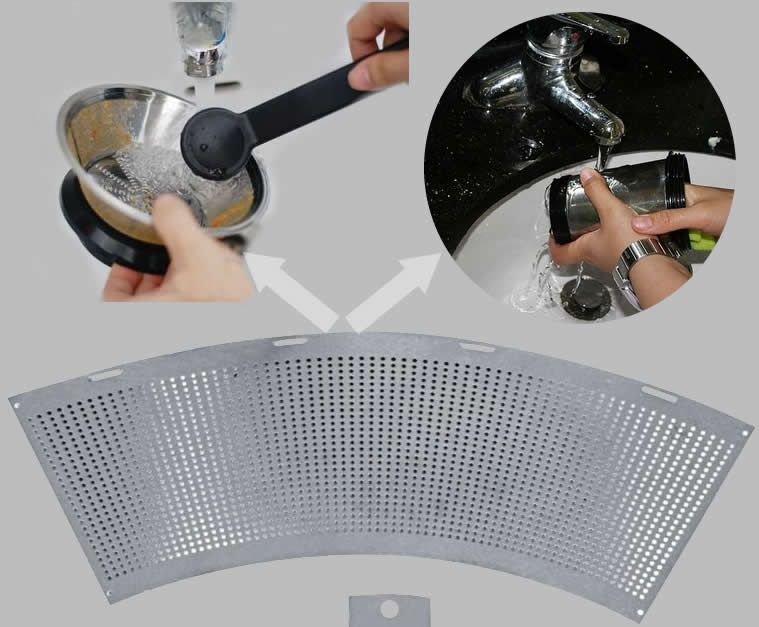

Understanding the Mechanics of "Blinding" and "Pegging"
The Physical Challenges of Particle Accumulation
"Blinding" occurs when fine particles, moisture, or sticky resins coat the surface of the wires, effectively sealing the apertures and preventing fluid flow. This is a common issue in the food processing and pharmaceutical industries where oils and proteins can create a stubborn film. If left unaddressed, this accumulation creates an uneven pressure distribution across the screen, which can cause the mesh to "bag" or stretch, permanently ruining its geometric accuracy. Understanding the specific nature of the blinding material-whether it is organic, mineral, or metallic-is the first step in selecting the correct cleaning frequency and method to restore the screen to its original "open area" specifications.
The Phenomenon of Pegging in Vibratory Systems
"Pegging" is a more aggressive form of blockage where near-sized particles become mechanically wedged within the mesh openings. This is particularly prevalent in mining and aggregate screening where the particles are hard and irregularly shaped. Unlike surface blinding, pegged particles cannot be easily brushed away; they require mechanical energy or thermal expansion to be dislodged. If these particles remain wedged, they act as "stress risers," creating localized tension that can lead to wire fatigue and eventual breakage. Maintenance teams must be trained to identify the difference between these two conditions, as the aggressive mechanical force required to clear pegging can sometimes damage delicate fine-mesh screens if not applied with precision.
Professional Cleaning Methodologies
The Power of Ultrasonic Cleaning Technology
Ultrasonic cleaning is widely regarded as the "gold standard" for restoring fine-mesh stainless steel screens. This process utilizes high-frequency sound waves to create millions of microscopic vacuum bubbles in a cleaning solution-a phenomenon known as cavitation. When these bubbles collapse against the wire surface, they release a concentrated burst of energy that "scrubs" away contaminants even from the smallest pores of a 635-mesh screen. This method is exceptionally "good" because it is non-abrasive; it cleans the interior of the weave without the need for harsh scrubbing that could displace the wires. For critical filters used in aerospace or medical device manufacturing, ultrasonic cleaning is often the only approved method for ensuring the absolute removal of sub-visible particulates.
Chemical Pickling and Degreasing Protocols
In environments where mesh is exposed to heavy oils, greases, or mineral scales, mechanical cleaning alone is often insufficient. Chemical degreasing involves the use of specialized solvents or alkaline cleaners that break the molecular bonds of organic contaminants. Following degreasing, "pickling" may be required to remove deep-seated metallic oxides or scale. This involves the application of an acidic solution (usually a blend of nitric and hydrofluoric acids) that strips away a microscopic layer of the metal surface. While this sounds aggressive, it is a controlled process that ensures the base stainless steel is perfectly clean and ready for the re-formation of its protective oxide layer. It is vital to use the correct chemical concentration to avoid "over-etching," which could thin the wires and change the micron rating of the filter.
High-Pressure Back-Pulsing and Back-Washing
For screens integrated into continuous flow systems, such as those in oil refineries or water treatment plants, "offline" cleaning is not always an option. These systems rely on back-washing, where the direction of fluid flow is momentarily reversed at a higher pressure. This surge of energy forces trapped particles out of the mesh apertures from the "clean side" to the "dirty side." When performed correctly, back-washing can maintain a screen's performance for months without a full teardown. However, the maintenance team must carefully monitor the "Delta P" (pressure drop) to ensure the back-wash pressure is high enough to dislodge debris but low enough to avoid "shucking" the mesh-a destructive event where the mesh is ripped away from its support structure by excessive reverse force.
Comparative Selection Matrix for Mesh Cleaning Methods
| Cleaning Method | Mechanism of Action | Best For... | Impact on Mesh | Recommended Use |
| Ultrasonic Cleaning | High-frequency Cavitation | Micro-powders, proteins, sub-micron impurities | Extremely gentle; no mechanical damage | Pharmaceuticals, Aerospace, Precision fine-mesh |
| Chemical Pickling | Chemical dissolution & oxidation | Metal scale, mineral buildup, heavy rust | Risk of wire thinning; requires strict timing | Chemical plants, high-pressure systems, mesh refurbishing |
| High-Pressure Back-wash | Kinetic Energy Displacement | Granular debris, loose accumulations | Frequent use may cause wire fatigue | Water treatment, oil & gas, continuous flow systems |


Passivation: Restoring the Chemical Shield
The Logic of Surface Chemistry Restoration
Stainless steel's resistance to corrosion is not permanent; it depends on a healthy "passive layer" of chromium oxide. During operation, abrasive particles or harsh chemicals can deplete this layer, leaving the underlying iron vulnerable to rust. Passivation is the process of immersing the cleaned mesh in a mild oxidant, such as nitric or citric acid. This chemical treatment serves two purposes: it dissolves any "tramp iron" (microscopic particles of carbon steel or iron) that may have been embedded in the surface, and it forces the rapid growth of a thick, uniform chromium-oxide film. Without regular passivation, a 316L screen in a saline environment will eventually develop "tea staining" or pitting, significantly shortening its functional life.
Citric vs. Nitric Acid Passivation
For many years, nitric acid was the industry standard for passivation, but it is hazardous to handle and environmentally damaging. Modern maintenance protocols are increasingly shifting toward citric acid-based systems. Citric acid is "good" because it is organic, biodegradable, and safer for personnel, yet it is highly effective at "chelating" (binding) free iron without attacking the chromium or nickel in the alloy. In the food and beverage industry, citric acid passivation is preferred because it leaves no toxic residues. Regardless of the acid used, the key to a successful lifecycle is ensuring the screen is thoroughly rinsed and dried after the process, as any residual acid trapped in the weave can actually trigger localized corrosion rather than preventing it.
Monitoring and Lifecycle Diagnostics
Visual Inspection and "Linen Tester" Analysis
The most basic yet essential form of maintenance is the regular visual inspection of the mesh. Technicians should use a "Linen Tester"-a specialized magnifying glass with a built-in scale-to check for "wire migration" or "weaving streaks." Over time, the tension in a screen can cause wires to shift, creating larger-than-specified holes that allow oversized particles to pass through. By performing a weekly count of the wires in a one-inch square, maintenance teams can identify when a screen has begun to lose its geometric integrity. This proactive check can prevent a "blowout" during production, which would otherwise result in a complete batch of product being rejected due to contamination.
Measuring Wire Diameter for Wear Limits
In abrasive applications, such as sifting sand or metal powders, the wires of the screen act like the tread on a tire-they gradually wear down. As the wire diameter (d) decreases, the aperture size (w) increases, and the overall mechanical strength of the mesh declines. A critical part of lifecycle management is using a digital micrometer to measure the wire thickness at the points of highest friction. Most industrial standards recommend that a screen should be retired once the wires have lost 15% to 20% of their original thickness. Beyond this point, the risk of a catastrophic "burst" under pressure increases exponentially. Keeping a historical log of these measurements allows engineers to predict the exact "Mean Time Between Failures" (MTBF) and schedule replacements during planned downtime.
Lifecycle Health Indicators and Retirement Criteria
| Key Indicator | Normal Operating Range | Warning Signs | Retirement Limit (Action Required) | Potential Risks of Neglect |
| Wire Diameter Loss | < 5% of original diameter | 10% - 15% wear detected | > 20% loss of thickness | Sudden mesh burst; total structural failure |
| Aperture Drift | Within ASTM/ISO tolerance | Reaching upper limit of tolerance | Exceeding tolerance by > 5% | Filtration bypass; downstream product contamination |
| Clean Delta P (Pressure Drop) | Baseline initial value | 20% - 30% increase from baseline | > 50% increase over baseline | Extreme energy consumption; mesh deformation |
| Surface Integrity | Uniform weave; no flaws | Localized discoloration or scratches | Any broken wires or mesh displacement | Large particle bypass; complete batch rejection |
Conclusion: The Strategic Value of Proactive Care
The long-term performance of a stainless steel screen is a direct reflection of the quality of its maintenance. As we have explored in this guide, a "good" screen can easily become a liability if blinding is ignored, if cleaning is performed with the wrong chemistry, or if the structural wear of the wires is not monitored. The transition from a reactive maintenance mindset-where a screen is only replaced after it breaks-to a lifecycle management approach provides massive economic benefits. It ensures that the "open area" remains consistent, which in turn stabilizes the energy consumption of pumps and fans that must push fluid through the mesh.
Ultimately, maintenance is an act of preserving the "engineered precision" of the mesh. Whether through the microscopic cleaning power of ultrasonics, the chemical restoration provided by passivation, or the diagnostic rigor of micrometer measurements, every step in the maintenance cycle serves to protect the integrity of the process. By treating the stainless steel screen as a high-value asset rather than a disposable commodity, industrial operators can ensure the safety of their products, the longevity of their equipment, and the overall efficiency of their global manufacturing operations. A well-maintained screen is the hallmark of a world-class production facility.
To see how these maintenance protocols integrate into the broader selection and application of mesh technology, return to our master technical manual:
[Is a Stainless Steel Screen Good?]