






The question "Is a stainless steel screen good?" might seem simple, but in the industrial world, the answer is the foundation of multi-million dollar filtration systems. For an architect, "good" means a facade that remains pristine for 50 years; for a food scientist, it means a mesh that doesn't leach metallic ions into organic products; and for a petroleum engineer, it means a screen that can withstand the abrasive force of sand at 3,000 feet below sea level.
In almost every scenario, stainless steel is the premier choice. It offers a unique combination of mechanical strength, corrosion resistance, and long-term reusability. However, the term "stainless steel" covers a vast family of alloys, each with its own strengths and fatal weaknesses. This 3,000-word guide provides a comprehensive evaluation of stainless steel screens, exploring the metallurgy, the practical pros and cons, and the specific industry secrets that determine whether this material will be your best asset or a costly failure.


The Secrets of Stainless Steel's Longevity
The "Magic" of the Self-Healing Passive Layer
The primary reason stainless steel is considered "good" is its ability to heal itself. Unlike galvanized steel, which relies on a zinc coating that eventually wears off, stainless steel contains chromium integrated into its very DNA. When exposed to oxygen, a microscopic layer of chromium oxide forms on the surface. If a wire is scratched by abrasive sand or nicked during installation, the layer reforms instantly. This "passive layer" is what prevents rust from taking hold. In this section, we explore how keeping the screen clean and exposed to oxygen is actually the key to its "immortality."
Austenitic Alloys: The Weaver's Favorite
Most industrial wire mesh belongs to the "Austenitic" family, specifically the 300-series. These alloys are favored because they are incredibly ductile, meaning they can be drawn into wires as thin as a human hair without snapping. Furthermore, they are non-magnetic in their annealed state. This is crucial for electronic applications or specialized food processing lines where magnetic interference could disrupt sensors or where magnetic separation is used to catch stray carbon steel particles.
Magnetic Stainless Steel: When and Why to Use It
There is a common misconception that "good" stainless steel must be non-magnetic. However, in the food and recycling industries, magnetic stainless steel (the 400-series) is often preferred. If a piece of the screen breaks off due to extreme wear, it can be easily detected and captured by magnetic separators downstream, preventing metal contamination in the final consumer product. We will discuss why 430-grade mesh is a strategic choice for high-volume grain processing.
Choosing the Right Grade: 304 vs. 316 vs. Exotic Alloys
Grade 304: The Versatile All-Rounder
Grade 304 is the most popular stainless steel in the world. It is excellent for indoor environments, freshwater filtration, and general industrial screening. However, its "Achilles' heel" is salt. Even the salt air of a coastal city can cause 304 mesh to develop unsightly brown spots known as "tea staining." We'll look at why 304 is perfect for your kitchen strainer but perhaps a poor choice for a seaside wastewater plant.
Grade 316: The Marine and Chemical Specialist
When the environment gets aggressive, Grade 316 takes over. The addition of molybdenum (usually 2-3%) creates a shield against chlorides-the chemical components of salt. This makes 316 "good" for seawater intake screens, pharmaceutical reactors, and anything involving harsh cleaning chemicals. We will analyze the cost-benefit ratio: 316 is roughly 20-30% more expensive than 304, but in a saline environment, it can last five times longer.
Super Alloys: When 316 is Not Enough
In extreme cases, such as the handling of hot sulfuric acid or in desalination plants, even 316 will succumb to "pitting" (small holes being eaten through the wire). This is where exotic grades like 904L, Duplex 2205, or Hastelloy enter the picture. These materials are incredibly expensive but essential for mission-critical parts where a single hour of downtime costs more than the entire filter itself.
Alloy selection is the most frequent point of failure in filtration design. For a comprehensive analysis of metal performance and selection criteria, explore our guide:
[Stainless Steel Alloy Selection: From 304 to Exotic Super-Alloys]
Mechanical Performance and Structural Rigidity
Resistance to High-Pressure Deformation
One of the biggest advantages of stainless steel over synthetic mesh (like Nylon or Polyester) is its stiffness. In high-pressure liquid filtration, synthetic wires tend to stretch or "bow," which causes the openings (apertures) to enlarge, allowing large contaminants to pass through. Stainless steel remains rigid, ensuring that a 50-micron filter stays 50 microns even under intense pressure. This stability is why it's the standard for aircraft hydraulic systems.
Operating in Extreme Temperatures
Most plastics begin to lose their strength at 100°C and melt shortly after. Stainless steel screens, however, are comfortable in temperatures ranging from cryogenic levels (-196°C) up to glowing heat (800°C for Grade 310). We will discuss how stainless steel mesh is used in hot gas filtration in power plants and as flame arrestors in petrochemical vents-scenarios where no other material could survive.
The Impact of Weave Density on Durability
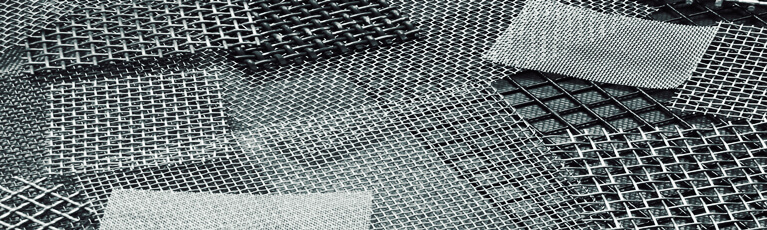
A "good" screen isn't just about the material; it's about how it's woven. A "Dutch Weave" stainless steel screen uses thicker warp wires and thinner shute wires driven tightly together. This creates a staggered, tortuous path for the fluid, making the screen incredibly strong and capable of withstanding the "back-pulsing" (reverse flow) used to clean industrial filters without damaging the weave structure.
Maintenance and the Economics of Reusability
Ultrasonic Cleaning: The Ultimate Refresh
Unlike disposable paper or fabric filters, a stainless steel screen is a long-term asset. When it becomes clogged (a condition known as "blinding"), it can be cleaned using ultrasonic baths. High-frequency sound waves create millions of microscopic bubbles that collapse against the wires, "scrubbing" away even the stickiest resins or finest dust. This section details how a single screen can be cleaned and returned to service dozens of times, drastically reducing the "Cost Per Gallon" of filtered product.
Chemical Passivation: Restoring the Shield
Over time, exposure to abrasives or poor-quality water can deplete the chromium on the surface of the wires. "Passivation" is a maintenance process where the screen is treated with a mild acid (like citric or nitric acid). This removes surface iron and "re-charges" the chromium-oxide layer. We explain why a regular passivation schedule is the secret to making a stainless steel screen last for decades rather than years.
Monitoring Wear: When to Retire a Screen
Even the best stainless steel eventually wears down. In abrasive applications like mining slurries, the wires will gradually become thinner. We'll discuss how to use a "Linen Tester" or a digital micrometer to measure wire diameter during routine maintenance. Once the wire has lost 15-20% of its original thickness, the risk of a "burst" becomes too high, and the screen should be recycled and replaced.
Maintenance Guide: Maximizing the ROI of your screen requires professional cleaning protocols. Discover the latest industrial cleaning techniques and predictive monitoring tools in our review:
[Maintenance and Cleaning of Stainless Steel Mesh: A Lifecycle Guide]
Industry-Specific Case Studies
Food and Beverage: Why "L-Grade" Matters
In food processing, hygiene is everything. We examine why "316L" (the L stands for Low Carbon) is the standard. Lower carbon content prevents the steel from becoming vulnerable to corrosion after it is welded into a frame. This prevents "pitting," where bacteria could hide and grow, ensuring that the screen remains "good" for FDA inspections and safe for consumer health.
Oil and Gas: The Battle Against Sand
At the bottom of an oil well, screens are used to keep sand out of the pumps. This is a brutal environment of high heat, high pressure, and corrosive saltwater. We'll look at why multi-layer "Sintered" stainless steel-where several layers of mesh are fused together-is the only material that can survive these conditions for years without needing a "workover" (an expensive process to pull the equipment out of the well).
Architectural Design: Beauty Meets Strength
Beyond industry, stainless steel screens are "good" for modern architecture. They are used for sunshades, security screens, and decorative partitions. In this section, we discuss the "aesthetic grade" of stainless steel and how the high tensile strength allows architects to span large distances with a transparent-looking "curtain" of steel that is strong enough to stop a hurricane's flying debris.

Global Standards and Quality Verification
ASTM E11 and the Science of Sifting
If you are using a screen for laboratory work, "good" means accuracy. The ASTM E11 standard defines how many openings must be measured to certify a sieve. We explain how a certified 100-mesh screen differs from a "commercial grade" 100-mesh screen and why you should never use uncertified mesh for final quality control of a product's particle size.
ISO 9044: The Industrial Fabricator's Bible
For general industrial use, ISO 9044 provides the rules for "allowable defects." No roll of mesh is 100% perfect. This section clarifies what is considered an acceptable deviation (like a slightly shifted wire) and what is a "fail" (like a broken wire). Understanding these standards helps you negotiate with suppliers and ensures you get the quality you paid for.
Compliance Check: Selecting the wrong tolerance grade can lead to system failure. For a detailed breakdown of global manufacturing standards, see our article:
[Global Standards for Stainless Steel Mesh: ASTM, ISO, and Compliance]
Comparative Analysis: Stainless Steel vs. Alternative Materials
Stainless Steel vs. Synthetic Polymers (Nylon/Polyester)
When deciding if a stainless steel screen is "good," one must compare it to the popular synthetic alternatives. While Nylon and Polyester meshes are significantly cheaper and lighter, they lack the "geometric memory" of stainless steel. Under the heat and pressure of a continuous industrial process, polymer wires will stretch and elongate. This stretching causes the pores to enlarge, leading to "contaminant bypass," where the very particles you are trying to stop begin to leak through. Stainless steel, by contrast, maintains its aperture size up to its breaking point. Furthermore, synthetics are prone to "adsorption," where chemicals or proteins bind to the plastic fibers, making them nearly impossible to clean perfectly. Stainless steel's inert surface is much more resistant to this, allowing for the high-purity results required in biotech.
Stainless Steel vs. Galvanized and Carbon Steel
In many heavy industries, carbon steel or galvanized screens are used to save costs. However, these materials are often a "false economy." Galvanized steel relies on a thin coating of zinc for protection; once that coating is scratched by abrasive rocks or eroded by high-velocity fluid, the underlying steel rusts rapidly. This rust doesn't just destroy the screen; it contaminates the entire fluid system with iron oxide particles. A stainless steel screen is "good" because its protection is consistent throughout the entire thickness of the wire. Even if a wire is worn down by 50%, the remaining metal still contains enough chromium to prevent rusting. This makes stainless steel the only logical choice for permanent installations where the cost of replacing a rusted screen far exceeds the initial price of the stainless alloy.
Material Performance Comparison Matrix
| Feature | Stainless Steel (316) | Synthetic (Nylon) | Galvanized Steel |
| Max Operating Temp | Up to 800°C | Approx. 100°C | Approx. 250°C |
| Chemical Resistance | Excellent (Acids/Salts) | Moderate (Vulnerable to Solvents) | Poor (Acid Sensitive) |
| Structural Rigidity | High (No stretching) | Low (Prone to sagging) | High |
| Reusability | Excellent (Ultrasonic cleanable) | Limited (Often disposable) | Moderate (Rusts after cleaning) |
| Life Cycle Cost | Lowest (Long term) | High (Frequent replacement) | Moderate |
Environmental Dynamics and Failure Prevention
Managing Thermal Expansion in High-Heat Cycles
In applications like heat-treating or hot gas exhaust, the "goodness" of a stainless steel screen is tested by its Coefficient of Thermal Expansion. All metals expand when heated, and if a stainless steel screen is tightly bolted into a frame that doesn't expand at the same rate, the mesh will "buckle" or tear at the edges. This is a common failure mode in furnace filters. To prevent this, engineers must design "floating" frames or use specialized weaves that can absorb the expansion. Understanding the difference between Grade 304 and Grade 310 is crucial here; Grade 310 has a higher nickel content, which helps it maintain its tensile strength and resist "scaling" (the flaking off of oxidized metal) at temperatures where other steels would literally crumble into dust.
Preventing Galvanic Corrosion in Multi-Metal Systems
A stainless steel screen is technically "noble," meaning it sits high on the galvanic scale. However, this can be a problem if the screen is installed in a frame made of a "less noble" metal like aluminum or standard carbon steel. In the presence of an electrolyte (like moisture or saltwater), a battery-like reaction occurs. The stainless steel will remain perfect, but it will accelerate the corrosion of the surrounding frame, eventually causing the entire assembly to fall apart. To ensure your screen is "good" for the long haul, you must use insulating gaskets or ensure that the entire housing is made of a compatible grade of stainless steel. This section emphasizes that the screen is part of a system, and its success depends on the materials it touches.
Understanding the Impact of Fluid pH on Alloy Stability
While stainless steel is famous for its acid resistance, it is not invincible. The "goodness" of the material depends heavily on the pH level of the fluid. In highly acidic environments (pH below 3), Grade 304 will lose its passive layer and begin to corrode uniformly. In highly alkaline environments (pH above 12), certain grades can suffer from "caustic embrittlement," where the metal becomes as fragile as glass. This section explains how to use a "Corrosion Chart" to match the specific chemical makeup of your fluid to the correct stainless steel grade. For example, in a phosphoric acid environment, Grade 316 is a minimum requirement, but in a hydrochloric acid environment, even 316 may fail, necessitating a move to "Super-Austenitic" alloys.


Fabrication and Industrial Integration Logic
The Importance of Edge Tensioning and Fraying Prevention
A stainless steel screen is only as good as its installation. Because the wires are woven rather than welded (in most cases), the edges of a cut piece of mesh are prone to "fraying" or unraveling. In high-vibration applications like vibratory sifters, a loose edge will quickly lead to total mesh failure. To prevent this, professional fabricators use "U-binding," "Hook strips," or "Hemmed edges." These reinforcements ensure that the tension is distributed evenly across all the warp wires. This section details why proper tensioning-measured with a Newton meter-is the secret to preventing the mesh from "whipping" against the support bars, which is the leading cause of premature wire breakage in industrial screening.
Sintering: Turning Mesh into a Structural Component
For the most demanding environments, we use a process called "Sintering" to make the mesh even better. By stacking multiple layers of stainless steel mesh and bonding them together in a vacuum furnace, we create a material that has the filtration precision of a cloth but the structural strength of a steel plate. This prevents the "media migration" that can occur if a single wire in a standard weave breaks. Sintered mesh is "good" because it is nearly impossible to puncture and can be back-washed at extremely high pressures (up to 50 bar) to remove stubborn clogs. This section explores why the aerospace and polymer industries rely exclusively on sintered stainless steel for their mission-critical filtration needs.
Table: Sintered vs. Single Layer Mesh Comparison
| Property | Single Layer Mesh | 5-Layer Sintered Mesh |
| Mechanical Strength | Low (Needs support) | Extremely High (Self-supporting) |
| Filtration Accuracy | High | High + Depth Loading |
| Cleaning Method | Ultrasonic/Manual | High-Pressure Backwash/Chemical |
| Durability | Moderate (Prone to tearing) | Exceptional (Puncture resistant) |
| Typical Use | Water strainers, Food sieves | Polymer extrusion, Aero-fuel |
| Cost | Budget-friendly | Premium Investment |
Conclusion: Making the Final Decision
Is a stainless steel screen good? The overwhelming consensus across the global engineering community is a definitive yes, but it is a tool that must be meticulously matched to its specific operational environment. The true brilliance of stainless steel lies in its unparalleled versatility-it can be engineered as a delicate, silk-like fabric for filtering high-end perfumes or as a rugged, armor-like plate for sifting tons of gold ore. However, the "goodness" of the material is not a static quality; it is a direct result of the synergy between the chosen alloy grade, the weave pattern, and the structural fabrication. To succeed, an engineer must move beyond the generic term "stainless steel" and demand a solution tailored to the fluid's pH level, the system's peak pressure, and the anticipated thermal cycles.
When evaluating the cost of a stainless steel screen, the focus must shift from the initial procurement price to the long-term Life Cycle Cost (LCC). While synthetic or galvanized alternatives may offer a lower entry point, they are often a "false economy" in industrial settings. When you subtract the hidden costs of frequent replacements, the risks of batch contamination, and the energy lost to inefficient flow dynamics caused by mesh deformation, stainless steel almost always emerges as the most economical and sustainable choice. Its ability to be cleaned, passivated, and returned to service dozens of times provides a return on investment that disposable media simply cannot match. In an era where environmental sustainability and carbon neutrality are becoming central to corporate procurement, the 100% recyclability of stainless steel further solidifies its position as the premier choice for the future.
In the final analysis, selecting the right stainless steel screen is an act of risk management. By adhering to international standards such as ASTM E11 or ISO 9044, and by implementing the advanced maintenance protocols and failure analysis frameworks discussed in this guide, organizations can transform their filtration systems from a recurring maintenance headache into a strategic asset for process optimization. Whether you are protecting a multi-million dollar aerospace engine from microscopic debris or ensuring the purity of a life-saving pharmaceutical, the stainless steel screen remains the most reliable foundation of global industrial progress. It is a material that has survived centuries of technological shifts, and through modern material science, it continues to provide the "smart" and ultra-precise solutions required for the next generation of global manufacturing.