






After examining porosity and the metallurgical nature of stainless steel in the previous sections, the question arises: is stainless steel truly porous? The short answer is: in its standard solid form, stainless steel is effectively non-porous, but a deeper exploration reveals nuances regarding engineered porosity, surface effects, and specialized applications.
Understanding these subtleties is essential for engineers, designers, and users in industries ranging from healthcare to aerospace.
read more:Is Stainless Steel Really Porous?
1.1 Solid Stainless Steel: An Impermeable Material
At the macroscopic and microscopic level, solid stainless steel is a dense metal alloy with negligible porosity. Its internal crystalline structure, combined with a protective chromium oxide layer, creates a virtually impermeable barrier to gases, liquids, and microbial contamination.
Key points that confirm stainless steel's non-porous nature:
Crystalline Density:
Austenitic grades like 304 and 316 use a face-centered cubic (FCC) lattice, with 74% atomic packing efficiency. Ferritic and martensitic stainless steels use a body-centered cubic (BCC) lattice, slightly less dense but still highly compact. These tight atomic arrangements leave no pathways for fluid or gas penetration.
Passive Chromium Oxide Layer:
The self-healing Cr₂O₃ film forms naturally when stainless steel is exposed to oxygen. Even if scratched, the layer regenerates, sealing microscopic defects and maintaining non-porosity. This is a critical reason stainless steel is used in sterile environments like hospitals and food processing plants.
Minimal Manufacturing Porosity:
Modern manufacturing techniques-continuous casting, vacuum induction melting, hot rolling, and annealing-reduce entrapped gas and inclusion porosity to below 0.1%, a value that is functionally negligible.
Example:
A 316L stainless steel surgical tray is exposed to repeated autoclaving at 134°C. Despite decades of use, neither moisture nor microbial penetration occurs, demonstrating effective impermeability.
1.2 Micro-Porosity: When Stainless Steel Appears Porous
Even though solid stainless steel is non-porous, micro-porosity can occur under specific circumstances:
Casting Defects:
Inadequate degassing during molten metal pouring can trap tiny gas pockets, usually <1 μm in diameter. These voids are isolated, closed, and do not create pathways for fluids, meaning the material remains non-permeable.
Welding Porosity:
Improper welding conditions (e.g., insufficient shielding gas) may produce weld porosity, visible as pinholes. While small, these defects can compromise corrosion resistance if exposed to aggressive environments. Post-weld treatments like passivation and electropolishing restore impermeability.
Surface Micro-Pits:
Abrasive finishing, bead blasting, or mechanical damage may produce microscopic depressions. These are often mistaken for "pores," but they are merely surface topography irregularities rather than true internal voids.
Example:
In food-grade tanks, a stainless steel surface brushed to No. 4 finish may have valleys 0.5 μm deep. Cleaning and passivation ensure these valleys do not harbor bacteria, reaffirming the non-porous nature of the metal itself.
1.3 Engineered Porosity: When Stainless Steel Becomes Functional
While standard stainless steel is non-porous, manufacturers sometimes deliberately engineer porosity to achieve specific functional goals. This is common in industries where filtration, diffusion, or airflow control is necessary.
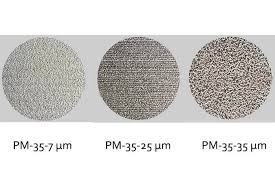
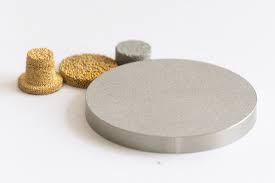
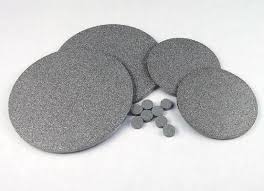
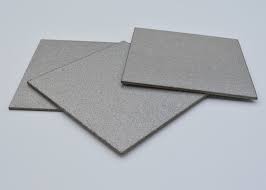
Sintered Stainless Steel:
Produced by compressing metal powders under heat below the melting point, sintered stainless steel contains controlled interconnected pores. These are highly uniform and allow liquids or gases to pass. Applications include:
Gas diffusion filters in chemical plants
Oil and fuel filtration in engines
Controlled-release drug delivery systems
Wire Mesh and Perforated Sheets:
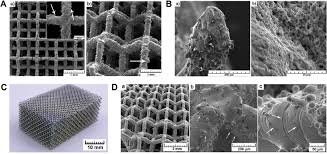
Stainless steel mesh or laser-perforated sheets is technically solid but has open gaps. Functionally, it behaves as a porous medium. However, the metal strands themselves remain non-porous; it is only the designed spacing between wires or holes that allows flow.
Porous Stainless Steel in Advanced Technologies:
Fuel cells: Stainless steel bipolar plates may have micro-perforations for gas exchange.
Acoustic damping panels: Porous structures absorb sound while remaining corrosion-resistant.
Catalyst supports: High surface area porous steel serves as a platform for chemical reactions.
Important distinction: In all engineered porous applications, stainless steel is deliberately processed to create controlled, uniform porosity, unlike the unwanted random pores seen in defective castings.
1.4 Corrosion and Hygiene: Why Non-Porosity Matters
One of stainless steel's most critical features is its resistance to corrosion, which is inherently tied to its non-porous nature:
Fluid Impermeability: No internal channels exist for water, acids, or salts to penetrate the bulk metal.
Microbial Safety: Non-porous surfaces prevent bacteria from nesting in microscopic voids. Stainless steel remains the preferred choice for surgical instruments, laboratory equipment, and food-contact surfaces.
Chemical Stability: Even in harsh environments with high chloride content, stainless steel maintains integrity because the passive film prevents corrosion pathways.
Industry example:
Pharmaceutical mixing tanks made of 316L stainless steel are exposed to acidic solvents and high-pressure steam. Despite repeated cleaning cycles, no penetration occurs because the alloy is dense and non-porous, unlike aluminum or cast iron, which could allow seepage into internal pores.
1.5 Misconceptions About Porosity
Many misconceptions arise from surface appearance or handling errors:
Rust Stains and Discoloration:
Minor surface oxidation often occurs when stainless steel contacts iron particles or chloride-rich water. This is surface contamination, not true porosity. Proper cleaning restores non-porous behavior.
Scratches and Abrasions:
Superficial scratches may appear like tiny holes but do not penetrate the metal lattice. Passivation and polishing restore a sealed surface.
"Pitted" Appearance in Corrosion:
Pitting corrosion occurs in aggressive environments (like seawater) and is sometimes interpreted as porosity. However, this is localized chemical attack, not inherent voids in the metal.
Summary: True porosity is extremely rare in solid stainless steel and typically only appears as engineered or defect-related microvoids.
1.6 Porous Stainless Steel in Filtration and Industry
While standard stainless steel is non-porous, engineered porous stainless steel is intentionally used for industrial applications:
|
Application |
Type of Porosity |
Example |
|
Chemical filtration |
Sintered mesh |
Gas-liquid separation in chemical reactors |
|
Oil & fuel |
Microporous filters |
Fuel injection systems |
|
Food & beverage |
Perforated screens |
Juice or wine filtration |
|
Aerospace |
Diffuser plates |
Pressure equalization and airflow control |
|
Medical |
Drug delivery membranes |
Controlled liquid diffusion |
These engineered pores are uniform, controlled, and reproducible, demonstrating stainless steel's versatility: it can be impermeable or selectively porous depending on design.
1.7 The Scientific Verdic
After examining the metallurgical properties, manufacturing processes, surface effects, and engineered porosity, we can confidently conclude:
Standard stainless steel is non-porous.
Its dense crystalline lattice, protective passive layer, and controlled manufacturing produce a material that is impermeable to liquids, gases, and microbes.
Micro-porosity is negligible.
Any trapped gas pockets or microvoids are isolated and do not compromise bulk integrity.
Controlled porosity is possible.
Through sintering, perforation, or mesh design, stainless steel can be engineered to allow fluid or gas passage for specialized applications.
Non-porosity is essential to its industrial appeal.
Hygiene, corrosion resistance, structural reliability, and long-term durability all rely on stainless steel's dense, impermeable nature.

1.8 Real-World Examples Reinforcing Non-Porosity
Medical Industry:
Surgical instruments, implants, and laboratory benches are exposed to repeated sterilization. Stainless steel retains its impermeability, preventing fluid absorption and bacterial growth.
Food & Beverage:
Stainless steel tanks, pipes, and conveyor systems withstand acidic juices, cleaning chemicals, and high-pressure steam without absorbing liquids or harboring contaminants.
Aerospace & Automotive:
Critical components such as exhaust systems, turbocharger housings, and fuel injection filters rely on stainless steel's impermeable properties for safety and reliability.
Architecture:
Stainless steel facades and balustrades resist environmental moisture penetration and maintain aesthetic quality over decades.
Conclusion
So, is stainless steel really porous?
In its standard, solid form-absolutely not. Stainless steel's atomic structure, protective oxide layer, and dense manufacturing process make it inherently non-porous, impermeable, and hygienic.
However, through advanced engineering, stainless steel can be deliberately made porous to serve specialized functions like filtration or energy conversion.
This duality-non-porous strength and engineered adaptability-is what makes stainless steel one of the most versatile and valuable materials across modern industries, from surgical instruments to architectural art.