






Before we can answer whether stainless steel is truly porous, we must first understand what porosity means in the context of material science. Porosity refers to the presence of tiny voids, gaps, or channels within a solid structure. These pores can vary widely in size-from microscopic (nanometers) to macroscopic (millimeters)-and they directly affect how a material interacts with air, water, gases, or other substances.
Porosity is one of the most fundamental yet misunderstood properties in material science. When people hear the word "porous," they often imagine a sponge or foam - a material full of visible holes that absorb liquids. But in industrial materials, the concept of porosity extends far deeper, down to the microscopic level of atoms and molecules. To truly understand whether stainless steel is porous, we must begin with a comprehensive view of what porosity means, how it forms, how it's measured, and why it matters in practical engineering.
1.1 What Is Porosity?
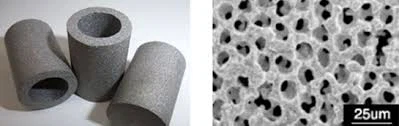
In the simplest terms, porosity refers to the proportion of empty space (voids or pores) within a solid material. It is often expressed as a percentage of the total volume and can range from nearly 0% (in dense metals like stainless steel) to over 90% (in foamed or sintered materials).
Porosity is not a defect by default. It's a design variable - sometimes unwanted, sometimes intentionally engineered. For example:
Porosity in concrete affects strength and water permeability.
Porous ceramics are used for filtration and catalysts.
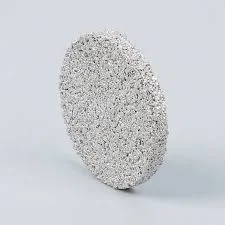
Porous metals like sintered bronze are essential in lubrication systems and mufflers.
However, for materials that require strength, hygiene, and impermeability, like stainless steel, low or zero porosity is a critical feature.
In scientific notation, porosity (φ) is calculated as:
ϕ=VvoidVtotal×100%\phi = \frac{V_{\text{void}}}{V_{\text{total}}} \times 100\%ϕ=VtotalVvoid×100%
where VvoidV_{\text{void}}Vvoid is the volume of all pores and VtotalV_{\text{total}}Vtotal is the total material volume.
1.2 The Types of Porosity
Porosity isn't one single phenomenon; it exists in various forms depending on how a material is made and used. Scientists typically classify porosity into several categories:
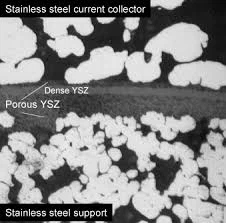
Open Porosity:
Pores are connected and accessible from the material's surface, allowing liquids or gases to penetrate. Found in foams, filters, and ceramics.
Closed Porosity:
Pores are sealed inside the material, not exposed to the surface. These voids trap gases but don't affect permeability. Found in some cast metals and glass.
Micro-Porosity:
Pores smaller than one micron (1 µm), often at grain boundaries or inclusions in metals.
Macro-Porosity:
Visible or large pores resulting from incomplete fusion or gas entrapment during casting.
In dense, well-processed stainless steel, all these porosity types are minimized to an almost negligible level, ensuring complete impermeability.
1.3 How Porosity Forms in Materials
Porosity can develop during various stages of material production:
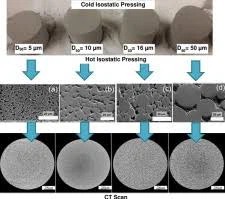
Casting: If molten metal solidifies too quickly, gases (oxygen, nitrogen, hydrogen) can become trapped, creating small voids.
Sintering: In powder metallurgy, incomplete fusion of particles leads to residual pore networks.
Welding: Gas entrapment or improper shielding may cause porosity in weld seams.
Additive Manufacturing (3D Printing): Laser or electron-beam melting may produce pores if powder density or energy input is inconsistent.
However, high-grade stainless steel undergoes controlled manufacturing - continuous casting, hot rolling, cold working, and annealing - that effectively removes these imperfections.
1.4 How Porosity Is Measured
Engineers employ several scientific techniques to detect and quantify porosity. Among the most common are:
|
Method |
Principle |
Typical Application |
|
Mercury Intrusion Porosimetry (MIP) |
Mercury forced into pores under pressure to measure volume and size |
Porous ceramics and filters |
|
Helium Pycnometry |
Uses gas displacement to measure true density vs. bulk density |
Metals and powders |
|
Optical & Electron Microscopy (SEM/TEM) |
Visual inspection of pore morphology |
Microstructure analysis |
|
X-ray Computed Tomography (Micro-CT) |
3D mapping of internal structure |
Non-destructive testing |
|
Archimedes Principle |
Buoyancy-based density measurement |
Metal and polymer samples |
For stainless steel, porosity levels are often below 0.1%, which is effectively non-porous in practical terms. This is why stainless steel components can hold pressure, prevent fluid penetration, and maintain sterile surfaces even after years of use.
1.5 Porosity and Its Effect on Material Properties
Porosity significantly influences a material's performance. The higher the porosity, the lower the strength and durability - but the higher the permeability. Let's summarize this relationship:
|
Property |
Low Porosity (Stainless Steel) |
High Porosity (Ceramic Foam) |
|
Strength |
Very high tensile and yield strength |
Brittle, weak under tension |
|
Corrosion Resistance |
Excellent - no paths for corrosion |
Poor - pores trap corrosive media |
|
Density |
High, near theoretical value |
Low, lightweight |
|
Thermal Conductivity |
Efficient heat transfer |
Insulating effect |
|
Fluid Permeability |
Impermeable |
Highly permeable |
Thus, in stainless steel, minimizing porosity means maximizing reliability and hygiene - two of its defining advantages.
1.6 Porosity in Everyday Materials vs. Stainless Steel
To grasp how unique stainless steel is, compare it with common porous and non-porous materials:
|
Material |
Typical Porosity (%) |
Porosity Type |
Notes |
|
Concrete |
10–20% |
Open/Closed |
Absorbs water, prone to cracking |
|
Ceramic |
15–30% |
Open |
Used in filters |
|
Aluminum Alloy |
0.5–1% |
Micro |
Small casting pores possible |
|
Glass |
0% |
Non-porous |
Brittle, not corrosion-resistant |
|
Stainless Steel |
<0.1% |
Negligible |
Dense, hygienic, corrosion-proof |
This comparison highlights stainless steel's exceptional density and non-porous structure, rivaled only by glass - yet offering far superior mechanical strength.
1.7 Why Porosity Matters in Engineering Applications
Porosity directly affects performance in industries such as:
Aerospace: Porous metals can fail under pressure cycling.
Food & Beverage: Porous surfaces trap microbes and compromise sanitation.
Medical Devices: Porosity in implants can lead to infection or structural fatigue.
Filtration: Controlled porosity is beneficial for selective permeability.
Therefore, understanding and controlling porosity is at the heart of modern materials engineering. Stainless steel's near-zero porosity makes it a benchmark for cleanliness and reliability, especially in sectors requiring sterile and corrosion-free environments.
1.8 The Relationship Between Porosity and Corrosion
Porosity increases the surface area where corrosion can begin. In carbon steels or cast irons, trapped moisture or chloride ions within pores accelerate rust formation. Stainless steel, on the other hand, owes its corrosion resistance to its non-porous matrix and protective chromium oxide film, which seals even micro-defects.
That combination of density + passivation explains why stainless steel endures decades in harsh marine, chemical, and industrial settings with minimal degradation.


learn more:Understanding Wire Mesh in Everyday Domestic Applications