






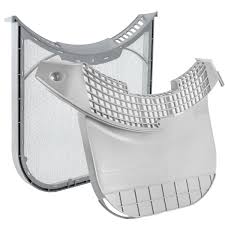
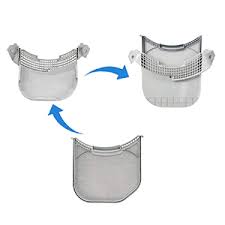
Dryers appear simple on the outside-place clothing inside, press a button, and wait for the drum to tumble your garments dry. Yet behind this convenience lies a complex airflow and heat-transfer system. Every component inside a dryer is engineered to maximize efficiency, safety, and performance. One of the most underestimated yet essential components is thewire mesh dryer lint filter.
Far from a simple screen, the lint filter is a critical element that enables optimized airflow, stable heat distribution, moisture removal, and the overall efficiency of the drying cycle. Without it, a dryer's performance would degrade rapidly, energy consumption would rise significantly, and the risk of overheating or fire would climb.
This article explores in detail how wire mesh lint filters support airflow efficiency, thermal management, moisture removal, and energy savings. It is packed with technical depth, practical examples, engineering considerations, and comparison tables to help readers fully understand the system-level role played by wire mesh lint filters.
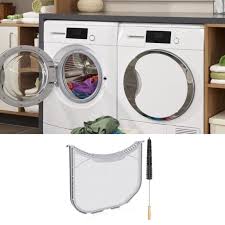
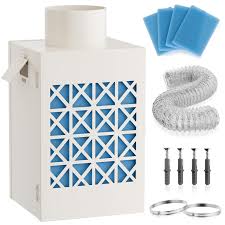
1. Airflow Fundamentals Inside a Clothes Dryer
At its core, a clothes dryer is an airflow machine: its job is to move large volumes of heated air through wet laundry to extract moisture. The process depends on four elements:
Air intake – usually from room air or recirculated internal air
Heating element or gas burner
Air circulation path inside the drum
Exhaust air path through the lint filter and vent
The lint filter sits at a crucial point between steps 3 and 4-it catches lint released during drying before it can blow into the exhaust duct.
To appreciate why the lint filter is so important, consider the airflow numbers.
A typical household dryer moves about:
150–200 CFM (Cubic Feet per Minute) of air
Heated to 120–165°F (49–74°C) depending on setting
Cycling continuously for 30–60 minutes
This airflow must remain stable; otherwise:
Drying takes longer
Moisture removal becomes inefficient
The heater works harder
Energy usage increases
Components may overheat
Even small disruption to airflow results in noticeable performance deterioration. This is why the lint filter's ability to allow high airflow while filtering particles is crucial.
2. Why Wire Mesh is an Ideal Filtration Medium for Dryers
Manufacturers use many types of lint screens-plastic mesh, nylon mesh, perforated metal, or stainless wire mesh. Among these, wire mesh offers a unique balance of:
High open area
Low airflow resistance
Durability
Temperature stability
Long cleaning life
Consistent pore size
A dryer environment is harsh:
Repeated heat cycles
Moisture exposure
Lint saturated airflow
Chemical residues from detergents
Physical abrasion
User cleaning and handling stress
Wire mesh survives these conditions better than any other consumer-grade filtration material.
2.1 Mechanical Strength & Dimensional Stability
The mesh must maintain its geometry-specifically pore size-to provide consistent filtration and airflow. Plastics soften with heat, warp after months of use, or degrade with scrubbing. Wire mesh, however:
Maintains pore uniformity
Retains tension
Resists deformation
Doesn't soften with heat
This stability directly ensures predictable airflow performance across the product's lifespan.
2.2 Superior Heat Resistance
Dryers reach internal air temperatures of up to 165°F (74°C) on high heat cycles. The lint filter experiences slightly lower but still elevated temperatures. Wire mesh-often stainless steel-can handle:
Continuous temps of 500–700°F
Momentary temps up to 1,500°F
This is far above normal dryer temperatures, which means:
No melting
No structural weakening
No outgassing
No pore deformation
Other materials cannot match this thermal resilience.
2.3 High Open Area for Airflow Efficiency
Wire mesh offers 30%–70% open area depending on specification, allowing extremely efficient airflow with low pressure drop. This directly improves drying performance because the blower expends less energy moving air.
This is a key functional advantage: optimal filtration with minimal resistance.
2.4 Easy-Clean & Long-Life Performance
Lint filters must be cleaned after every dryer cycle. Wire mesh withstands:
Scrubbing
Rinsing
Washing
Repeated reinsertion
Even after thousands of cycles, the metal mesh remains intact.
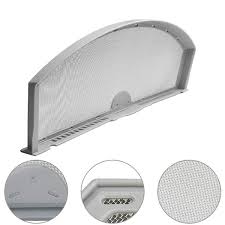
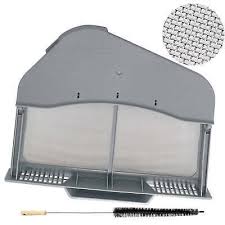
3. Where the Lint Filter Sits in the Dryer Air Path
Most dryers position the lint filter either:
At the front of the drum (common in modern machines)
On the dryer top panel (older models)
Inside the exhaust duct as a secondary lint screen
The location matters because it influences:
Air velocity at the filter
Lint concentration at the filter
Access and cleaning habit of the user
Regardless of the exact placement, the lint filter is always designed to intercept lint before the airflow reaches the blower or ducts.
4. How the Lint Filter Enables Efficient Airflow
Airflow efficiency is the most significant functional benefit offered by wire mesh lint filters.
4.1 Airflow Resistance
Engineers measure airflow restriction using pressure drop (ΔP).
A clean, well-designed wire mesh lint filter typically produces a:
ΔP of 5–20 Pa at standard dryer airflow
This is extremely low. Higher resistance would:
Increase drying time
Waste energy
Stress the blower motor
Raise temperature inside the dryer
Wire mesh's uniform structure helps minimize turbulence and maintain laminar airflow.
4.2 Airflow Uniformity Across the Drum
Even distribution of air ensures consistent drying. If airflow becomes uneven:
Some clothes dry faster
Others remain damp
Wrinkling increases
Hotspots can develop
The lint filter is engineered to help maintain balanced pressure and flow by preventing duct blockage.
4.3 Maintaining Air Velocity for Moisture Removal
Dryers remove moisture through evaporation. Evaporation speed depends on:
Air temperature
Air velocity
Air humidity
The lint filter ensures airflow velocity remains high enough to transport vapor out of the drum.
If lint accumulates internally (without a filter), airflow slows and humidity rises, making drying far less efficient.
4.4 Preventing Air Leakage and Backflow
If the lint filter did not exist, lint would:
Build up in ducts
Cause blockages
Increase back pressure
Potentially force air back into the drum
A proper lint filter prevents this by ensuring the airflow path remains clear.
5. How the Lint Filter Supports Heat Transfer
Heat transfer is another area directly affected by lint filter performance.
5.1 Stable Air Temperature Distribution
Hot air from the heater must travel freely into the drum. If lint accumulates in the ducts:
Hot air cannot move effectively
Heat gets trapped around the heater
Thermal cutoffs may trip
Drying performance drops
Wire mesh lint filters minimize lint migration, maintaining clear ducts for heat flow.
5.2 Preventing Overheating of the Dryer
Lint buildup can cause:
Temperature spikes near the heater
Destruction of thermostats
Fire risk
Early burner or heating element failure
The lint filter mitigates these risks by preventing clogging downstream.
5.3 Supporting Efficient Moisture Evaporation
The drying process is fundamentally evaporative. Air must:
Be heated
Absorb moisture from clothes
Exit through the filter
Carry moisture to the vent
A clogged exhaust restricts step 3, slowing evaporation. Wire mesh lint filters prevent clogging, ensuring:
High evaporation rate
Stable humidity inside the drum
Faster drying cycles
6. How the Lint Filter Improves Dryer Energy Efficiency
Energy efficiency is a major concern for households, laundromats, and commercial laundry facilities. A clean wire mesh lint filter supports efficient operation in several ways.
6.1 Shorter Drying Cycles
Studies show a clogged lint filter can extend drying times by 25–60%.
Because wire mesh is easy to clean and maintains airflow, dryers with mesh lint filters experience:
Faster moisture removal
Shorter cycles
Reduced energy consumption
6.2 Lower Heating Element Workload
If airflow is restricted:
The heater must run longer
The dryer draws more power
The drum stays hot longer
This increases total kilowatt-hours per cycle.
A clean wire mesh filter reduces runtime by enabling efficient heat exchange.
6.3 Reduced Wear on the Blower Motor
Restricted airflow forces the blower motor to work harder, leading to:
Higher electricity consumption
Faster motor wear
Increased noise
Higher maintenance cost
Wire mesh filtration helps keep the blower path clear.
6.4 Minimizing Duct Cleaning Frequency
When the lint filter captures more lint, less enters the ducts. This reduces the need for:
Professional duct cleaning
Maintenance shutdowns
Fire hazard inspections
7. Table: How Wire Mesh Filters Influence Dryer Performance
Below is a table summarizing how the lint filter affects the most important dryer performance categories.
|
Dryer Performance Factor |
Effect of Clean Wire Mesh Filter |
Effect of Dirty/Clogged Filter |
Impact |
|
Airflow (CFM) |
High airflow, low resistance |
Restricted airflow, high ΔP |
Faster vs. slower drying |
|
Heat Transfer |
Stable heat movement |
Hot air trapped near heater |
Efficient vs. overheated |
|
Humidity Extraction |
Rapid moisture removal |
Slow vapor evacuation |
Fast vs. damp loads |
|
Energy Consumption |
Lower electricity usage |
Heater/blower run longer |
Saves vs. wastes energy |
|
Drying Time |
Shorter cycles |
25–60% longer cycles |
Efficient vs. inefficient |
|
Component Stress |
Low stress |
High temp + motor strain |
Long vs. short lifespan |
|
Safety |
Low fire risk |
High lint ignition risk |
Safe vs. hazardous |
8. Failure Scenarios When the Lint Filter is Missing or Dirty
Understanding the consequences emphasizes its importance.
8.1 Dramatic Loss of Airflow
Without filtration:
Lint enters ducts
Builds up fast
Reduces CFM
Increases exhaust temperatures
Causes overheating
Airflow decline severely impacts drying performance.
8.2 Fire Hazard Escalation
Lint is highly flammable due to:
High surface area
Dry fibers
Low ignition temperature (as low as 200°C)
Lint collecting near the heater element is a major fire hazard.
8.3 Damage to Sensors and Heaters
Blocked airflow causes:
Overheating of the thermostat
Heater element burnout
Cycling of thermal fuse
Premature component failure
Replacing these parts is costly.
8.4 Increased Operating Cost
Longer cycles equal:
Higher electricity bills
More mechanical wear
Greater maintenance frequency
A clean mesh lint filter prevents this.
9. Engineering Perspective: Why Filtration Quality Matters
Lint particles vary widely in shape and size:
Cotton fibers: 10–40 µm
Polyester fibers: 12–25 µm
Wool fragments: 20–50 µm
Dust, skin flakes, debris: 2–20 µm
Wire mesh pore sizes are typically:
300–600 µm
Large enough for airflow; small enough to trap most lint.
Engineers choose the mesh parameters to maximize lint capture without obstructing airflow.
10. The Relationship Between User Behavior and Performance
Even the best filter fails if neglected.
10.1 Cleaning Frequency Matters
Recommended cleaning:
After every load
Monthly deep cleaning to remove softener residue
10.2 Incorrect Reinstallation Causes Bypass
If the filter is not seated properly:
Air sneaks around the frame
Lint enters ducts
Clogs develop
10.3 Damaged Filters Lead to Performance Loss
Torn mesh or cracked frames let lint through. Regular inspection is necessary.
11. Life-Cycle Value of Wire Mesh Lint Filters
Wire mesh filters last significantly longer than plastic or nylon counterparts.
11.1 Long-Term Durability
Typical lifespan:
5–10 years with regular cleaning
Some last the entire lifetime of the dryer
11.2 Reduced Replacement Frequency
Plastic filters often deform after:
200–500 cycles
Wire mesh filters can handle:
Thousands of cycles
11.3 Lower Total Cost of Ownership
When factoring:
Energy savings
Reduced repairs
Reduced duct cleaning
Fewer filter replacements
Wire mesh performs best overall.
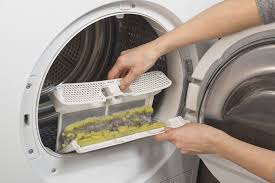
read more:Maintenance, Safety, Performance Optimization & Long-Term Cost Benefits of Wire Mesh Dryer Lint Filters
12. Summary
Wire mesh lint filters are foundational to dryer performance because they:
Maintain high airflow
Improve heat transfer
Reduce drying time
Enhance energy efficiency
Minimize wear on components
Maximize safety
Reduce long-term operating cost
Although small, the lint filter is one of the most impactful components in the entire dryer system.