





316 and 316L stainless steel mesh are widely recognized for their superior corrosion resistance in aggressive environments. By alloying molybdenum into the austenitic stainless steel structure, these grades offer enhanced protection against chlorides, acids, and marine exposure compared to 304 stainless steel. As a result, 316 and 316L mesh are frequently specified for chemical processing, marine filtration, pharmaceutical production, and high-reliability industrial systems where material failure is not an option.
Chemical Composition and Corrosion Resistance
Role of Molybdenum in Corrosion Protection
The defining difference between 316-series and 304 stainless steel is the addition of molybdenum. This element significantly improves resistance to pitting and crevice corrosion, particularly in chloride-rich environments such as seawater or salt-laden industrial fluids. For filtration systems exposed to aggressive chemicals, molybdenum-enhanced mesh ensures longer service life and stable performance.
Resistance to Chlorides and Acids
316 and 316L stainless steel mesh performs exceptionally well in environments containing chlorides, sulfuric acid, phosphates, and various industrial solvents. This makes them suitable for chemical reactors, fluid transfer systems, and offshore equipment. Their corrosion resistance reduces the risk of mesh degradation, contamination, and unexpected system downtime.
Comparison Between 316 and 316L Grades
While both grades share similar chemical resistance, 316L contains a lower carbon content. This reduces the risk of carbide precipitation during welding or high-temperature exposure. In applications involving welding or prolonged thermal cycles, 316L mesh provides superior intergranular corrosion resistance, making it the preferred choice for critical assemblies.
Long-Term Stability in Harsh Conditions
In continuous-operation systems, long-term stability is essential. 316-series mesh maintains structural integrity and filtration accuracy over extended periods, even when exposed to fluctuating temperatures and aggressive chemicals. This reliability is a key reason it is favored in mission-critical filtration applications.
Mechanical Properties and Fabrication Characteristics
Strength and Ductility
316 and 316L stainless steel mesh retain excellent tensile strength while offering high ductility. This balance allows the mesh to withstand pressure differentials, vibration, and mechanical stress without cracking or deformation. These properties are especially valuable in high-pressure filtration and industrial screening systems.
Weaving and Mesh Accuracy
Fine wire drawing and precision weaving enable 316-series mesh to achieve consistent aperture sizes and micron-level filtration accuracy. This precision ensures predictable flow rates and particle retention, which is essential for chemical and pharmaceutical filtration processes.
Weldability and Formability
316L mesh is particularly well-suited for welded filter elements, sintered components, and complex geometries. The low carbon content minimizes heat-affected zone corrosion, allowing manufacturers to produce durable filter cartridges, discs, and cylinders without compromising corrosion resistance.
Compatibility with Advanced Manufacturing Methods
316 and 316L mesh can be combined with sintering, pleating, or multilayer lamination techniques. These fabrication methods enhance strength and filtration efficiency while maintaining chemical resistance, making the material adaptable to custom and high-performance filtration designs.
Applications in Corrosive and Marine Environments
Chemical Processing and Petrochemical Systems
In chemical plants, 316-series mesh is commonly used for catalyst support, liquid filtration, and gas separation. Its resistance to aggressive chemicals ensures consistent performance and reduces contamination risks in sensitive processes.
Marine and Offshore Filtration
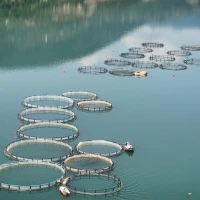
Saltwater exposure presents severe corrosion challenges. 316 and 316L stainless steel mesh are widely used in seawater filtration, desalination systems, and offshore platforms due to their resistance to chloride-induced corrosion and biofouling.
Pharmaceutical and Biotech Applications
Hygiene, corrosion resistance, and cleanability are critical in pharmaceutical environments. 316L mesh meets stringent industry standards, supports sterilization processes, and prevents product contamination, making it ideal for sterile filtration and equipment protection.
Food and Beverage Processing in Aggressive Conditions
Where food processing involves acidic ingredients or frequent washdowns with chemical cleaners, 316-series mesh provides a reliable solution. Its corrosion resistance and clean surface help maintain product safety and regulatory compliance.
Design and Selection Considerations
Mesh Size and Filtration Efficiency
Selecting the appropriate mesh size is crucial for balancing flow rate and particle retention. 316 and 316L mesh are available in a wide range of apertures to accommodate both coarse pre-filtration and fine micron-level separation.
Environmental Exposure Assessment
Engineers must evaluate chemical composition, temperature, pressure, and exposure duration when selecting between 316 and 316L. In welded or high-temperature environments, 316L is generally recommended to ensure long-term corrosion resistance.
Cost vs. Performance Trade-Off
Compared to 304 stainless steel, 316-series mesh has a higher material cost. However, in corrosive environments, the extended service life and reduced maintenance often result in lower total ownership costs.
Integration into Multi-Stage Filtration Systems
316 and 316L mesh are frequently used as final filtration layers or structural supports in multi-stage systems. Their durability protects downstream components and ensures consistent filtration under harsh operating conditions.
Performance of 316 and 316L
Stainless Steel Mesh in Chloride-Rich Environments
Chloride-induced corrosion is one of the most aggressive and common failure mechanisms affecting filtration components in industrial systems. Applications involving seawater, brine solutions, cooling towers, and chemical processing fluids often expose filter media to high concentrations of chlorides, which can rapidly attack standard stainless steel grades. 316 and 316L stainless steel mesh are specifically engineered to address this challenge through the addition of molybdenum, which significantly enhances resistance to pitting and crevice corrosion.
In practical filtration systems, stainless steel mesh is continuously exposed to flowing liquids, pressure fluctuations, and localized oxygen depletion, all of which can accelerate corrosion in inferior materials. 316 and 316L mesh maintain surface stability under these conditions, preventing localized metal loss that could enlarge apertures, weaken structural integrity, or release metal particles downstream. This stability is particularly critical in fine filtration applications, where even minor changes in pore geometry can compromise filtration accuracy and system reliability.
Furthermore, long-term exposure testing has shown that 316 and 316L meshes exhibit substantially lower corrosion rates compared to 304 stainless steel in chloride environments. This performance advantage translates directly into longer service life, reduced replacement frequency, and improved total cost of ownership for operators managing corrosive process fluids.
Selecting Between 316 and 316L
Mesh for Long-Term Chemical Filtration Reliability
While 316 and 316L stainless steel meshes share nearly identical chemical compositions, the reduced carbon content of 316L plays a decisive role in long-term reliability for chemically aggressive filtration systems. During fabrication processes such as welding, sintering, or brazing, higher carbon levels can promote chromium carbide precipitation along grain boundaries, reducing corrosion resistance in affected zones. 316L minimizes this risk, preserving corrosion performance after thermal processing.
In chemical filtration systems operating continuously at elevated temperatures, this distinction becomes particularly important. 316L mesh maintains intergranular corrosion resistance even after repeated thermal cycling, making it a preferred choice for filter elements used in reactors, acid circulation loops, and solvent recovery systems. Its metallurgical stability ensures that both mechanical strength and corrosion resistance remain consistent throughout extended service intervals.
However, in applications where welding is minimal or operating temperatures remain moderate, standard 316 mesh may still provide sufficient performance at a slightly lower material cost. Engineers must therefore evaluate not only the chemical environment but also fabrication methods, operating temperature, and maintenance expectations when selecting between 316 and 316L. Proper material selection at this stage ensures filtration systems remain reliable, safe, and compliant over their full operational lifespan.
Conclusion
316 and 316L stainless steel mesh are engineered for environments where corrosion resistance is critical. The addition of molybdenum significantly enhances performance in chloride-rich, acidic, and marine conditions, making these grades indispensable for chemical processing, offshore systems, and pharmaceutical applications. Their mechanical strength, fabrication flexibility, and long-term stability ensure reliable filtration performance even under demanding operational conditions.
When selecting between 316 and 316L, factors such as welding requirements, thermal exposure, and environmental aggressiveness should guide the decision. Although the initial cost is higher than standard grades, the improved durability and reduced maintenance requirements often justify the investment. Proper specification and integration allow 316-series stainless steel mesh to deliver consistent, high-performance results in corrosive environments.
To better understand how 316 and 316L compare with other stainless steel mesh grades in terms of corrosion resistance, strength, and cost, refer back to the main article:
Main Article: Understanding the Different Grades of Stainless Steel Mesh: 304, 316, 316L, and 430.