






As a seasoned perforated tube supplier, I've witnessed firsthand the pivotal role that quality standards play in the manufacturing and application of these essential products. Perforated tubes are used in a wide range of industries, from automotive and aerospace to filtration and architecture. Ensuring that these tubes meet rigorous quality standards is not only a matter of regulatory compliance but also a key factor in delivering reliable and high - performance solutions to our customers.
Material Quality
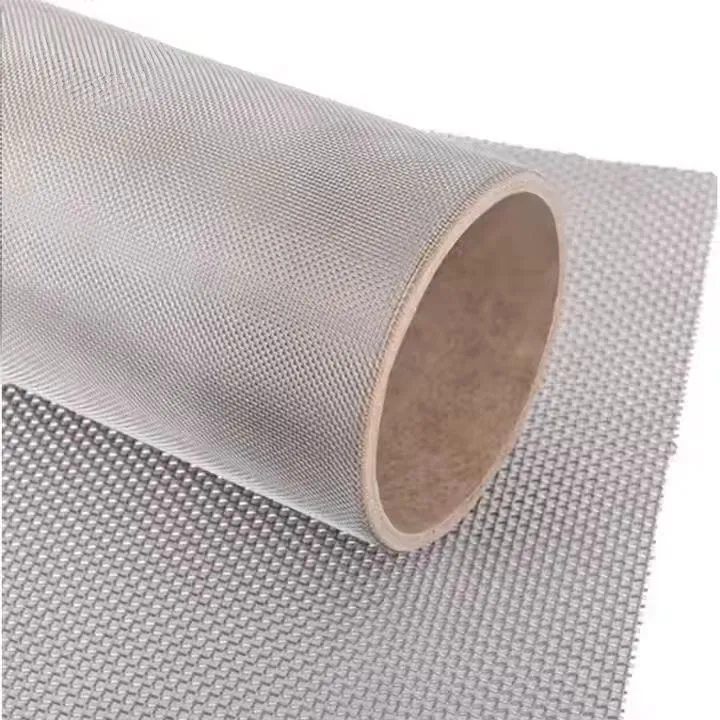
The foundation of a high - quality perforated tube lies in the material from which it is made. We source our raw materials from reputable suppliers who adhere to strict quality control procedures. For instance, when using stainless steel, we typically opt for grades like 304L. The 304L Stainless Steel Wire Mesh is known for its excellent corrosion resistance, high strength, and good formability. This grade contains low carbon content, which minimizes the risk of carbide precipitation during welding, making it suitable for applications where weldability is crucial.
Nickel - based alloys are another popular choice for perforated tubes, especially in high - temperature and corrosive environments. Our Nickle Wire Mesh offers superior resistance to oxidation and corrosion, making it ideal for use in chemical processing plants, power generation facilities, and marine applications.
Material certification is a must - have for us. Every batch of raw material we receive comes with a detailed certificate that verifies its chemical composition, mechanical properties, and compliance with relevant industry standards. This documentation allows us to track the origin of the material and ensures that it meets the specific requirements of our customers.
Perforation Accuracy
The accuracy of the perforations is a critical quality parameter for perforated tubes. The size, shape, and pattern of the holes can significantly impact the tube's performance. For example, in filtration applications, the hole size determines the particle size that can pass through the tube, while the pattern affects the flow rate and distribution of the fluid.
We use advanced CNC punching machines and laser cutting technology to achieve precise perforation. These machines are programmed with high - precision software that allows us to control the hole diameter, pitch, and pattern with micron - level accuracy. Our technicians regularly calibrate the machines to ensure consistent performance and to minimize errors.
In addition to accuracy, the quality of the perforation edges is also important. Sharp or jagged edges can cause damage to the material passing through the tube or lead to premature wear and tear. We use deburring processes to smooth the edges of the holes, ensuring a clean and uniform finish.
Dimensional Tolerance
Maintaining strict dimensional tolerance is essential for the proper fit and functionality of perforated tubes. The outer diameter, wall thickness, and length of the tube must be within the specified tolerance range. Any deviation from these dimensions can lead to installation problems, reduced performance, or even safety hazards.
We have a comprehensive quality control system in place to monitor the dimensional accuracy of our perforated tubes. Our in - house inspection team uses precision measuring tools such as calipers, micrometers, and laser measuring devices to check the dimensions at various stages of the manufacturing process. If any non - conformities are detected, the tubes are either reworked or rejected to ensure that only products that meet the required specifications are sent to our customers.
Surface Finish
The surface finish of a perforated tube can affect its appearance, corrosion resistance, and cleanability. We offer a variety of surface finishes to meet the diverse needs of our customers. For decorative applications, we can provide tubes with a polished or brushed finish to enhance their aesthetic appeal. In industrial settings, a smooth or coated surface can help prevent the accumulation of dirt and debris, making the tubes easier to clean and maintain.
We use advanced surface treatment techniques such as electro - polishing, passivation, and powder coating to achieve the desired surface finish. Electro - polishing, for example, not only improves the surface smoothness but also enhances the corrosion resistance of the tube by removing surface contaminants and creating a passive oxide layer.
Weld Quality (if applicable)
In some cases, perforated tubes may require welding to join different sections or to attach fittings. Weld quality is of utmost importance in these applications, as a poor - quality weld can compromise the structural integrity of the tube and lead to leaks or failures.
Our welders are highly skilled and certified to perform welding operations according to industry standards. We use advanced welding techniques such as TIG (Tungsten Inert Gas) welding and MIG (Metal Inert Gas) welding, which offer precise control over the welding process and produce high - quality welds.
Before welding, we carefully prepare the surfaces to be joined to ensure proper fusion. After welding, the welds are inspected using non - destructive testing methods such as ultrasonic testing, X - ray testing, and dye penetrant testing to detect any internal defects.
Testing and Inspection
To ensure that our perforated tubes meet the highest quality standards, we conduct a series of tests and inspections at every stage of the manufacturing process. Incoming raw materials are inspected for quality and compliance, and the finished products undergo a final inspection before shipment.
We perform mechanical tests such as tensile testing, hardness testing, and impact testing to evaluate the strength and durability of the tubes. Chemical analysis is also carried out to verify the chemical composition of the material. In addition, we conduct functional tests to simulate real - world operating conditions and to ensure that the tubes perform as expected.
Our quality control team maintains detailed records of all tests and inspections, which are available to our customers upon request. This transparency allows our customers to have full confidence in the quality of our products.
Compliance with Industry Standards
Our perforated tubes are designed and manufactured to comply with a wide range of national and international standards. We stay up - to - date with the latest industry regulations and requirements to ensure that our products meet or exceed the expectations of our customers.
Some of the common standards we adhere to include ASTM (American Society for Testing and Materials), ISO (International Organization for Standardization), and ASME (American Society of Mechanical Engineers). These standards cover various aspects of perforated tube manufacturing, including material specifications, perforation requirements, and testing methods.

Customer - Specific Requirements
In addition to meeting industry standards, we also work closely with our customers to understand their specific requirements. Every project is unique, and we are committed to providing customized solutions that meet the exact needs of our clients.
Whether it's a special hole pattern, a specific material grade, or a unique surface finish, we have the expertise and capabilities to deliver high - quality perforated tubes that are tailored to our customers' specifications. Our technical support team is always available to provide advice and guidance throughout the project, from design to installation.
Conclusion
As a perforated tube supplier, we understand that quality is not just a buzzword; it's the cornerstone of our business. By adhering to strict quality standards in material selection, perforation accuracy, dimensional tolerance, surface finish, weld quality, and testing, we are able to provide our customers with reliable and high - performance perforated tubes.
If you are in the market for perforated tubes and are looking for a supplier who can meet your quality requirements, we would love to hear from you. Whether you need a small batch for a prototype or a large - scale production run, we have the capacity and expertise to deliver. Contact us today to discuss your project and to get a quote.
References
- ASTM International. Various ASTM standards related to metals and perforated products.
- ISO. International standards for quality management and manufacturing processes.
- ASME. Codes and standards for mechanical engineering and pressure vessels.