






Can Ss Wire Mesh be used for 3D printing?
In the dynamic landscape of manufacturing and technology, 3D printing has emerged as a revolutionary force, transforming the way we create objects. It offers unparalleled flexibility in design, enabling the production of complex geometries that were once difficult or impossible to achieve using traditional manufacturing methods. As a supplier of Ss Wire Mesh, I've often been asked about the potential of using Ss Wire Mesh in 3D printing. In this blog post, we'll explore this question in detail, considering the properties of Ss Wire Mesh, the requirements of 3D printing, and the current state of research and applications.
Understanding Ss Wire Mesh
Ss Wire Mesh, or Stainless Steel Wire Mesh, is a versatile material known for its strength, durability, and corrosion resistance. It is made by weaving or welding stainless steel wires together to form a grid-like structure. The properties of Ss Wire Mesh can vary depending on the type of stainless steel used (such as 316L Stainless Steel Wire Mesh), the wire diameter, and the mesh size. These variations allow Ss Wire Mesh to be used in a wide range of applications, from filtration and screening to architectural and decorative purposes.
The key properties of Ss Wire Mesh that make it an interesting candidate for 3D printing include:
- Strength and Durability: Stainless steel is a strong and durable material, which can provide structural integrity to 3D printed objects. This is particularly important for applications where the printed part needs to withstand mechanical stress or harsh environmental conditions.
- Corrosion Resistance: Stainless steel has excellent corrosion resistance, making it suitable for use in applications where the printed object may be exposed to moisture, chemicals, or other corrosive substances.
- Thermal Conductivity: Stainless steel has relatively good thermal conductivity, which can be beneficial in some 3D printing processes that involve heat transfer, such as metal 3D printing.
The Basics of 3D Printing
3D printing, also known as additive manufacturing, is a process of creating three-dimensional objects by adding material layer by layer. There are several different 3D printing technologies available, each with its own set of materials and processes. Some of the most common 3D printing technologies include:
- Fused Deposition Modeling (FDM): This is one of the most widely used 3D printing technologies. It works by extruding a thermoplastic filament through a heated nozzle and depositing it layer by layer to build the object.
- Stereolithography (SLA): SLA uses a laser to cure a liquid resin into solid layers. It is known for its high precision and ability to produce smooth surfaces.
- Selective Laser Sintering (SLS): SLS uses a laser to sinter (fuse) powdered material, such as plastic or metal, layer by layer to create the object.
- Direct Metal Laser Sintering (DMLS): This is a metal 3D printing technology that uses a laser to melt and fuse metal powder particles together to form a solid object.
The choice of 3D printing technology depends on several factors, including the type of material to be used, the complexity of the object, the required accuracy and surface finish, and the production volume.
Using Ss Wire Mesh in 3D Printing
The use of Ss Wire Mesh in 3D printing is still in its early stages, but there are several potential ways in which it can be incorporated into the process:

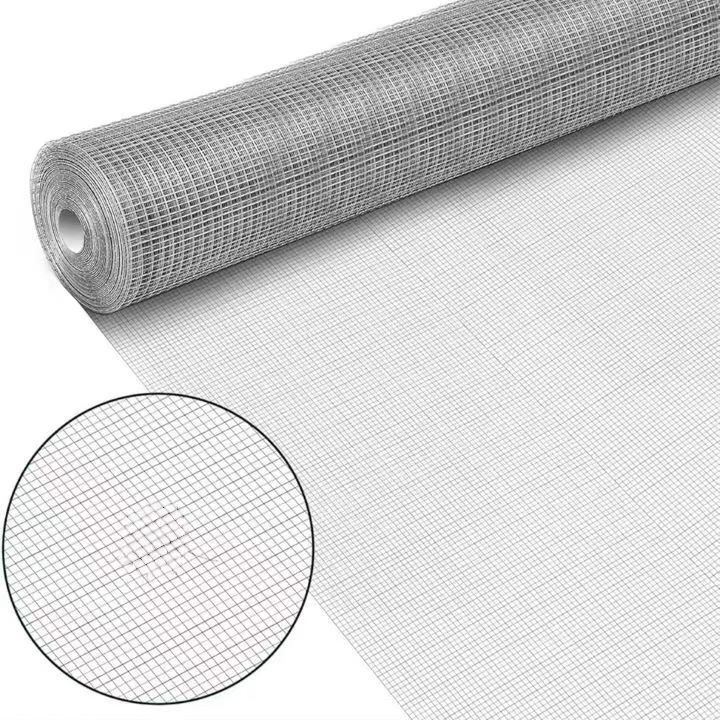
- Reinforcement: Ss Wire Mesh can be used as a reinforcement material in 3D printed objects. By embedding the wire mesh within the printed part, it can enhance the strength and stiffness of the object. This approach is similar to the use of rebar in concrete structures. For example, in a 3D printed plastic part, the Ss Wire Mesh can be placed strategically to improve its mechanical properties, such as tensile strength and impact resistance.
- Hybrid Printing: Another approach is to combine Ss Wire Mesh with other 3D printing materials. For instance, a 3D printer can be used to deposit a polymer material around the wire mesh, creating a hybrid structure. This can allow for the creation of objects with unique combinations of properties, such as a flexible polymer outer layer with a rigid wire mesh core.
- Direct 3D Printing of Wire Mesh Structures: Some researchers are exploring the possibility of directly 3D printing wire mesh structures using metal 3D printing technologies. This would involve using a metal powder or wire feedstock to create the wire mesh pattern layer by layer. However, this approach presents several challenges, such as controlling the wire diameter and mesh size, and ensuring the proper bonding between the layers.
Challenges and Limitations
While the potential of using Ss Wire Mesh in 3D printing is exciting, there are also several challenges and limitations that need to be addressed:
- Material Compatibility: Ensuring the compatibility of Ss Wire Mesh with the 3D printing materials and processes is crucial. For example, in FDM printing, the wire mesh needs to be able to withstand the high temperatures of the extruded thermoplastic without melting or deforming. In metal 3D printing, the wire mesh needs to be able to bond properly with the metal powder or wire feedstock.
- Design and Fabrication Complexity: Incorporating Ss Wire Mesh into 3D printed objects adds an additional level of design and fabrication complexity. Designers need to consider the orientation and placement of the wire mesh to optimize its performance, and the manufacturing process needs to be carefully controlled to ensure the proper integration of the wire mesh with the printed material.
- Cost: The cost of Ss Wire Mesh and the 3D printing processes involved can be relatively high, especially for large-scale production. This may limit the widespread adoption of Ss Wire Mesh in 3D printing applications.
Current Research and Applications
Despite the challenges, there is ongoing research and development in the area of using Ss Wire Mesh in 3D printing. Some researchers are exploring the use of Ss Wire Mesh in the aerospace and automotive industries, where the combination of strength, durability, and lightweight properties is highly desirable. For example, 3D printed parts reinforced with Ss Wire Mesh could be used in aircraft components or automotive engine parts.
In addition, there are some emerging applications in the field of architecture and construction. Ss Wire Mesh can be used to create 3D printed architectural elements, such as facades and partitions, which offer both aesthetic and functional benefits. The corrosion resistance of stainless steel makes it suitable for outdoor applications, and the ability to create complex geometries using 3D printing allows for unique and innovative designs.
Conclusion
In conclusion, the use of Ss Wire Mesh in 3D printing has the potential to open up new possibilities in manufacturing and design. While there are still challenges to overcome, the unique properties of Ss Wire Mesh, such as its strength, durability, and corrosion resistance, make it an attractive material for a variety of 3D printing applications. As research and development in this area continue, we can expect to see more innovative uses of Ss Wire Mesh in 3D printing in the future.
If you're interested in exploring the potential of using Ss Wire Mesh in your 3D printing projects, or if you have any questions about our Ss Wire Mesh products, we'd be happy to discuss your needs. Whether you're a researcher, a designer, or a manufacturer, we can provide you with the high-quality Ss Wire Mesh and technical support you need. Contact us to start a conversation about how we can work together to bring your ideas to life.
References
- Gibson, I., Rosen, D. W., & Stucker, B. (2010). Additive manufacturing technologies: rapid prototyping to direct digital manufacturing. Springer Science & Business Media.
- Wohlers, T., & Gornet, P. (2017). Wohlers report 2017: 3D printing and additive manufacturing state of the industry. Wohlers Associates.
- ASTM International. (2015). Standard terminology for additive manufacturing technologies. ASTM F2792 - 12a.