







316 stainless steel mesh screen is used for particle sizing, material separation, liquid screening, guards and water-treatment equipment. The working variables are aperture, open area, wire diameter, screen tension and frame fit. Molybdenum in 316 improves resistance in many chloride and chemical environments, but it does not replace a proper particle-size and throughput calculation.
CHG Metal supplies 316 and 316L screen mesh as rolls, cut sheets, discs and framed panels. A useful inquiry states what is being screened, the particle range, machine width and tension method rather than only a mesh count.
316 Screen Mesh at a Glance
- Duties: particle sizing, liquid screening, powder cleanup, guards and water treatment.
- Common range: 40-200 mesh; coarser guards and finer sizing are selected by duty.
- Construction: plain square, twill fine mesh and Dutch weave serve different screening or filtration goals.
- Supply: rolls, sheets, discs, framed panels and drawing-based tensioned parts.
Common 316 Screen Specifications
| Mesh Count | Wire Diameter (mm) | Opening Size (mm) | Approx. Filtration (µm) |
|---|---|---|---|
| 40 Mesh | 0.21 | 0.42 | 350–400 |
| 60 Mesh | 0.16 | 0.26 | 250–300 |
| 80 Mesh | 0.14 | 0.17 | 180–200 |
| 100 Mesh | 0.10 | 0.15 | 130–150 |
| 150 Mesh | 0.065 | 0.10 | 80–100 |
| 200 Mesh | 0.053 | 0.07 | 60–70 |
| Weave Type | Structure Feature | Filtration Accuracy | Typical Application |
|---|---|---|---|
| Plain Weave | Simple over-under | Medium | General filtration |
| Twill Weave | Tighter structure | High | Fine filtration |
| Dutch Weave | Warp & weft unequal | Very High | Precision filtration |
| Industry | Recommended Mesh | Material Grade | Notes |
|---|---|---|---|
| Hydraulic Oil | 100–200 Mesh | 316L | High pressure resistance |
| Chemical Processing | 150–300 Mesh | 316 / 316L | Corrosion resistant |
| Marine Filtration | 60–150 Mesh | 316L | Saltwater resistance |
| Food & Beverage | 80–200 Mesh | 316L Food Grade | Hygienic & reusable |
| Fuel Filtration | 120–250 Mesh | 316L | Stable filtration |
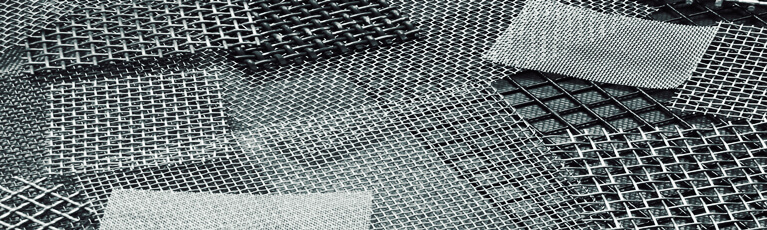


Balancing Open Area and Wire Diameter
At the same mesh count, thinner wire gives larger openings, higher open area and more throughput, but lower strength and wear resistance. Thicker wire lasts longer in heavy duty but reduces open area and flow. Mining and construction screens therefore focus on coarse wire and support, while fine powders need accurate, uniform openings and flat cloth.
The corrosion benefit of 316 does not replace abrasion design. High-wear material may need reinforced edges, support bars, a stronger tension system or a different alloy and surface strategy.
Rolls, Framed Panels and Replacement Screens
Rolls suit continuous cutting and customer tensioning. Framed panels are supplied as a replaceable unit, where outer dimensions, tension, flatness, sealing face and mounting holes become critical. Discs and basket screens also need center holes, reinforcing rings and controlled burrs.
CHG Metal can shear, roll, weld, hem and frame 316 screen to drawing. Dispatch checks cover loose areas, edge cracking, opening distortion and identification.
FAQ
Q: Is 316 screen mesh suitable for food or chemical screening?
A: 316 is common in general food and chemical environments. The actual medium, temperature and cleaning chemicals still need review; welded parts may call for 316L.
Q: Does a higher mesh count always give finer screening?
A: Opening normally becomes smaller, but wire diameter and weave also matter. Moisture and flow behaviour affect actual passage.
Q: Can you supply framed screen panels?
A: Yes. Provide the outer frame, mounting holes, tension method and screen dimensions.
Request a Quote
Send the material, particle range, machine model, screen dimensions, mesh or aperture, wire diameter, tension method and quantity to CHG Metal for a screen quotation.


