






Introduction
Filter bags are not simple fabric sleeves - they are engineered filtration media built from advanced polymers, inorganic fibers, and composite structures designed to operate in some of the most demanding industrial environments on earth. From cement kilns producing highly abrasive dust at elevated temperatures, to pharmaceutical plants requiring sterile liquid filtration, the material composition of a filter bag determines efficiency, reliability, compliance, and lifecycle cost.
Understanding what filter bags are made of requires knowledge of polymer chemistry, fiber manufacturing, textile engineering, and fluid dynamics. This article explores the science behind filter bag materials, how molecular structure influences performance, and how industrial engineers translate material properties into real-world filtration solutions.
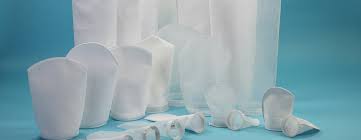
1. Fundamental Material Categories
All industrial filter bags fall into three primary material categories:
|
Category |
Description |
Typical Applications |
|
Synthetic Polymers |
Man-made fibers engineered for strength, chemical resistance, and flexibility |
Dust collection, liquid filtration, chemical processing |
|
Inorganic Fibers |
Mineral-based fibers designed for extreme temperature resistance |
Power plants, steel mills, furnaces |
|
Composite & Coated Media |
Hybrid systems combining fabrics with membranes or surface treatments |
High-efficiency particulate capture, clean air compliance |
These categories define the technological foundation of modern filtration systems.
2. Polymer Chemistry and Fiber Engineering
2.1 How Synthetic Fibers Are Made
Most filter bag materials begin as polymer pellets derived from petroleum or natural gas. These polymers are melted and extruded through spinnerets to form continuous filaments. The filament structure - whether monofilament or multifilament - determines:
Tensile strength
Pore uniformity
Abrasion resistance
Filtration efficiency
2.2 Monofilament vs. Multifilament
|
Fiber Type |
Structure |
Performance Characteristics |
|
Monofilament |
Single continuous strand |
Smooth surface, precise pore size, easy cleaning |
|
Multifilament |
Multiple twisted strands |
Higher dust capacity, better flexibility, depth filtration |
Liquid filtration often favors monofilament nylon or polyester mesh, while dust collection typically relies on needlefelt multifilament structures.
3. Major Synthetic Filter Bag Materials
3.1 Polyester (PET)
Polyester is the backbone of industrial filtration due to its balance of mechanical strength, chemical tolerance, and affordability.
|
Property |
Typical Value |
|
Max Temperature |
~135°C |
|
Tensile Strength |
High |
|
Chemical Resistance |
Good |
|
Cost Level |
Low |
Molecular Insight: Polyester's ester bonds provide rigidity and tensile stability, but hydrolysis can occur in high-moisture, high-temperature environments.
3.2 Polypropylene (PP)
Polypropylene is a chemically inert, lightweight polymer ideal for corrosive liquid filtration.
|
Property |
Typical Value |
|
Max Temperature |
~80°C |
|
Chemical Resistance |
Excellent |
|
Density |
Very Low |
|
Cost Level |
Low |
Its non-polar molecular structure resists acids and alkalis but limits high-temperature performance.
3.3 Nylon (Polyamide)
Nylon provides superior abrasion resistance and elasticity.
|
Property |
Typical Value |
|
Max Temperature |
~77°C |
|
Strength |
Very High |
|
Moisture Absorption |
Moderate |
Nylon's hydrogen bonding contributes to its mechanical strength but increases sensitivity to moisture.


4. High-Performance Polymers
|
Material |
Max Temp |
Key Advantage |
Typical Industry |
|
PTFE |
260°C |
Chemical inertness |
Chemical plants |
|
PPS |
200°C |
Oxidation resistance |
Power generation |
|
PVDF |
150°C |
Chemical stability |
Water treatment |
|
PEEK |
250°C |
Structural strength |
Aerospace & pharma |
These materials are used when standard polymers cannot survive the operating environment.
read more:Understanding Filter Bag Materials: A Complete Guide to Fibers, Fabrics, and Filtration Performance
5. Inorganic Materials: Fiberglass and Mineral Fibers
Fiberglass filter bags are made from woven or felted glass fibers that can withstand extreme temperatures.
|
Property |
Performance |
|
Max Temperature |
>260°C |
|
Chemical Stability |
High |
|
Flexibility |
Low |
Their brittle nature requires special coatings to improve durability.
6. Composite Media and Membranes
Modern filtration often uses PTFE membranes laminated onto polyester or PPS felt.
|
Layer |
Function |
|
Base Fabric |
Structural strength |
|
PTFE Membrane |
Fine particle capture |
|
Surface Finish |
Dust release & anti-static |
This layered design improves both efficiency and service life.
7. Material Performance Matrix
|
Material |
Heat |
Chemical |
Abrasion |
Cost |
Efficiency |
|
Polyester |
Medium |
Medium |
High |
Low |
Medium |
|
Polypropylene |
Low |
High |
Medium |
Low |
Medium |
|
Nylon |
Low |
Medium |
Very High |
Medium |
Medium |
|
PTFE |
Very High |
Very High |
High |
High |
Very High |
|
Fiberglass |
Very High |
High |
Medium |
Medium |
High |
Conclusion
Filter bag materials represent the intersection of polymer science, textile engineering, and industrial design. Selecting the right material ensures not only filtration efficiency but also operational safety, regulatory compliance, and long-term cost control.