






Cutting stainless steel mesh correctly is a critical step that directly affects installation accuracy, structural integrity, filtration performance, and overall service life. Whether you are working with welded mesh panels for reinforcement or woven wire mesh for filtration and screening, improper cutting can lead to frayed edges, dimensional distortion, corrosion initiation, and unnecessary material waste. Because stainless steel mesh varies significantly in wire diameter, weave structure, and mechanical behavior, cutting methods must be selected carefully based on mesh type, thickness, and application requirements.
This guide provides a comprehensive, practical overview of how to cut stainless steel welded mesh and woven mesh effectively. It explains tool selection, cutting techniques, safety considerations, edge finishing, and quality control practices. Engineers, fabricators, and procurement professionals can use this guide to improve cutting precision, reduce rework, and ensure reliable downstream performance in filtration, drainage, construction, and industrial systems.

Understanding Stainless Steel Mesh Before Cutting
Differences Between Welded Mesh and Woven Mesh
Stainless steel welded mesh and woven mesh behave very differently during cutting, making it essential to understand their structural characteristics before selecting tools or methods. Welded mesh consists of longitudinal and transverse wires resistance-welded at intersections, creating a rigid grid with fixed spacing. This rigidity provides excellent dimensional stability, but it also means that cutting forces are transmitted across the structure. If improper tools are used, cutting can introduce stress at weld points, potentially weakening adjacent intersections or causing localized deformation.
Woven mesh, by contrast, is produced by interlacing warp and weft wires in patterns such as plain weave, twill weave, or Dutch weave. This interwoven structure gives woven mesh greater flexibility but also makes it prone to edge fraying when cut incorrectly. Cutting woven mesh without stabilizing the edges can allow wires to loosen or shift, changing aperture size and compromising filtration accuracy. Understanding these fundamental differences allows fabricators to anticipate risks and select appropriate cutting strategies.
Influence of Wire Diameter and Mesh Opening
Wire diameter and mesh opening size play a major role in determining cutting difficulty and tool selection. Thicker wires require higher cutting force and more robust tools, while fine wires can be damaged easily by excessive pressure or improper blade geometry. In woven mesh used for filtration, maintaining consistent aperture size is critical. Excessive deformation during cutting can distort openings near the cut edge, reducing filtration accuracy and flow consistency.
In welded mesh, thicker wires increase cutting resistance but also help maintain edge stability after cutting. However, cutting too close to weld points can introduce stress concentrations. Engineers often specify minimum edge margins to preserve structural integrity. Proper planning based on wire diameter and mesh opening ensures that cutting does not negatively affect performance or installation compatibility.
Stainless Steel Grade Considerations During Cutting
Different stainless steel grades respond differently to cutting processes due to variations in hardness, ductility, and work-hardening behavior. Austenitic grades such as 304, 316, and 316L are tough and ductile but tend to work-harden when cut, increasing tool wear and heat generation. Ferritic grades like 430 are harder and less ductile, which can make cutting more brittle if improper techniques are used.
Understanding the material grade helps fabricators choose cutting speeds, blade materials, and cooling strategies. For example, slow, controlled cutting with sharp tools minimizes heat buildup and reduces the risk of discoloration or microstructural damage that could later affect corrosion resistance.

Manual Cutting Methods for Stainless Steel Mesh
Using Hand Shears and Tin Snips
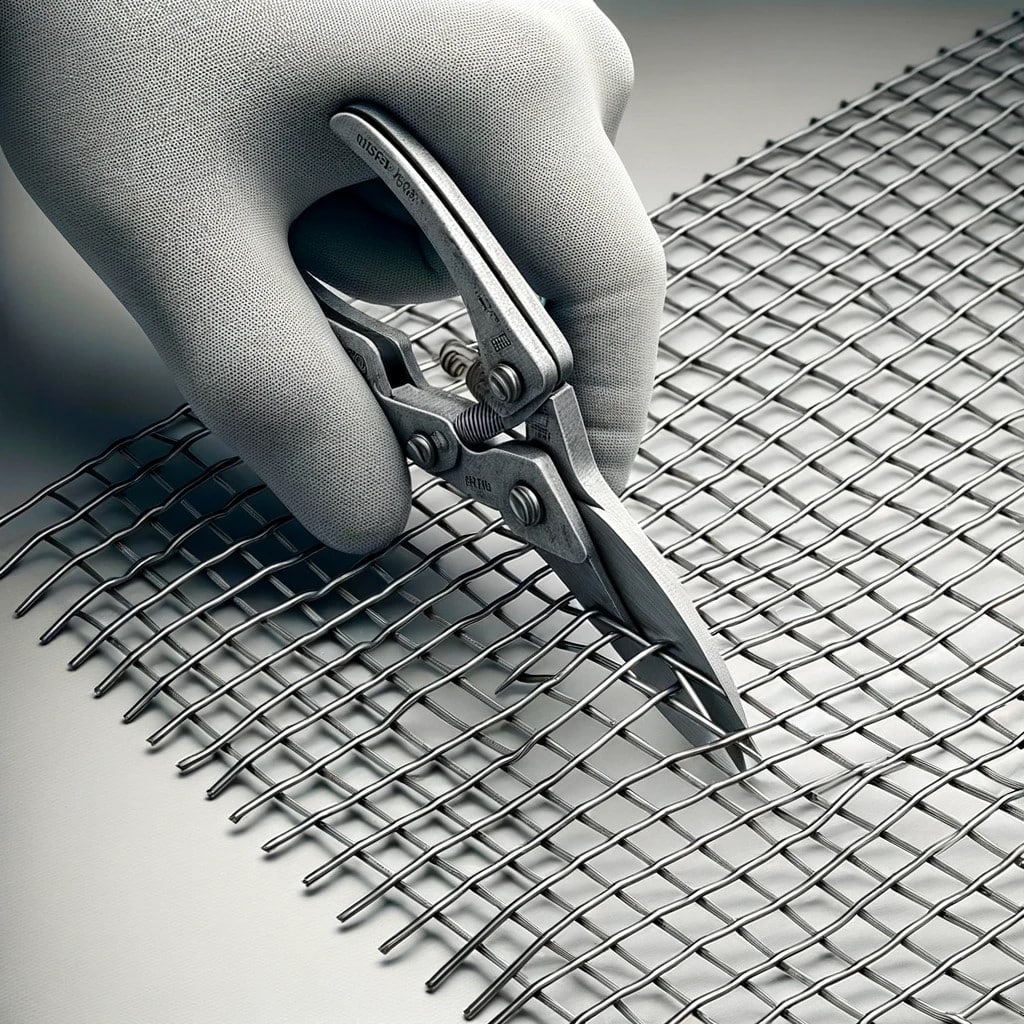
Hand shears and tin snips are commonly used for cutting thin stainless steel mesh, especially in small-scale fabrication or on-site installation. They are suitable for fine woven mesh and light welded mesh with small wire diameters. The key advantage of hand tools is control; operators can make precise cuts along marked lines without generating excessive heat or sparks.
However, hand cutting requires proper technique. Cutting too quickly or at an incorrect angle can bend wires or create jagged edges. For woven mesh, it is essential to secure the mesh firmly to prevent shifting during cutting. Operators should cut one wire at a time rather than forcing multiple wires simultaneously, reducing distortion and hand fatigue. While hand tools are cost-effective, they are best limited to low-volume or precision tasks where speed is not critical.
Bolt Cutters for Thicker Welded Mesh
Bolt cutters are widely used for cutting thicker welded mesh panels, particularly in construction and outdoor applications. Their long handles provide mechanical advantage, allowing operators to cut through heavier wire diameters with less physical effort. Bolt cutters are effective for straight cuts and rough sizing of mesh panels before final trimming.
Despite their power, bolt cutters can introduce deformation if not used carefully. Cutting too close to weld points may damage adjacent joints, and uneven pressure can cause wire ends to flare. To minimize issues, operators should position the cutter jaws squarely on the wire and apply steady, controlled force. Bolt cutters are ideal for structural applications where edge precision is less critical but strength and speed are required.
Limitations of Manual Cutting Methods
While manual cutting methods offer flexibility and low cost, they have limitations. Precision decreases with increasing wire diameter, and operator fatigue can lead to inconsistent results. Manual methods are also unsuitable for high-volume production or complex shapes. Understanding these limitations helps engineers decide when to transition to mechanical or automated cutting solutions.
Mechanical Cutting Tools and Equipment
Angle Grinders and Cut-Off Wheels
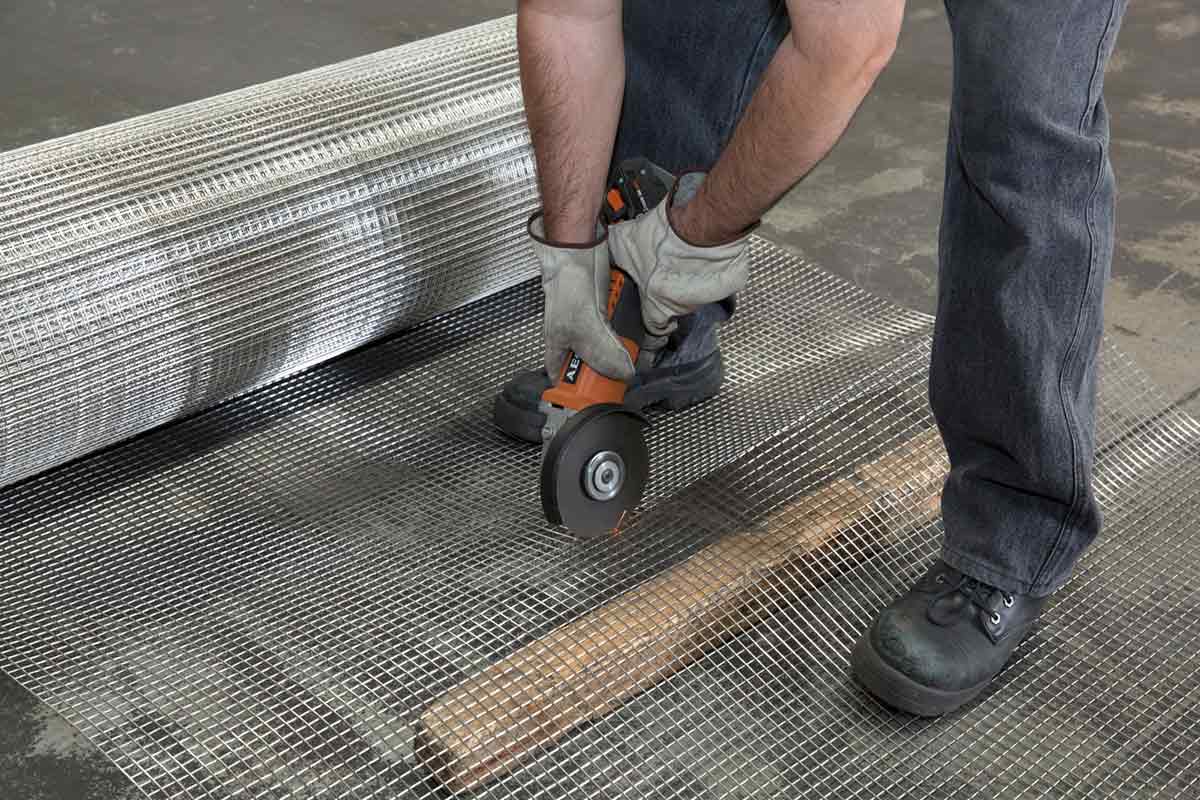
Angle grinders equipped with stainless steel-rated cut-off wheels are widely used for cutting welded mesh and heavier woven mesh. They offer speed and versatility, making them suitable for on-site and workshop environments. Angle grinders can handle thicker wires and larger panels efficiently.
However, they generate significant heat and sparks, which can discolor stainless steel and potentially affect corrosion resistance if not managed properly. Using appropriate wheel materials, maintaining steady cutting speed, and avoiding excessive pressure help reduce heat buildup. Operators should also wear proper protective equipment, as sparks and sharp fragments are common hazards.
Guillotine Shears and Mesh Cutting Machines
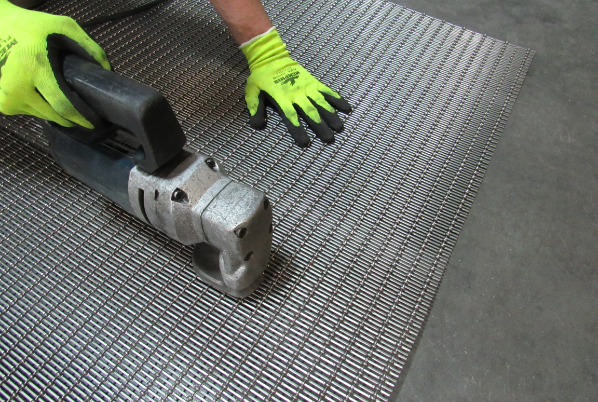
For industrial-scale cutting, guillotine shears and dedicated mesh cutting machines provide superior accuracy and repeatability. These machines apply uniform cutting force across the mesh width, producing clean edges with minimal deformation. They are especially effective for woven mesh used in filtration, where edge quality directly affects performance.
Machine cutting allows precise control over dimensions, reducing waste and ensuring consistency across batches. While initial investment is higher, mechanical cutting equipment significantly improves productivity and quality in high-volume operations.
Plasma and Laser Cutting for Custom Shapes
Advanced cutting methods such as plasma and laser cutting are used for complex shapes, thick welded mesh, or integrated assemblies. Laser cutting offers exceptional precision and minimal mechanical stress, making it ideal for applications requiring tight tolerances. Plasma cutting is faster and suitable for thicker materials but introduces more heat.
Both methods require careful parameter control to prevent excessive heat-affected zones. Post-cut cleaning or passivation may be necessary to restore corrosion resistance. These techniques are best suited for specialized fabrication environments.
For a more detailed comparison of cutting tools-from manual shears and bolt cutters to laser and CNC systems
this guide on tool selection for stainless steel mesh cutting provides a practical breakdown of efficiency, accuracy, and cost considerations.
Tool Selection Guide for Cutting Stainless Steel Mesh: From Hand Tools to CNC
Cutting Woven Mesh Without Fraying or Distortion
Edge Stabilization Techniques
Preventing fraying is one of the biggest challenges when cutting woven stainless steel mesh. Before cutting, edges can be stabilized using temporary clamping, adhesive tapes, or spot welding. These methods hold wires in place, preventing unraveling during cutting.
For fine filtration mesh, stabilization is especially important. Even slight wire movement can change aperture geometry, affecting filtration accuracy. Proper stabilization ensures clean edges and consistent performance.
If filtration performance is critical, it is also important to understand how different cutting methods can directly influence aperture stability and micron accuracy-this topic is explored in detail in our article on how cutting methods affect filtration accuracy in woven stainless steel mesh.
How Cutting Methods Affect Filtration Accuracy in Woven Stainless Steel Mesh
Cutting Direction and Sequence
The direction and sequence of cutting affect edge quality. Cutting parallel to warp or weft wires reduces resistance and minimizes distortion. Cutting diagonally increases the risk of wire movement and uneven edges. Planning the cutting path and sequence helps maintain mesh integrity.
Post-Cut Edge Treatments
After cutting, edges may require finishing to remove burrs or sharp points. Light grinding, brushing, or rolling edges improves safety and prevents damage to adjacent components during installation. Proper finishing also reduces stress concentration points that could initiate corrosion.
Safety Considerations During Mesh Cutting
Personal Protective Equipment (PPE)
Cutting stainless steel mesh involves sharp edges, flying fragments, and potential sparks. Gloves, safety glasses, face shields, and protective clothing are essential. For mechanical cutting, hearing protection may also be required.
Workspace and Tool Safety
A stable workspace prevents accidents and ensures precision. Mesh should be securely clamped or supported to prevent movement. Tools must be properly maintained, with sharp blades and intact guards. Following safety protocols reduces injury risk and improves cutting quality.
Handling and Disposal of Cut Edges
Cut mesh edges are sharp and hazardous. Proper handling, labeling, and disposal prevent injuries during transport and installation. In industrial environments, standardized handling procedures improve safety and efficiency.
Quality Control After Cutting Stainless Steel Mesh
Dimensional Accuracy and Tolerance Checks
After cutting, mesh dimensions should be verified against specifications. Accurate sizing ensures proper fit during installation and prevents rework. Measuring tools and templates help maintain consistency.
Structural Integrity and Edge Inspection
Inspecting cut edges for deformation, broken welds, or loose wires is essential. Early detection of defects prevents downstream failures and ensures reliable performance.
Preparing Mesh for Installation or Fabrication
Proper cleaning and packaging protect cut mesh from contamination and damage. Preparing mesh correctly ensures smooth integration into filtration systems, drainage assemblies, or structural frameworks.
After cutting, edge finishing and corrosion prevention become equally important for long-term performance-these post-cut processes are explained in detail in our guide on edge finishing and corrosion protection for stainless steel mesh.
Post-Cutting Edge Finishing and Corrosion Prevention for Stainless Steel Mesh
Safety Considerations When Cutting Stainless Steel Mesh
Personal Protective Equipment (PPE) Requirements
Cutting stainless steel welded mesh and woven mesh generates sharp edges, metal burrs, sparks, and sometimes fine metal dust. Proper personal protective equipment (PPE) is essential to prevent injuries and long-term health risks. At a minimum, operators should wear cut-resistant gloves made from Kevlar or steel-reinforced fibers to protect hands from razor-sharp wire ends. Standard fabric gloves are insufficient and can easily tear when handling freshly cut mesh.
Eye protection is equally critical. Safety goggles or full-face shields prevent metal fragments from entering the eyes, especially when using angle grinders, plasma cutters, or mechanical shears. For power cutting tools, hearing protection should be worn to reduce long-term hearing damage caused by high-decibel noise. In enclosed workshops, respiratory protection may also be necessary, as cutting stainless steel can release fine particles that irritate the respiratory system.
Foot protection is often overlooked but highly important. Steel-toe safety boots prevent injuries from falling mesh panels or cut-off sections. Long-sleeve protective clothing minimizes skin exposure to hot sparks and sharp wire ends. Establishing clear PPE standards not only protects workers but also improves productivity by reducing accidents and downtime. In industrial or construction environments, consistent use of PPE is a basic but essential requirement for safe stainless steel mesh cutting operations.
Managing Sharp Edges and Wire Burrs After Cutting
One of the most common hazards when cutting stainless steel mesh is exposure to sharp edges and wire burrs. Both welded mesh and woven mesh can develop needle-like wire tips after cutting, which pose serious risks during handling, transportation, and installation. These burrs can easily puncture skin, damage gloves, or snag protective clothing if not properly managed.
After cutting, mesh edges should be immediately inspected and treated. Manual deburring using files, abrasive pads, or flap discs helps smooth sharp wire ends and reduce injury risks. For high-volume production, automated edge finishing or secondary grinding processes are often implemented to ensure consistency and safety. In applications where mesh will be handled frequently, such as filtration panels or removable screens, edge finishing is not optional-it is a functional requirement.
In addition to deburring, edge reinforcement methods can be applied. Folding the mesh edge, welding a stainless steel frame, or installing U-shaped edge trims improves safety and enhances structural stability. Proper labeling of freshly cut mesh panels also helps alert workers to potential hazards. Managing sharp edges is not only a safety measure but also a quality control step that improves the usability and professionalism of the finished stainless steel mesh product.
Fire and Spark Control During Power Cutting
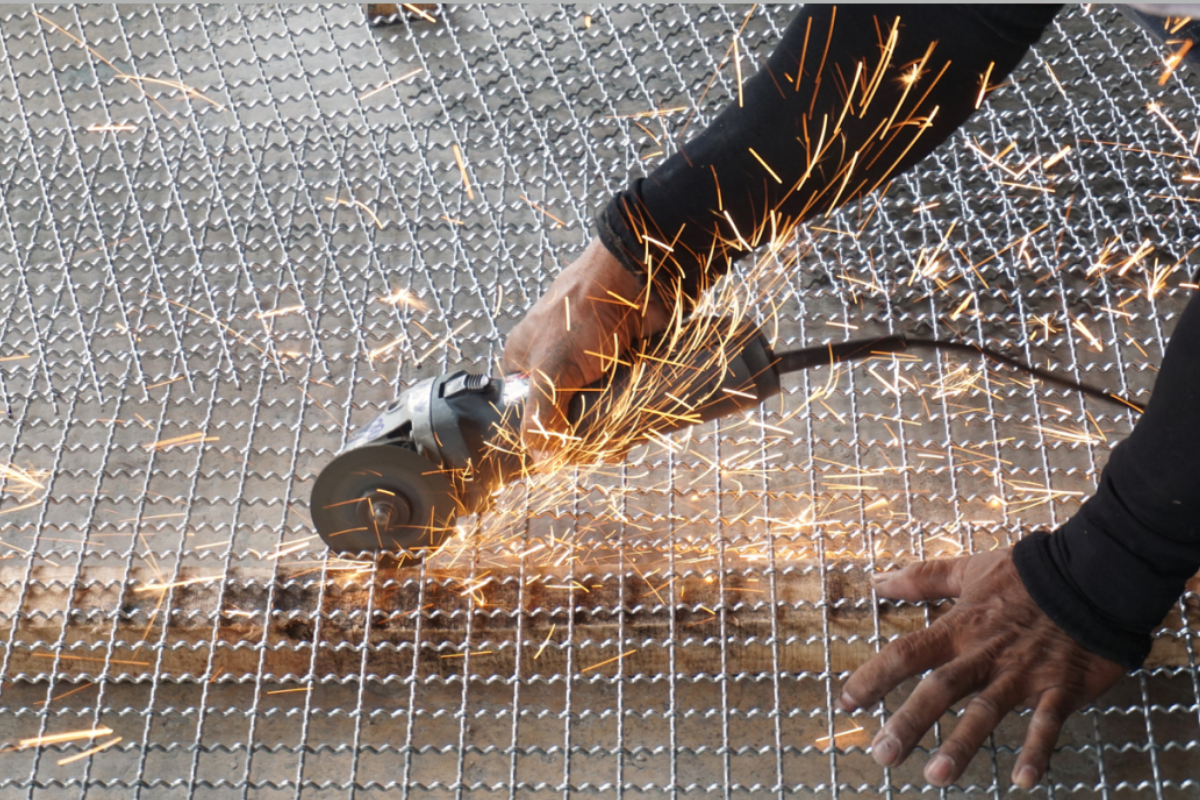
Power cutting tools such as angle grinders, plasma cutters, and laser systems generate sparks and heat that can pose fire hazards, especially in workshops handling flammable materials. Stainless steel itself is not combustible, but sparks can ignite nearby dust, packaging materials, or chemical residues. Proper fire prevention measures must be in place before cutting operations begin.
Work areas should be cleared of flammable materials, and fire-resistant barriers or spark shields should be installed where necessary. Fire extinguishers suitable for metal-related fires must be readily accessible, and operators should be trained in their proper use. When cutting large mesh panels, sparks may travel several meters, making it important to establish a controlled cutting zone.
Ventilation also plays a role in spark and heat management. Adequate airflow reduces heat buildup and disperses fumes generated during cutting. In industrial settings, hot work permits and safety checklists are often required before initiating cutting operations. By proactively managing sparks and heat sources, manufacturers and installers can significantly reduce the risk of fire-related incidents when cutting stainless steel mesh.
Safe Handling and Storage of Cut Mesh Panels
Once stainless steel mesh is cut, proper handling and storage are essential to prevent injuries and material damage. Cut mesh panels should never be stacked haphazardly, as exposed wire ends can cause cuts when panels shift. Using spacers, protective separators, or wooden pallets helps maintain safe spacing between panels and prevents edge damage.
Lifting and transporting mesh should be done using appropriate techniques. Large panels may require two-person handling or mechanical lifting equipment to avoid strain injuries and accidental dropping. When storing mesh vertically, secure racks should be used to prevent tipping. Horizontal storage should ensure even support to avoid bending or warping, particularly for thinner woven meshes.
Clear labeling of cut sizes, mesh type, and hazard warnings improves workplace safety and efficiency. Proper storage conditions-dry, clean, and well-organized-also protect stainless steel mesh from contamination and corrosion before installation. Safe handling practices ensure that cutting operations do not introduce new risks during subsequent stages of processing or use.
Precision and Tolerance Control in Stainless Steel Mesh Cutting
Importance of Dimensional Accuracy for Industrial Applications
Dimensional accuracy is a critical requirement when cutting stainless steel mesh for industrial use. Applications such as filtration systems, protective screens, and machine guards demand precise dimensions to ensure proper fit and performance. Even small deviations in length or width can result in installation difficulties, leakage, or reduced structural integrity.
Woven mesh presents unique challenges because cutting through the weave can cause minor shifts in wire alignment. Without proper control, the mesh may fray or lose uniformity along the cut edge. Welded mesh, while more rigid, requires accurate measurement to ensure that cut panels align correctly with frames or mounting points. Precision cutting tools, calibrated measuring systems, and consistent setup procedures are essential to maintain tight tolerances.
In manufacturing environments, dimensional accuracy also affects repeatability. Producing consistent mesh panels reduces waste, improves assembly efficiency, and ensures compliance with customer specifications. Precision cutting is not only about aesthetics-it directly impacts the functional reliability of stainless steel mesh components in demanding applications.
Controlling Mesh Deformation During Cutting
Stainless steel mesh can deform during cutting if improper techniques or tools are used. Woven mesh is particularly susceptible to distortion because individual wires are interlaced rather than rigidly fixed. Excessive force, improper clamping, or uneven cutting pressure can stretch or compress the mesh, altering aperture size and shape.
To minimize deformation, mesh should be securely clamped or supported during cutting. Flat support surfaces prevent sagging and maintain consistent tension across the panel. For woven mesh, cutting along a straight guide or using precision shears helps preserve wire alignment. In automated cutting systems, controlled feed rates and optimized cutting paths reduce stress on the mesh.
Post-cut inspection is essential to identify any deformation that could affect performance. Minor distortions may be corrected through flattening or tensioning, but severe deformation often requires re-cutting. Controlling deformation ensures that stainless steel mesh maintains its designed filtration accuracy, strength, and appearance.
Tolerance Requirements for Framed and Welded Assemblies
When stainless steel mesh is used in framed or welded assemblies, cutting tolerances become even more critical. Mesh panels must fit precisely within frames to allow secure welding, bolting, or crimping. Inconsistent dimensions can lead to uneven welds, weak joints, or visible gaps that compromise structural integrity.
For welded mesh frames, allowance must be made for thermal expansion during welding. Cutting panels slightly undersized may be necessary to prevent warping or buckling. In woven mesh assemblies, maintaining square edges ensures even tension distribution when the mesh is stretched or secured.
Clear tolerance specifications should be defined during the design stage. Communicating these requirements to production teams helps ensure consistent results. Precision cutting tailored to assembly requirements reduces rework, improves joint strength, and enhances the overall quality of stainless steel mesh products.
Quality Control and Inspection After Cutting
Quality control does not end once the cutting process is complete. Inspection of cut stainless steel mesh panels ensures that dimensional accuracy, edge quality, and overall integrity meet project requirements. Visual inspection identifies burrs, wire damage, or misaligned openings, while dimensional checks verify compliance with specified tolerances.
In critical applications, additional testing may be required. For filtration mesh, aperture consistency and open area may be measured to confirm performance. For structural applications, flatness and rigidity may be evaluated to ensure load-bearing capability. Documenting inspection results supports traceability and quality assurance.
Implementing standardized inspection procedures reduces the risk of defective mesh reaching installation sites. Quality control reinforces the value of precision cutting and ensures that stainless steel mesh performs reliably throughout its service life.
Conclusion
Cutting stainless steel welded mesh and woven mesh is a technically demanding process that directly influences product performance, safety, and longevity. Understanding the differences between mesh types, wire diameters, and material grades allows fabricators to select appropriate cutting tools and methods. Manual cutting offers flexibility for small-scale tasks, while mechanical and advanced cutting technologies provide precision and efficiency for industrial production.
Equally important are safety practices, edge stabilization techniques, and post-cut quality control. By combining proper planning, correct tool selection, and disciplined execution, engineers and fabricators can achieve clean cuts, maintain mesh integrity, and reduce waste. Mastering these cutting practices ensures that stainless steel mesh performs reliably in filtration, construction, drainage, and industrial applications-delivering long-term value and consistent performance.