






1. Introduction: Why Nylon Monofilament Is Everywhere
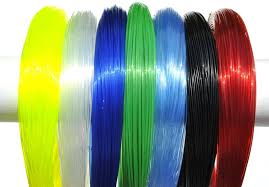
Nylon monofilament has become one of the most widely adopted polymer materials across global industries-not because it is inexpensive or simple, but because it delivers an exceptional balance of mechanical performance, chemical stability, and design flexibility. Its single-strand structure enables precise control over diameter, surface characteristics, and mechanical behavior, making it uniquely suitable for applications where consistency and reliability are critical.
From industrial filtration systems operating under continuous flow conditions, to fishing lines exposed to saltwater and dynamic loads, to medical devices requiring strict hygiene and material stability, nylon monofilament plays a foundational role. Unlike composite or multifilament materials, monofilament's uniform structure allows engineers to predict performance accurately, reduce failure risk, and optimize system efficiency.
This article explores the real-world applications of nylon monofilament, explaining why specific nylon types are chosen for different industries, how performance requirements shape material selection, and how customization enables nylon monofilament to meet increasingly specialized demands.

2. Why Nylon Monofilament Is Preferred Across Industries
Before examining individual applications, it is important to understand the core reasons nylon monofilament is favored over alternative materials.
2.1 Key Performance Advantages
|
Property |
Application Benefit |
|
Uniform diameter |
Predictable filtration & flow |
|
High tensile strength |
Load-bearing reliability |
|
Abrasion resistance |
Long service life |
|
Chemical stability |
Compatibility with process fluids |
|
Thermoplastic nature |
Customization & recyclability |
|
Smooth surface |
Easy cleaning, low clogging |
These properties allow nylon monofilament to function reliably in both static and dynamic environments, across a wide temperature and chemical exposure range.
3. Filtration Industry Applications
3.1 Liquid Filtration
One of the most critical applications of nylon monofilament is in liquid filtration systems, where precision and consistency directly affect product quality and operational efficiency.
Common uses include:
Industrial water filtration
Chemical processing
Food and beverage filtration
Pharmaceutical liquids
Monofilament is often woven or welded into filter meshes or sewn into filter bags.
Why Nylon Monofilament Works for Filtration
Controlled pore size
Smooth filament surface reduces particle adhesion
High flow rate with low pressure drop
|
Filtration Requirement |
Nylon Monofilament Advantage |
|
Accurate micron rating |
Precise diameter control |
|
Reusability |
Strong abrasion resistance |
|
Chemical exposure |
Broad resistance profile |
3.2 Air and Gas Filtration
In air filtration, nylon monofilament is commonly used as:
Support layers
Pre-filters
Washable screens
Its ability to maintain structural integrity under airflow makes it suitable for:
HVAC systems
Industrial ventilation
Dust collection pre-filters
4. Fishing and Aquaculture Applications
4.1 Fishing Lines
Perhaps the most widely recognized use of nylon monofilament is fishing line. Its success in this application comes from its balance of strength, flexibility, and knot performance.
Key requirements:
High tensile strength
Controlled stretch for shock absorption
Transparency in water
|
Fishing Requirement |
Nylon Monofilament Performance |
|
Shock resistance |
Elastic elongation |
|
Knot strength |
Molecular uniformity |
|
Abrasion resistance |
Smooth surface |
4.2 Nets and Aquaculture Systems
In aquaculture, nylon monofilament is used for:
Fish nets
Protective cages
Feeding systems
PA6 and PA66 are commonly selected due to their toughness and fatigue resistance under constant water exposure.
5. Industrial and Engineering Applications
5.1 Industrial Brushes
Nylon monofilament is extensively used in:
Conveyor cleaning brushes
Road-sweeping brushes
Food processing brushes
Its resilience allows it to maintain shape after repeated bending and abrasion.
|
Brush Requirement |
Nylon Monofilament Benefit |
|
Wear resistance |
Long operating life |
|
Elastic recovery |
Shape retention |
|
Chemical exposure |
Stable in detergents |
5.2 Conveyor and Mechanical Systems
In mechanical systems, nylon monofilament can be found in:
Belting components
Guide elements
Reinforcement structures
Its low friction coefficient reduces wear on mating surfaces.

read more:How Nylon Monofilament Is Made
6. Medical and Healthcare Applications
6.1 Medical Devices and Consumables
Medical-grade nylon monofilament is used in:
Surgical sutures
Diagnostic devices
Disposable medical tools
Strict requirements include:
Biocompatibility
Sterilization resistance
Dimensional accuracy
|
Medical Requirement |
Nylon Solution |
|
Sterilization |
Heat & chemical tolerance |
|
Clean surface |
Low particle shedding |
|
Regulatory compliance |
Controlled formulations |
6.2 Hygiene and Safety Considerations
Smooth monofilament surfaces reduce bacterial adhesion, making nylon suitable for hygienic environments when properly certified.
7. Food and Beverage Processing Applications
7.1 Food-Grade Filtration
In food and beverage production, nylon monofilament is used in:
Filter bags
Sieves
Screening belts
Common applications include:
Juice clarification
Brewing filtration
Edible oil processing
|
Requirement |
Nylon Monofilament Feature |
|
Food safety |
FDA / EU compliance |
|
Cleanability |
Smooth surface |
|
Reusability |
Mechanical durability |
8. Textile, Printing, and Screen Applications
8.1 Screen Printing Mesh
Nylon monofilament is widely used in screen printing for:
Textile printing
Industrial marking
Graphic applications
Its uniform mesh opening ensures consistent ink transfer.
8.2 Technical Textiles
In technical textiles, monofilament contributes to:
Reinforced fabrics
Architectural textiles
Protective screens
9. Customization Options for Nylon Monofilament
9.1 Diameter and Shape Customization
Manufacturers can tailor:
Diameter (micron to millimeter range)
Cross-section (round, oval, flat)
|
Custom Feature |
Benefit |
|
Fine diameters |
Precision filtration |
|
Thick filaments |
Structural strength |
9.2 Surface and Additive Customization
UV stabilizers
Anti-static agents
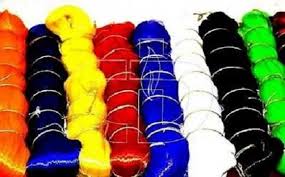
Color coding
Hydrophilic coatings
Customization allows nylon monofilament to meet industry-specific standards.
10. Nylon Monofilament vs Other Materials
|
Material |
Comparison Summary |
|
Polyester |
Lower moisture absorption, less flexible |
|
Polypropylene |
Lower strength, lower temperature resistance |
|
Stainless steel |
High strength, low flexibility |
|
PTFE |
Excellent chemical resistance, high cost |
Nylon monofilament offers the most balanced performance for general industrial use.
11. Market Trends and Future Development
11.1 Growing Demand Areas
Industrial filtration
Food & beverage processing
Medical devices
Environmental protection
11.2 Innovation Trends
Bio-based nylon materials
Enhanced surface engineering
Precision micron-level control
12. Sustainability and Recycling
As a thermoplastic material, nylon monofilament:
Can be recycled
Supports circular manufacturing
Reduces long-term waste when reused
Manufacturers are increasingly focusing on sustainability-driven production.
13. Conclusion: Nylon Monofilament as a Strategic Material
Nylon monofilament has evolved from a simple synthetic fiber into a strategic engineering material used across filtration, industrial manufacturing, healthcare, food processing, and beyond. Its adaptability, reliability, and performance consistency make it indispensable in modern production systems.
By understanding application-specific requirements and leveraging customization, manufacturers and buyers can unlock the full potential of nylon monofilament-optimizing performance, extending service life, and ensuring compliance across global markets.