








Products Description
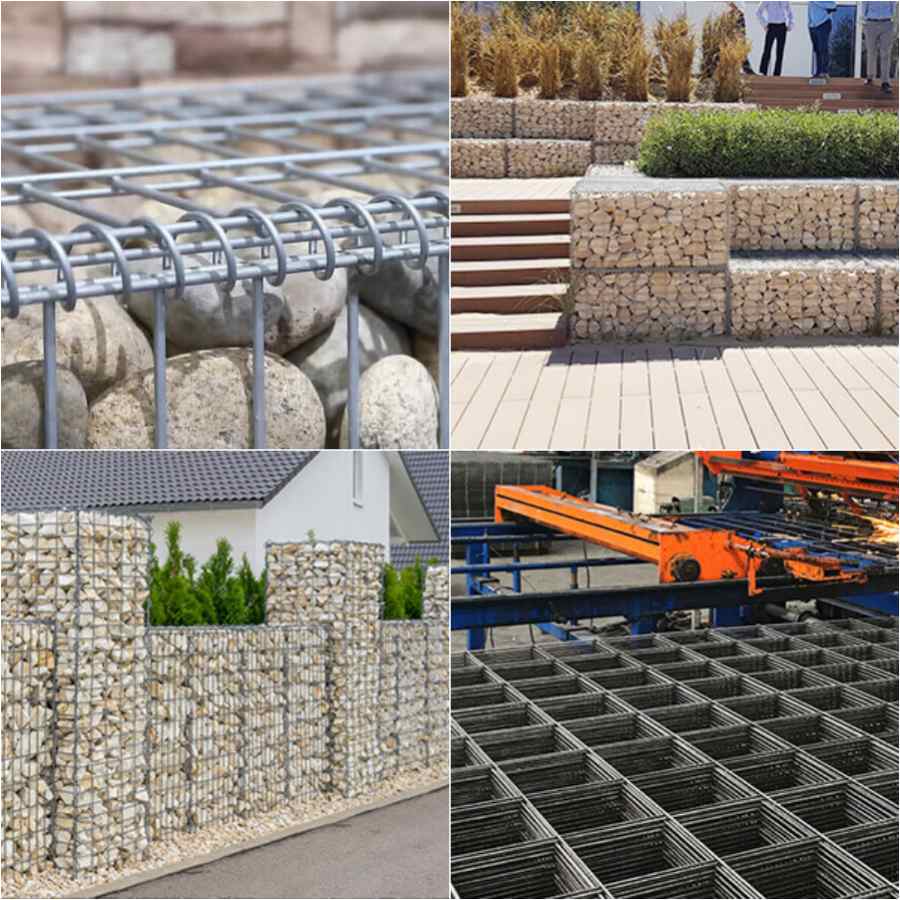
Gabion mesh, also referred to as a gabion basket or gabion cage, is a welded or woven wire container filled with stones, gravel, or other durable aggregates. It is engineered to form a flexible, permeable, and stable structure that adapts to ground movement and resists hydraulic forces. Gabion mesh is widely used in civil engineering and environmental projects for applications such as retaining walls, slope stabilization, erosion control, riverbank protection, and landscape design.
Thanks to its ease of installation, cost-effectiveness, and long-term durability, it has become a proven and sustainable solution for managing soil erosion, reinforcing embankments, and integrating functional structures with natural environments. Gabion systems also offer aesthetic versatility in architectural and landscaping contexts, where functionality and visual impact are both desired.
|


Applications OF GABION MESH
✅ 1. Retaining Walls for Highways and Railways
Gabion mesh is commonly used to construct gravity retaining walls that support road and railway embankments. Its modular structure allows it to absorb and distribute pressure from soil and vehicles, reducing landslide risks and minimizing maintenance costs over time.
✅ 2. Slope and Embankment Protection
Gabion structures stabilize natural or man-made slopes by preventing soil erosion caused by rainfall or surface runoff. The mesh holds the stones in place while allowing vegetation to grow, creating a green and eco-friendly slope reinforcement solution.
✅ 3. River and Canal Bank Stabilization
Installed along riverbanks and canals, gabion cages resist the hydraulic forces of flowing water. They prevent scouring and collapse of the banks, protect infrastructure like bridges and culverts, and can be easily adapted to various waterway shapes and terrains.
✅ 4. Coastal and Flood Control Projects
In coastal regions, gabions serve as flexible seawalls, breakwaters, and wave barriers. Unlike rigid concrete walls, gabion structures adapt to seabed movements and dissipate wave energy naturally, reducing erosion and enhancing shoreline stability.
✅ 5. Landscaping & Garden Design
Gabion baskets are widely used in modern landscaping for building decorative walls, benches, planters, and steps. Their natural stone appearance blends well with outdoor environments, offering a contemporary, low-maintenance alternative to traditional structures.
✅ 6. Military and Emergency Defense Barriers
In defense and disaster relief, rapidly deployable gabion systems (like Hesco barriers) are used to create blast walls, bunkers, or flood barriers. Their strength, mobility, and fill flexibility make them ideal for temporary or semi-permanent fortifications.

Packaging & Delivery
Secure & Space-Saving Packaging
Gabion mesh products are folded, compressed, and packed with waterproof inner layers such as plastic film or moisture-proof paper. They are then securely loaded on steel or wooden pallets (or crates) to ensure protection during transportation and maximize container space.
Custom Labels & Flexible Shipping
Each shipment includes clear product labels and shipping marks. We offer customized packaging, barcodes, and branding upon request. Multiple delivery options are available, including sea freight (FCL/LCL), land transport, and flexible scheduling for urgent orders.

Top-RATED GABION MESH MANUFACTURER

CHG METAL's gabion mesh products are widely used across internationally. These double-twisted hexagonal steel wire mesh cages are designed to be filled with rocks or stones, making them ideal for cost-effective and natural-looking engineering solutions-especially in areas where stone is readily available. Commonly referred to as gabion baskets, gabion walls, or hexagonal baskets, these structures offer versatile applications beyond traditional retaining walls, including streambed stabilization and erosion control.
As the leading manufacturer and supplier of gabion mesh, CHG METAL specializes in producing both PVC-coated and galvanized iron (GI) gabion mesh in full compliance with the latest Indian specifications. We also provide turnkey solutions for the supply and installation of mechanically woven, double-twisted hexagonal wire mesh gabion systems.
FAQ
Q: 1. What is Gabion Mesh?
A: Gabion mesh consists of hexagonal woven wire netting filled with stones or gravel. Engineers widely apply it in civil and environmental projects to prevent erosion, stabilize slopes, and build retaining walls. Its flexible structure adapts to ground movement, while its permeability ensures effective drainage. These features make it a reliable solution for riverbanks, roadside reinforcement, and landscape design.
Q: 2. Types of Gabion Mesh
A: Hexagonal Woven Gabion – This flexible structure adapts well to uneven terrain, making it ideal for retaining walls, slope protection, and erosion control in challenging environments.
Welded Gabion Box – With a flat, rigid surface, this type offers clean lines and structural integrity, commonly used in architectural facades, noise barriers, and modern landscaping projects.
Gabion Mattress (Reno Mattress) – Designed with a lower profile, it effectively protects riverbeds, banks, and hydraulic structures by preventing scouring and promoting stability.
Surface Coatings – To enhance corrosion resistance, all gabion types are available with hot-dip galvanized, PVC-coated, or Galfan (zinc-aluminum alloy) wire finishes, suitable for both dry and wet conditions.
Q: 3. Applications of Gabion Mesh
A: Gabion mesh is widely used in civil, environmental, and landscaping projects. Typical applications include erosion control along riverbanks, reservoirs, and coastlines; slope stabilization and landslide prevention; reinforcement of highway and railway embankments; and protection of bridge abutments and culverts. It is also popular in garden retaining walls and modern landscape design. In military and infrastructure settings, gabion systems (such as Hesco barriers) serve as effective solutions for defense and noise control.
Q: 4. Gabion Mesh Production Process
A: The manufacturing process starts with preparing low-carbon steel wire, which is drawn and coated with hot-dip galvanizing, PVC, or Galfan to improve corrosion resistance. Precision machines then weave the wire into hexagonal mesh with uniform apertures. The mesh is cut to size and folded into flat panels for assembly. Edges are reinforced by twisting manually or mechanically to enhance strength. Each batch undergoes thorough quality inspections, including checks on mesh size, tensile strength, coating thickness, and corrosion resistance. Finally, the panels are folded, compressed into bundles, and securely packed on pallets or in wooden crates to ensure safe and efficient transportation.
Q: 5. Which is better for gabion boxes: hand-twisted edges or machine-twisted edges?
A: Hand-twisting creates tighter knots, enhancing the structural strength and durability of gabion edges-ideal for projects exposed to harsh environments and heavy loads. This method, however, requires more time and incurs higher production costs. In contrast, machine-twisting improves manufacturing efficiency and reduces expenses, making it suitable for large-scale projects with moderate strength demands, though it provides slightly less robustness. When project requirements prioritize maximum strength and longevity, hand-twisted edges offer the best solution. Conversely, if budget and turnaround time are critical and conditions are less demanding, machine-twisted edges serve as a cost-effective alternative.


