






Hexagonal gabion mesh is a widely used material in various civil engineering and environmental protection projects. As a supplier of hexagonal gabion mesh, I often receive inquiries about its standard size. In this blog, I will delve into the details of the standard size of hexagonal gabion mesh, its influencing factors, and how these sizes are determined to meet different project requirements.

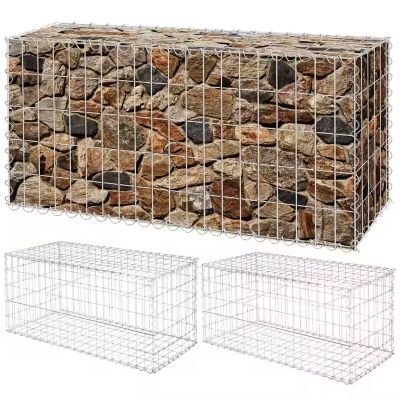
Understanding Hexagonal Gabion Mesh
Hexagonal gabion mesh is made of high - strength, corrosion - resistant wire, which is woven into a hexagonal pattern. This unique structure gives it excellent flexibility and stability. It is commonly used in slope protection, riverbank reinforcement, and erosion control. The wire used in the mesh can be made of materials such as galvanized steel, PVC - coated steel, or stainless steel, depending on the specific application and environmental conditions.
Standard Sizes of Hexagonal Gabion Mesh
The standard size of hexagonal gabion mesh is mainly determined by two key parameters: mesh aperture and wire diameter.
Mesh Aperture
The mesh aperture refers to the size of the hexagonal openings in the mesh. Common mesh apertures for hexagonal gabion mesh range from 60mm x 80mm to 150mm x 200mm. For example, a 60mm x 80mm mesh aperture is often used in applications where small stones are filled, such as in landscaping projects or small - scale slope protection. This smaller aperture can effectively hold the small stones in place and prevent them from falling out.
On the other hand, a larger mesh aperture like 150mm x 200mm is suitable for projects where larger stones are used, such as in major riverbank reinforcement projects. The larger aperture allows for the use of larger and heavier stones, which can provide greater stability and resistance to water flow.
Wire Diameter
The wire diameter of hexagonal gabion mesh typically ranges from 2.0mm to 4.0mm. Thinner wires, such as 2.0mm or 2.2mm, are often used in applications where the gabion structure does not need to bear extremely heavy loads, such as in some decorative or small - scale projects.
Thicker wires, like 3.5mm or 4.0mm, are used in high - stress applications. For example, in large - scale river training works or coastal protection projects, where the gabions are exposed to strong water currents and wave forces, thicker wires are required to ensure the long - term stability and durability of the gabion structure.
Influencing Factors on Standard Sizes
Several factors influence the selection of the standard size of hexagonal gabion mesh for a particular project.
Stone Size
The size of the stones to be filled in the gabion is a crucial factor. As mentioned earlier, smaller mesh apertures are used for smaller stones, while larger apertures are suitable for larger stones. The stone size also affects the wire diameter. If larger and heavier stones are used, a thicker wire is needed to support the weight of the stones and prevent the mesh from deforming.
Project Location
The location of the project plays an important role in determining the size of the gabion mesh. In areas with strong water currents, such as rivers with high - velocity flows or coastal areas with large waves, larger and more robust gabion meshes are required. The mesh aperture and wire diameter need to be selected to withstand the hydrodynamic forces exerted on the gabions.
In contrast, in areas with relatively calm water or low - stress environments, smaller and lighter gabion meshes can be used. For example, in a small pond or a gentle slope in a garden, a smaller mesh aperture and thinner wire diameter may be sufficient.
Load - Bearing Requirements
The load - bearing requirements of the project also impact the size of the hexagonal gabion mesh. If the gabions are part of a structure that needs to support heavy loads, such as a retaining wall or a foundation reinforcement, a thicker wire diameter and an appropriate mesh aperture are necessary to ensure the structural integrity of the gabion.
Comparison with Other Gabion Types
In addition to hexagonal gabion mesh, there are other types of gabions available in the market, such as Welded Gabion and Sack Gabion. Each type has its own characteristics and standard sizes.
Welded gabions are made by welding wires together at the intersections. They usually have a more rigid structure compared to hexagonal gabion mesh. The standard sizes of welded gabions are often determined by the size of the pre - fabricated panels, which can vary depending on the manufacturer and the project requirements.
Sack gabions, on the other hand, are made of flexible fabric sacks filled with stones. They are more suitable for temporary or small - scale applications. The size of sack gabions is mainly determined by the size of the sacks, which can range from small hand - held sizes to large industrial - scale sacks.
Compared to these other types, hexagonal gabion mesh offers greater flexibility and adaptability. Its hexagonal structure allows for better distribution of forces and can conform to irregular surfaces more easily.
Custom - Made Sizes
While there are standard sizes for hexagonal gabion mesh, many projects may require custom - made sizes. As a supplier, we are well - equipped to produce hexagonal gabion mesh according to specific project requirements. Whether it is a non - standard mesh aperture, a special wire diameter, or a unique shape of the gabion, we can work with our customers to develop the most suitable solution.
For example, in some architectural projects, the gabions may need to be made in a specific shape to fit the design concept. Or in a complex engineering project, a custom - sized gabion mesh may be required to meet the specific load - bearing and environmental conditions.
Conclusion
In conclusion, the standard size of hexagonal gabion mesh is determined by mesh aperture and wire diameter, which are influenced by factors such as stone size, project location, and load - bearing requirements. Understanding these factors is essential for selecting the right size of gabion mesh for a project.
As a supplier of Hexagonal Gabion MeshPET Plastic Gabion, we have the expertise and resources to provide high - quality gabion meshes in both standard and custom - made sizes. If you are planning a project that requires hexagonal gabion mesh, we encourage you to contact us for a detailed discussion. Our team of experts will be happy to assist you in selecting the most appropriate size and material for your specific needs.
References
- "Gabion Design and Construction Guidelines", International Erosion Control Association.
- "Civil Engineering Handbook: Water Resources and Environmental Engineering", McGraw - Hill.
- "Coastal and Hydraulic Engineering Manual", U.S. Army Corps of Engineers.