






Hey there! As a supplier of Phosphor Bronze Wire Mesh, I often get asked about the radiation resistance of our products. So, I thought I'd take a moment to shed some light on this topic.
First off, let's understand what radiation resistance means. Radiation resistance refers to the ability of a material to withstand the effects of radiation. Radiation can come in various forms, such as electromagnetic radiation (like radio waves, microwaves, infrared, visible light, ultraviolet, X - rays, and gamma rays) and particle radiation (such as alpha particles, beta particles, and neutrons).
Phosphor bronze is an alloy that mainly consists of copper, tin, and a small amount of phosphorus. This unique combination gives phosphor bronze wire mesh some interesting properties when it comes to radiation resistance.
How Phosphor Bronze Wire Mesh Deals with Electromagnetic Radiation
Electromagnetic radiation is all around us. From the Wi - Fi signals we use to connect to the internet to the X - rays used in medical imaging, it's a part of our daily lives. When it comes to electromagnetic radiation, phosphor bronze wire mesh can act as a shield.
The conductive nature of copper in the phosphor bronze alloy allows it to interact with electromagnetic fields. When an electromagnetic wave hits the wire mesh, the free electrons in the copper start to move in response to the changing electric field of the wave. This movement of electrons creates an opposing electric field that can cancel out or reduce the strength of the incoming electromagnetic wave.
For example, in electronic devices, phosphor bronze wire mesh can be used to prevent electromagnetic interference (EMI). EMI can cause malfunctions in sensitive electronic components. By using our phosphor bronze wire mesh, manufacturers can create a protective barrier around these components, ensuring their proper functioning. You can check out Nickle Wire Mesh for more options on metal meshes for EMI shielding.
Resistance to Particle Radiation
Particle radiation is a bit more complex. Alpha and beta particles are relatively easy to stop compared to neutrons and gamma rays. Phosphor bronze wire mesh can offer some protection against alpha and beta particles.
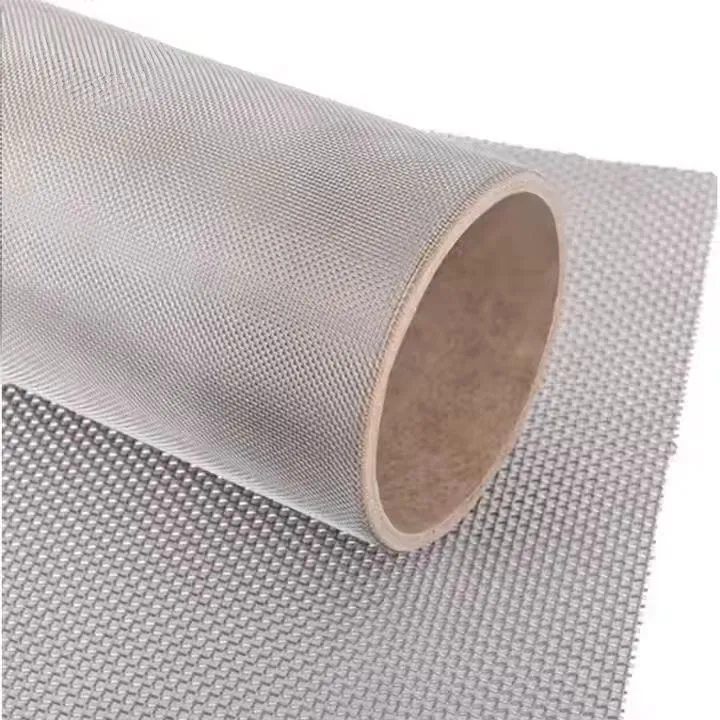

Alpha particles are large and positively charged. They can be stopped by a thin layer of material, and the wire mesh can act as a physical barrier to block these particles. Beta particles, which are smaller and negatively charged, can also be attenuated by the wire mesh. The electrons in the phosphor bronze can interact with the beta particles, causing them to lose energy and eventually stop.
However, when it comes to neutrons and gamma rays, phosphor bronze wire mesh alone may not be sufficient. Neutrons are uncharged particles that can penetrate deeply into materials. Gamma rays are high - energy electromagnetic waves. While the wire mesh can absorb some of the energy from these types of radiation, additional shielding materials may be required for full protection. For mining applications where radiation may be present, Stainless steel wire mesh for Mining Screen can also be considered in combination with other shielding methods.
Factors Affecting Radiation Resistance
The radiation resistance of phosphor bronze wire mesh is affected by several factors.
Mesh Density
The density of the wire mesh plays a crucial role. A denser mesh with smaller openings will provide better shielding against both electromagnetic and particle radiation. More wires in the mesh mean more opportunities for interaction with the radiation, leading to better attenuation.
Wire Thickness
Thicker wires generally offer better radiation resistance. Thicker wires have more material to interact with the radiation, and they can absorb and dissipate more energy.
Alloy Composition
The exact composition of the phosphor bronze alloy can also impact radiation resistance. A higher percentage of copper can enhance the conductive properties, which is beneficial for electromagnetic shielding. The amount of tin and phosphorus can also affect the mechanical and chemical properties of the alloy, which in turn can influence its performance under radiation exposure.
Applications of Phosphor Bronze Wire Mesh Based on Radiation Resistance
There are several industries that benefit from the radiation - resistant properties of phosphor bronze wire mesh.
Electronics Industry
As mentioned earlier, the electronics industry uses phosphor bronze wire mesh for EMI shielding. It can be found in smartphones, laptops, and other electronic devices to prevent interference between different components. Plain Weave Stainless Steel Wire Mesh is also an option for electronics applications, and you can compare its properties with our phosphor bronze wire mesh.
Medical Industry
In medical facilities, phosphor bronze wire mesh can be used in some radiation - related equipment. For example, it can be used in the construction of shielding enclosures for X - ray machines or other radiation - emitting devices to protect the surrounding environment and personnel.
Aerospace Industry
In aerospace applications, where there is exposure to cosmic radiation, phosphor bronze wire mesh can be used in the design of electronic systems and cabins to reduce the effects of radiation on the equipment and crew.
Why Choose Our Phosphor Bronze Wire Mesh
We take pride in offering high - quality phosphor bronze wire mesh. Our manufacturing process ensures that the alloy composition is carefully controlled, resulting in consistent radiation - resistant properties. We can customize the mesh density and wire thickness according to your specific requirements.
Whether you need a fine - mesh for precise EMI shielding in a small electronic device or a coarser mesh for a large - scale radiation - protection application, we've got you covered.
If you're interested in learning more about our phosphor bronze wire mesh or have a specific project in mind, don't hesitate to reach out. We're here to help you find the perfect solution for your radiation - protection needs. Contact us today to start a discussion about your procurement requirements.
References
- Materials Science and Engineering: An Introduction, William D. Callister Jr. and David G. Rethwisch
- Handbook of Electromagnetic Materials: Monolithic and Composite Versions, K. S. Subramanian