

Hey there! As a supplier of 304 stainless steel wire mesh, I've had my fair share of questions about how to test its quality. I'm here to share some practical methods that you can use to ensure you're getting top - notch 304 stainless steel wire mesh.
Visual Inspection
The first step in testing the quality of 304 stainless steel wire mesh is a simple visual check. You can start by looking at the surface of the mesh. High - quality 304 stainless steel wire mesh should have a smooth and uniform finish. There shouldn't be any obvious scratches, dents, or rough edges. If you notice any irregularities, it could be a sign of poor manufacturing or damage during transportation.
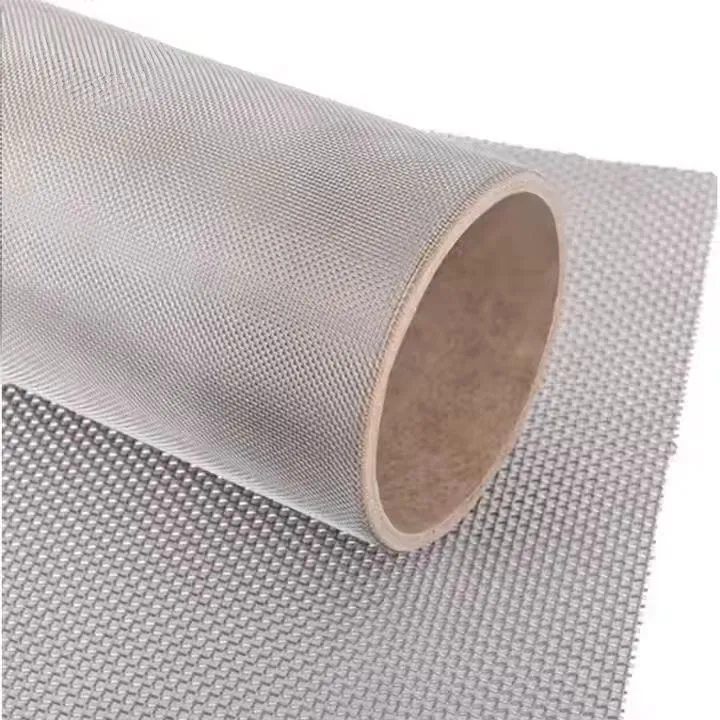
Also, take a close look at the weave pattern. A well - made 304 stainless steel wire mesh will have a consistent and tight weave. You can check for any loose wires or gaps in the mesh. If the weave is uneven or there are loose ends, it might not hold up well over time.
Chemical Composition Analysis
One of the most accurate ways to determine if the wire mesh is truly 304 stainless steel is through chemical composition analysis. 304 stainless steel is made up of approximately 18 - 20% chromium and 8 - 10.5% nickel. There are a few methods you can use for this analysis.

One option is to use a portable X - ray fluorescence (XRF) analyzer. This device can quickly and non - destructively measure the elemental composition of the wire mesh. You just need to point the analyzer at the mesh, and it will give you a readout of the different elements present. If the percentages of chromium and nickel fall within the 304 stainless steel range, then you're likely dealing with the real deal.
Another method is wet chemical analysis. This is a more traditional and accurate way, but it's also more time - consuming and requires a laboratory setting. In wet chemical analysis, a small sample of the wire mesh is dissolved in chemicals, and then the concentrations of different elements are measured using various techniques.
Tensile Strength Testing
Tensile strength is an important property of 304 stainless steel wire mesh. It measures how much force the mesh can withstand before it breaks. To test the tensile strength, you'll need a tensile testing machine.
First, cut a sample of the wire mesh to a specific size and shape according to the testing standards. Then, place the sample in the tensile testing machine. The machine will gradually apply a pulling force to the sample until it breaks. The maximum force applied at the point of breakage is the tensile strength of the wire mesh.
A high - quality 304 stainless steel wire mesh should have a good tensile strength. If the tensile strength is too low, it means the mesh might not be able to handle heavy loads or stress, and it could break easily in real - world applications.
Corrosion Resistance Testing
Since 304 stainless steel is known for its corrosion resistance, it's important to test this property. One common method is the salt spray test. In this test, a sample of the wire mesh is placed in a salt - fog chamber. The chamber sprays a fine mist of saltwater onto the mesh for a set period of time, usually several hours or even days.
After the test, you can examine the mesh for signs of corrosion. If there are only minor surface rust spots or no rust at all, it indicates that the mesh has good corrosion resistance. However, if there are large areas of rust or pitting, it means the mesh might not be made of high - quality 304 stainless steel or it could have been damaged during the manufacturing process.
Mesh Size and Opening Accuracy
The mesh size and opening accuracy are crucial for many applications. For example, if you're using the wire mesh for filtration, the size of the openings will determine what particles can pass through.
To measure the mesh size, you can use a caliper or a micrometer. Measure the distance between the centers of adjacent wires in both the warp and weft directions. The mesh size is usually expressed as the number of wires per linear inch. For example, an 18x18 Mesh Stainless Steel Wire Mesh means there are 18 wires per inch in both directions.
You also need to check the accuracy of the mesh openings. The openings should be uniform in size and shape. Any significant variation in the opening size could affect the performance of the wire mesh.
Hardness Testing
Hardness is another important property of 304 stainless steel wire mesh. A harder mesh is generally more resistant to wear and deformation. You can use a hardness tester to measure the hardness of the wire mesh.
There are different types of hardness tests, such as the Rockwell hardness test and the Brinell hardness test. The Rockwell hardness test is a quick and easy method. It measures the depth of an indentation made by a diamond or a steel ball under a specific load. The Brinell hardness test is more accurate but takes a bit more time. It measures the diameter of an indentation made by a hard ball under a heavy load.
Surface Finish and Coating
Some 304 stainless steel wire meshes come with a surface coating to enhance their performance. For example, a nickel coating can improve the corrosion resistance even further. You can visually inspect the coating to make sure it's evenly applied and there are no signs of peeling or flaking.
If you're interested in a Nickle Wire Mesh, you can pay special attention to the quality of the nickel coating. A high - quality coating should be smooth and adhere well to the wire mesh.
Comparing with Standards
It's always a good idea to compare the test results with industry standards. There are standards set by organizations like ASTM (American Society for Testing and Materials). These standards define the requirements for different properties of 304 stainless steel wire mesh, such as chemical composition, tensile strength, and corrosion resistance.
By comparing your test results with the standards, you can determine if the wire mesh meets the quality requirements for your specific application.
Conclusion
Testing the quality of 304 stainless steel wire mesh is a multi - step process. By using a combination of visual inspection, chemical composition analysis, tensile strength testing, corrosion resistance testing, and other methods, you can ensure that you're getting a high - quality product.
If you're in the market for 304 stainless steel wire mesh, whether it's an 18x18 Mesh Stainless Steel Wire Mesh or a 24*24 Mesh Count Stainless Steel Mesh, I'm here to help. I can provide you with high - quality products and answer any questions you might have. Don't hesitate to reach out for more information or to discuss your specific needs.
References
- ASTM International. (2023). ASTM standards related to stainless steel wire mesh.
- Metals Handbook: Properties and Selection: Stainless Steels, Tool Materials, and Special - Purpose Metals. ASM International.