





Hey there! I'm a supplier of Aluminum Epoxy Coated Mesh, and today I wanna chat about how epoxy coating affects the strength of aluminum mesh. It's a topic that's super important in our industry, and I've got some insights to share based on my experience.
Let's start with the basics. Aluminum mesh is widely used in various applications, from window screens to industrial filters. It's lightweight, corrosion - resistant, and has a decent amount of strength on its own. But when we add an epoxy coating to it, things get even more interesting.
How Epoxy Coating Works
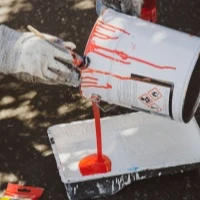
Epoxy coating is a type of polymer that forms a protective layer on the surface of the aluminum mesh. This layer is created through a chemical reaction that hardens the epoxy resin. When we apply it to the aluminum mesh, it adheres tightly to the metal surface.
The process of applying epoxy coating to aluminum mesh can be either dip - coating or spray - coating. Dip - coating involves submerging the mesh into a tank filled with epoxy, while spray - coating uses a spray gun to evenly distribute the epoxy over the mesh. Each method has its own advantages, but both result in a well - coated mesh.
Impact on Tensile Strength
One of the key aspects of strength is tensile strength, which is the ability of the mesh to withstand pulling forces. When we add an epoxy coating to aluminum mesh, it can actually enhance the tensile strength. The epoxy acts as a sort of reinforcement, holding the individual strands of the mesh together more firmly.
Think of it like this: without the epoxy, the aluminum strands can move independently when a pulling force is applied. But with the epoxy coating, the strands are bonded together, making it harder for them to separate. This means that the mesh can handle higher levels of tension before it breaks.
However, it's important to note that the increase in tensile strength isn't infinite. There are limits based on the quality of the epoxy, the thickness of the coating, and the original strength of the aluminum mesh. For example, if the epoxy is of poor quality, it might not bond well with the aluminum, and the increase in tensile strength will be minimal.
Resistance to Compressive Forces
Compressive strength is another important factor, especially in applications where the mesh might be pushed or squeezed. Epoxy coating can also have a positive impact on the compressive strength of aluminum mesh.
The epoxy layer provides a cushioning effect. When a compressive force is applied, the epoxy absorbs some of the energy, preventing the aluminum strands from being crushed too easily. This is particularly useful in industrial settings where the mesh might be subject to heavy loads.
But again, there are limitations. If the compressive force is too high, the epoxy coating might crack or peel off, reducing its effectiveness. That's why it's crucial to choose the right epoxy and apply it correctly to ensure maximum protection.
Corrosion Resistance and Long - Term Strength
One of the biggest benefits of epoxy coating is its ability to protect the aluminum mesh from corrosion. Aluminum is naturally resistant to corrosion to some extent, but in harsh environments, it can still be prone to rust and other forms of degradation.
The epoxy coating acts as a barrier between the aluminum and the surrounding environment. It prevents moisture, chemicals, and other corrosive agents from reaching the metal surface. By protecting the aluminum from corrosion, the epoxy coating helps maintain the long - term strength of the mesh.
Over time, if the aluminum were to corrode, its strength would gradually decrease. But with the epoxy coating in place, the mesh can retain its strength for a much longer period. This is especially important in outdoor applications, such as Epoxy Coated Mesh used in fences or outdoor structures.
Impact on Flexural Strength
Flexural strength refers to the ability of the mesh to bend without breaking. Epoxy coating can influence this aspect as well. The coating adds a bit of stiffness to the mesh, which can either be an advantage or a disadvantage depending on the application.
In some cases, a stiffer mesh is desirable. For example, in Epoxy coated wire mesh for filter support layer, a stiffer mesh can better support the filter material. However, in other applications where flexibility is key, like Window Screen Mesh Mosquito Screen Mesh, too much stiffness might be a problem.
Manufacturers need to find the right balance when applying the epoxy coating to ensure that the flexural strength meets the requirements of the specific application.
Limitations and Considerations
While epoxy coating offers many benefits in terms of strength, there are also some limitations. As I mentioned earlier, the quality of the epoxy and the application process are crucial. If the coating is too thick, it can make the mesh brittle, reducing its overall strength.
Also, the epoxy coating can be affected by temperature changes. Extreme heat or cold can cause the epoxy to expand or contract, which might lead to cracking or peeling. This is something to keep in mind when using the mesh in environments with wide temperature variations.


Conclusion
In conclusion, epoxy coating can have a significant impact on the strength of aluminum mesh. It can enhance tensile strength, improve resistance to compressive forces, protect against corrosion, and influence flexural strength. However, it's important to consider the limitations and choose the right epoxy and application method for the specific application.
If you're in the market for high - quality Aluminum Epoxy Coated Mesh, I'd love to chat with you. Whether you need it for industrial filtration, window screens, or any other application, I can provide you with the best - suited products. Just reach out, and we can discuss your requirements in detail.
References
- "Materials Science and Engineering: An Introduction" by William D. Callister, Jr. and David G. Rethwisch
- "Handbook of Epoxy Resins" by Henry Lee and Kris Neville