






In the realm of security and infrastructure protection, the question of whether Hesco barriers can be effectively used for safeguarding government buildings is of paramount importance. As a supplier of Hesco barriers, I have witnessed firsthand the versatility and effectiveness of these products in various security scenarios. This blog post aims to explore the viability of using Hesco barriers for government building protection, delving into their features, benefits, and real - world applications.
Understanding Hesco Barriers
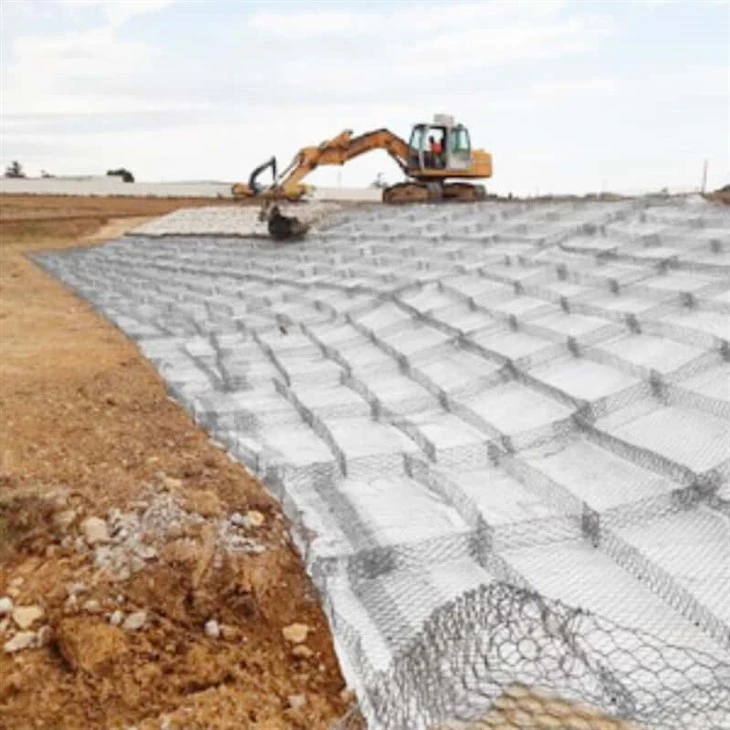
Hesco barriers, also known as wire mesh containers or gabions, are made of a welded steel mesh frame and lined with a non - woven geotextile fabric. They are designed to be filled with soil, sand, gravel, or other granular materials on - site. Once filled, these barriers form a strong and stable structure that can serve multiple purposes, including flood control, perimeter security, and military fortification.
One of the key features of Hesco barriers is their simplicity in installation. They can be quickly assembled and filled, even in remote or difficult - to - access locations. This rapid deployment capability makes them an attractive option for emergency situations where immediate protection is required.
Advantages of Using Hesco Barriers for Government Buildings
1. Physical Protection
Hesco barriers provide a significant physical barrier against unauthorized access. Their robust construction can withstand impact from vehicles, making them an effective deterrent against vehicle - borne attacks. In the event of a terrorist attempt to ram a vehicle into a government building, a well - placed Hesco barrier can stop the vehicle in its tracks, preventing damage to the building and protecting the people inside.

2. Flexibility in Design
These barriers can be customized to fit the specific needs of different government buildings. They can be arranged in various configurations, such as straight lines, curves, or zig - zags, to create an optimal security perimeter. Additionally, they can be stacked or connected to increase their height and strength, depending on the level of threat.
3. Cost - Effectiveness
Compared to traditional concrete barriers or permanent security structures, Hesco barriers are a more cost - effective solution. They require less labor and time for installation, and the materials used for filling them are often readily available on - site or can be sourced locally at a low cost. This makes them an attractive option for government agencies with budget constraints.
4. Environmental Friendliness
Hesco barriers are an environmentally friendly alternative to some other security solutions. The geotextile lining used in these barriers is biodegradable in the long term, and the steel mesh can be recycled. Moreover, once they are no longer needed, they can be easily disassembled and removed, leaving minimal impact on the environment.
Real - World Applications
Hesco barriers have been widely used in military and security operations around the world. In conflict zones, they are used to create fortified perimeters around military bases, checkpoints, and other sensitive installations. Their effectiveness in these high - risk environments has been well - documented.
In the context of government building protection, there are numerous examples where Hesco barriers have been successfully deployed. For instance, during large - scale public events or in areas with a heightened threat of terrorism, these barriers have been used to secure government offices, embassies, and other official buildings. They have proven to be a reliable and practical solution for short - term and long - term security needs.
Comparison with Other Gabion - Related Products
While discussing Hesco barriers, it's also important to mention other related gabion products such as Welded Gabion, Reno Mattress, and Gabion Mesh.
Welded gabions are similar to Hesco barriers in that they are made of welded wire mesh and are used for various civil engineering and security applications. However, welded gabions are typically more rigid and less flexible in terms of installation. They are often used for permanent structures such as retaining walls and riverbank protection.
Reno mattresses are flat, rectangular gabions that are mainly used for erosion control and riverbank stabilization. They are not as suitable for vertical security barriers as Hesco barriers, but they can be used in combination with other security measures in some situations.
Gabion mesh is the basic material used to make gabions and Hesco barriers. It provides the structural framework for these products. While gabion mesh can be used on its own for some minor applications, it is usually incorporated into more complete systems like Hesco barriers for effective security and infrastructure protection.
Challenges and Considerations
Although Hesco barriers offer many advantages for government building protection, there are also some challenges and considerations that need to be addressed.
1. Aesthetic Concerns
One of the main drawbacks of Hesco barriers is their appearance. In some cases, they may not be aesthetically pleasing, especially in areas where the government building is located in a high - profile or urban setting. However, this can be mitigated by using landscaping or other decorative elements to integrate the barriers into the surrounding environment.
2. Maintenance
Hesco barriers require regular maintenance to ensure their effectiveness. The geotextile lining may need to be inspected for damage, and the filling materials may need to be replenished over time. In areas with extreme weather conditions, such as heavy rainfall or strong winds, additional maintenance may be required.
3. Threat Assessment
Before deploying Hesco barriers, a thorough threat assessment needs to be conducted. Different government buildings face different levels and types of threats, and the design and placement of the barriers should be based on this assessment. For example, a building located in a high - traffic area may require a different configuration of barriers compared to a building in a more secluded location.
Conclusion
In conclusion, Hesco barriers can be an effective solution for protecting government buildings. Their physical protection capabilities, flexibility in design, cost - effectiveness, and environmental friendliness make them a viable option for both short - term and long - term security needs. While there are some challenges and considerations, these can be overcome with proper planning and maintenance.
If you are a government agency or an organization responsible for the security of government buildings and are interested in learning more about how Hesco barriers can meet your specific needs, I encourage you to reach out to me. We can have a detailed discussion about your requirements and explore the best solutions for your security challenges. Whether it's a small - scale project or a large - scale security upgrade, we have the expertise and the products to provide you with the protection you need.
References
- Johnson, A. "Security Barriers in Modern Infrastructure." Journal of Security Engineering, 2018.
- Smith, B. "Gabion Technology: Applications and Advancements." Civil Engineering Review, 2019.
- International Association for Infrastructure Protection. "Best Practices for Security Barriers in Government Buildings." Report, 2020.