






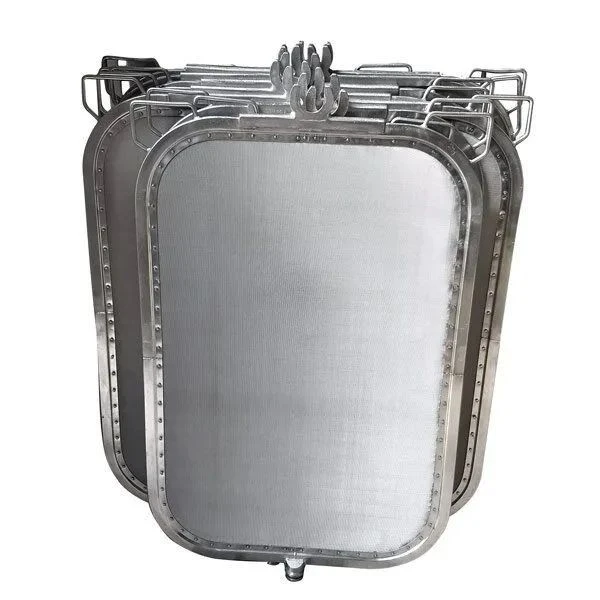
CHG Metal manufactures vertical leaf filter elements for vertical pressure leaf filter (VPLF) systems. The elements are arranged vertically inside the pressure vessel and are supported by top locating points, side guide rails or brackets. Slurry passes through both faces of each leaf, solids form a filter cake on the mesh, and filtrate flows through the internal drainage core to the bottom manifold. CHG Metal supplies 3-layer, 5-layer and heavy-duty constructions in SS304, SS316L, SS904L, Hastelloy C276, Monel 400 and other alloys selected for the process.

Vertical Layout and Working Principle
A vertical pressure leaf filter normally consists of a vertical pressure vessel, a common filtrate manifold and a set of vertically mounted leaves. The slurry enters the vessel from the side or bottom and flows upward around the leaf faces. Solids are retained on both sides of the element while filtrate passes through the drainage core and exits through the bottom manifold. Dry cake can be discharged by pneumatic vibration; wet cake can be removed by sluicing or reslurrying. The leaf frame, guide rails and bottom connection must work together to keep the array aligned during filtration, vibration and cleaning.
|
Structure |
Function |
Page Focus |
|
Vertical pressure vessel |
Contains slurry and the vertical leaf array |
Not a complete equipment page; explained as the installation environment |
|
Top locating point |
Limits leaf height and movement |
Locating pin, hanger point and installation height |
|
Side rails/brackets |
Maintain vertical alignment and leaf spacing |
Rail section, spacing and leaf clearance |
|
Leaf frame |
Carries differential pressure, cake weight and vibration |
C-channel, tubular or reinforced frame |
|
Filtration mesh |
Retains particles and forms the cake |
PDW/TDW, mesh count, wire diameter and target micron |
|
Bottom nozzle/manifold |
Discharges filtrate and seals against bypass |
Nozzle size, O-ring groove, seal material and insertion depth |
Support Rails and Installation Height
For vertical leaf filter elements, alignment is controlled by the installation height, top locating point, side rails and bottom manifold position. If the guide tabs or rail clearances are incorrect, the leaf can tilt, reduce spacing or damage the bottom seal during installation. CHG Metal reviews the existing rail section, center distance, leaf thickness, top pin position, bottom spigot and available removal clearance before making the replacement element.
Bottom Nozzle Sealing
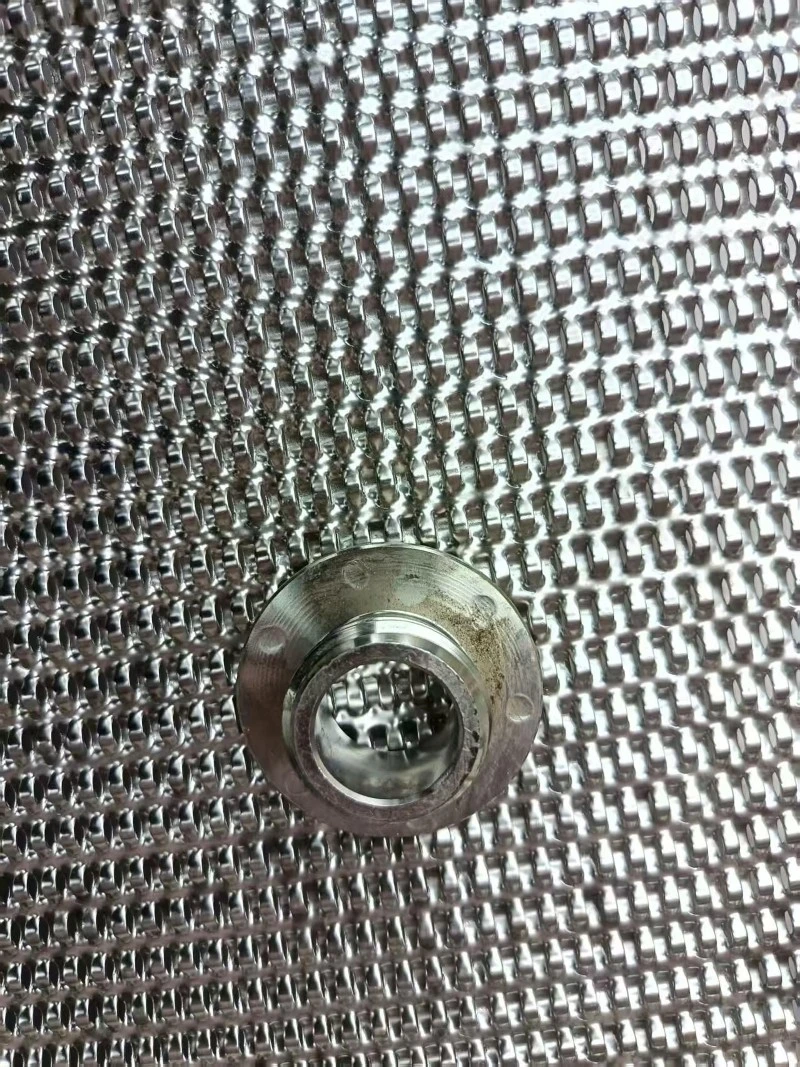
The bottom spigot is the connection between the leaf and the clean filtrate manifold. A poorly fitted spigot can cause installation friction, seal damage or slurry bypass into the filtrate side. CHG Metal machines the spigot from solid bar stock when the design requires it and can produce single-groove, double-groove, flat-gasket or flange-style connections. O-rings are selected from materials such as Viton, EPDM, Buna-N or PTFE according to the process fluid and temperature.
Technical Specifications
|
Item |
Reference Specification |
|
System filtration area |
Up to 120 m² reference |
|
Layer count |
3-layer or 5-layer; adjusted to the duty |
|
Mesh range |
15–150 µm reference |
|
Filtration-layer wire diameter |
0.14–0.40 mm |
|
Drainage core |
1.2–2.0 mm |
|
Materials |
SS304, SS316L, SS904L, Hastelloy C276 and Monel 400 |
|
Frame |
C-channel or tubular perimeter frame |
|
Bottom connection |
Center nozzle, offset spigot, single/double O-ring or flat gasket |
|
Design reference pressure |
-1 to 6 bar(g) |
|
Design reference temperature |
0–150°C |
Manufacturing and Quality Inspection
For vertical leaf filter elements, manufacturing covers material inspection, mesh cutting, layer alignment, drainage-core assembly, frame forming, continuous TIG welding or riveting, mesh tensioning, bottom spigot machining, O-ring fitting and final assembly. Inspection includes frame dimensions, installation height, diagonal squareness, panel flatness, guide-tab position, spigot position and groove dimensions, mesh count, mesh tension, weld appearance, seal fit and packing. For replacement projects, the first piece can be checked against the vessel guide and manifold before the remaining elements are produced.
FAQ
Q: What is a vertical leaf filter element?
A: It is a filter leaf installed vertically inside a pressure leaf filter vessel. Top locating points, side rails and the bottom spigot keep the leaf aligned with the vessel and filtrate manifold.
Q: How does element rigidity affect dry cake discharge in vertical pressure leaf filters?
A: At the end of a cycle, pneumatic vibrators shake the leaf array to drop dry cake into the bottom vessel cone. A flexible frame dampens vibration, leaving sticky cake stuck to the mesh. A rigid frame transfers 100% of the vibratory energy directly to the cake layer for clean detachment.
Q: Are these vertical leaf elements compatible with foreign OEM pressure leaf filters?
A: Yes. We manufacture exact drop-in replacement vertical leaf elements tailored to major international vessel brands (e.g., Sharplex, Amafilter, Niagara, Mahle, Velo), matching original mounting heights and manifold spigot dimensions.
Q: How is the element aligned in the vessel?
A: Alignment is controlled by installation height, top pin or hanger position, rail section and clearance, leaf thickness and bottom spigot position.
Q: Why is bottom discharge sealing important?
A: The bottom spigot connects the clean filtrate side to the manifold. A poorly fitted seal can cause bypass, while an over-compressed seal can make installation difficult.
Q: Can vertical elements be re-meshed?
A: Yes. The frame is inspected for flatness, cracks, guide damage and spigot condition. If suitable, new mesh layers and edge fixing can be installed.
Q: Can you manufacture a VPLF replacement element?
A: Yes. We can work from an equipment drawing, old element, measured dimensions or sample. Installation height, rails, spigot and manifold interface are verified before production.
Q: What information is needed for a quotation?
A: Please provide the vessel model or drawing, leaf dimensions, installation height, rail and guide dimensions, bottom spigot, O-ring groove, manifold data, mesh rating, material, pressure, temperature and quantity.
Request a Quote
Send the vertical pressure leaf filter drawing, existing element dimensions, guide rail details and bottom manifold data to CHG Metal. Our team will review the element construction, sealing and replacement interface, then provide a production drawing and quotation.


