






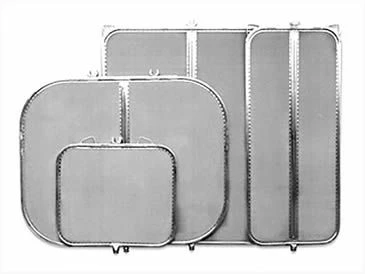
High-Impact Hydraulic Regeneration & Blinded Mesh Recovery
In continuous industrial liquid-solid separation, filter leaf screens gradually collect fine particulates, sticky organic bitumens, and chemical scales deep within their woven wire intersections. Manual removal and off-line cleaning of large filter leaf bundles causes excessive downtime, high labor costs, and potential structural frame damage during handling.
Our High-Efficiency Pressure Leaf Filter Clean-in-Place (CIP) Systems are engineered to deliver automated, high-impact hydraulic regeneration directly inside closed pressure vessels.
Utilizing precision-machined oscillating spray headers, high-impact flat-fan nozzles, and targeted chemical circulation flow paths, these CIP systems thoroughly wash away wet filter cake residues and dislodge deeply embedded microscopic contaminants. Restoring full hydraulic permeability without disassembling the vessel array ensures maximum operating uptime and extended filter leaf service life.
Details


Automated In-Vessel CIP Systems vs. Manual Off-Line Cleaning
Upgrading your pressure leaf array with an engineered CIP system drastically improves operational efficiency and maintenance safety:
| Operational Parameter | Manual Off-Line Leaf Cleaning | Our High-Efficiency CIP Systems |
| Vessel Downtime | 12–24 hours (Requires bundle extraction) | 30–90 minutes (Fully automated cycle) |
| Labor & Safety Risks | High manual labor; exposure to hot/harsh chemicals | Enclosed Automated Process (Zero operator exposure) |
| Cleaning Uniformity | Uneven manual pressure washing | $100\%$ Surface Coverage via Oscillating Headers |
| Mesh Physical Wear | Scrapes & dents fine Dutch weave mesh | Non-Contact Hydraulic Jet Impact (Zero mesh abrasion) |
| Chemical Wash Efficiency | High solvent/acid consumption & waste | Recirculated Closed-Loop Chemical Wash Skid |
| Permeability Recovery | Incomplete cleaning of inner drainage cores | High-Impact Penetration (Restores initial flux) |
Key Performance Advantages Rooted in Our Manufacturing Process
Precision CNC Nozzle Pitch Alignment: Spray nozzles are CNC-positioned along the sluice manifold header to align precisely with the gaps between adjacent leaf panels, ensuring dual-sided coverage.
Oscillating Header Drive Mechanics: Integrated pneumatic or electric drive units oscillate the wash header continuously during sluicing, eliminating blind spots across large rectangular or circular leaf panels.
Corrosion-Resistant Alloy Construction: All wash manifolds and nozzle tips are machined from SS316L, Alloy 20, or Hastelloy C276 to withstand aggressive acid and alkaline cleaning chemistries.
Frequently Asked Questions (FAQ)
Q1: Can a CIP sluicing system completely replace dry vibratory cake discharge?
It depends on the process. Wet sluicing CIP systems are ideal when the discharge cake can be discarded or re-slurried as a wet waste stream. In processes requiring dry cake recovery (e.g., dry sulfur or dry edible oil bleaching earth), dry vibratory discharge is used first, followed by a periodic wet CIP cycle to dislodge residual blinding.
Q2: What spray nozzle pressure is recommended for leaf filter CIP sluicing?
Optimal sluicing impact typically requires liquid pressures between $3.5\text{ bar}$ and $6.0\text{ bar}$. Excessively high pressures ($>10\text{ bar}$) are unnecessary and may cause localized erosion or displacement of delicate pre-coat layers.
Q3: How do CIP systems clean the internal drainage core of the filter leaf?
While outer spray nozzles clean the exterior mesh faces, closed-loop chemical CIP skids reverse-circulate heated acid or alkaline solutions backward through the discharge manifold spigots. This backwash flow flushes out trapped fines from the central drainage matrix.


