






When it comes to the construction and environmental protection industries, gabion boxes are a versatile and widely - used solution. As a gabion box supplier, I understand the importance of measuring the quality of these products. In this blog, I'll share some key methods and criteria for evaluating the quality of gabion boxes.
1. Material Quality
The first and most fundamental aspect of measuring the quality of gabion boxes is the material they are made from.
Galvanized Wire
Galvanized wire is a popular choice for gabion boxes due to its corrosion - resistance. When evaluating the quality of galvanized wire gabion boxes Galvanized Wire Gabion Box, we need to check the thickness of the zinc coating. A thicker zinc coating provides better protection against rust and corrosion. Industry standards usually specify a minimum zinc coating weight, for example, in some cases, it should be at least 250 grams per square meter.
We can use a coating thickness gauge to measure the thickness of the zinc layer accurately. This device works by using magnetic or eddy - current principles. By taking multiple measurements at different points on the wire, we can get a comprehensive understanding of the coating's uniformity. If the coating is uneven, some parts of the wire may be more vulnerable to corrosion over time.
Another important factor is the quality of the base wire. High - quality base wire should have sufficient tensile strength. Tensile strength is measured in units of force per unit area, such as megapascals (MPa). A typical good - quality base wire for gabion boxes may have a tensile strength of around 350 - 550 MPa. We can conduct tensile tests using a universal testing machine. This machine gradually applies a pulling force to the wire until it breaks, and records the maximum force applied.
Hexagonal Gabion Mesh and PET Plastic Gabion
For Hexagonal Gabion MeshPET Plastic Gabion, the quality of the mesh and the plastic material matters. The hexagonal mesh should have a uniform aperture size. Irregular aperture sizes can affect the stability of the gabion box and its ability to hold the filling materials. We can use a caliper to measure the aperture dimensions at various locations on the mesh.
The PET plastic used in these gabion boxes should be of high - grade quality. It should be UV - resistant to prevent degradation when exposed to sunlight. We can perform accelerated weathering tests in a laboratory environment. By exposing samples of the PET plastic to artificial sunlight and specific temperature and humidity conditions for a certain period, we can assess its resistance to weathering. If the plastic shows signs of cracking, discoloration, or a significant reduction in mechanical properties after the test, it indicates poor quality.
2. Manufacturing Process
The manufacturing process also has a significant impact on the quality of gabion boxes.
Welding Quality
In the case of welded gabion boxes, the quality of the welds is crucial. A good weld should be strong and free of defects such as cracks, porosity, or insufficient fusion. We can visually inspect the welds for any obvious signs of defects. For a more in - depth assessment, we can use non - destructive testing methods such as ultrasonic testing or X - ray testing.
Ultrasonic testing works by sending high - frequency sound waves into the weld. If there are internal defects, the sound waves will be reflected differently, and a trained operator can interpret the signals to detect the presence and location of the defects. X - ray testing provides a clear image of the internal structure of the weld, allowing us to identify any hidden flaws.
Weaving Quality
For woven gabion boxes, the weaving pattern and tightness are important. The mesh should be tightly woven to ensure that it can withstand the pressure exerted by the filling materials. We can check the weaving quality by hand - feeling the mesh. A well - woven mesh should feel firm and not have loose or frayed strands.
We can also measure the weaving density, which is usually expressed as the number of meshes per unit length. A higher weaving density generally indicates better quality, as it provides more structural integrity to the gabion box.
3. Structural Integrity
The overall structural integrity of the gabion box is essential for its performance.

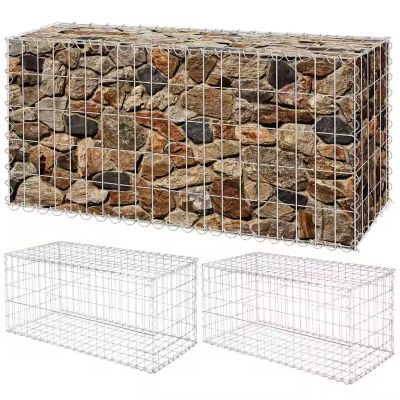
Box Dimensions
The gabion box should have accurate dimensions as specified in the design. Incorrect dimensions can lead to problems during installation and may affect the stability of the structure. We can use measuring tapes or laser distance meters to measure the length, width, and height of the gabion box. Any deviation from the specified dimensions should be within an acceptable tolerance range, which is usually determined by industry standards or customer requirements.
Assembly Quality
If the gabion box is assembled from multiple parts, the quality of the assembly is crucial. The connections between different parts should be secure. For example, if the box has wire ties or clips to hold the panels together, these connections should be strong enough to prevent the box from coming apart under normal use. We can perform a simple pull - test on the connections to check their strength.
4. Filling Compatibility
The gabion box should be compatible with the filling materials.
Filling Capacity
The gabion box should have an appropriate filling capacity. If the box is too small for the intended filling volume, it may cause over - crowding and put excessive stress on the box structure. On the other hand, if the box is too large, the filling materials may not be packed tightly enough, reducing the stability of the structure.
We can calculate the theoretical filling capacity of the gabion box based on its dimensions. Then, we can conduct filling tests in a controlled environment to ensure that the box can be filled to the desired level without any issues.
Filling Retention
The gabion box should be able to retain the filling materials effectively. The mesh size and the quality of the box construction play important roles in this aspect. A well - designed gabion box should prevent the filling materials from leaking out, especially during long - term use or when exposed to external forces such as water flow.
5. Durability and Long - term Performance
To ensure the long - term performance of gabion boxes, we need to consider their durability.
Corrosion Resistance
As mentioned earlier, corrosion resistance is a key factor. We can conduct long - term immersion tests in a simulated corrosive environment. For example, we can immerse samples of the gabion box in a salt - water solution for a certain period, usually several months or even years. By regularly inspecting the samples, we can monitor the degree of corrosion and estimate the service life of the gabion box in real - world conditions.
Resistance to Environmental Factors
Gabion boxes may be exposed to various environmental factors such as wind, rain, and temperature changes. We can perform environmental simulation tests in a climate chamber. By subjecting the gabion box to different temperature, humidity, and wind conditions, we can assess its ability to withstand these factors without significant damage.
In conclusion, measuring the quality of gabion boxes involves a comprehensive evaluation of the material, manufacturing process, structural integrity, filling compatibility, and long - term performance. As a gabion box supplier, we are committed to providing high - quality products that meet or exceed our customers' expectations. If you are in need of gabion boxes for your construction or environmental protection projects, we invite you to contact us for further discussion and procurement. We are ready to offer you the best solutions and products based on your specific requirements.
References
- ASTM International Standards for Gabion Boxes
- European Standards for Geosynthetic and Gabion Structures
- Industry - specific research papers on the performance and quality evaluation of gabion boxes