





In the modern world, power plants stand as the backbone of industrial and domestic energy supply. Ensuring their safety and security is of paramount importance. As a supplier of Hesco Barriers, I often encounter inquiries about the viability of using these barriers for protecting power plants. In this blog, I will delve into the various aspects of whether Hesco Barriers can indeed serve this crucial purpose.
Understanding Hesco Barriers
Hesco Barriers, also known as wire mesh containers or gabions, are engineered to provide flexible and rapidly deployable solutions for a wide range of applications. They consist of a wire mesh frame filled with soil, sand, or other granular materials. The modular design allows for easy assembly and customization, making them suitable for diverse scenarios.
One of the key advantages of Hesco Barriers is their ability to absorb and dissipate energy. When faced with external forces such as projectiles or blast waves, the filled material within the barrier acts as a cushion, reducing the impact on the protected area. This energy - absorbing property is crucial in protecting power plants from potential threats.
Threats to Power Plants
Power plants are vulnerable to multiple threats, both natural and man - made. Natural threats include floods, earthquakes, and extreme weather events. Man - made threats, on the other hand, range from terrorist attacks to accidental impacts from vehicles or aircraft.
Floods can cause significant damage to power plant infrastructure, leading to power outages and potentially costly repairs. Earthquakes can disrupt the structural integrity of buildings and equipment. Terrorist attacks may involve the use of explosives or firearms, while accidental impacts can result from errant vehicles or small aircraft. Protecting power plants from these threats requires a comprehensive security and safety strategy.
How Hesco Barriers Can Protect Power Plants
Protection Against Floods
Hesco Barriers can be an effective solution for flood protection. Their modular design allows for the quick construction of flood barriers around power plant perimeters. The filled material within the barriers provides a stable and watertight structure that can hold back floodwaters. Additionally, the wire mesh frame adds strength and durability to the barrier, ensuring that it can withstand the force of the flowing water.
For example, in areas prone to seasonal flooding, power plants can pre - position Hesco Barriers and quickly assemble them when flood warnings are issued. This proactive approach can significantly reduce the risk of flood - related damage to power plant facilities.

Protection Against Physical Attacks
In the case of man - made threats such as terrorist attacks or accidental impacts, Hesco Barriers can act as a first line of defense. The energy - absorbing property of the filled barriers can reduce the impact of projectiles and blast waves. For instance, if a vehicle were to crash into a power plant perimeter, the Hesco Barrier would absorb the kinetic energy of the vehicle, preventing it from reaching critical infrastructure.
Moreover, the height and thickness of Hesco Barriers can be customized according to the specific security requirements of the power plant. Higher and thicker barriers can provide enhanced protection against more severe threats.
Structural Support
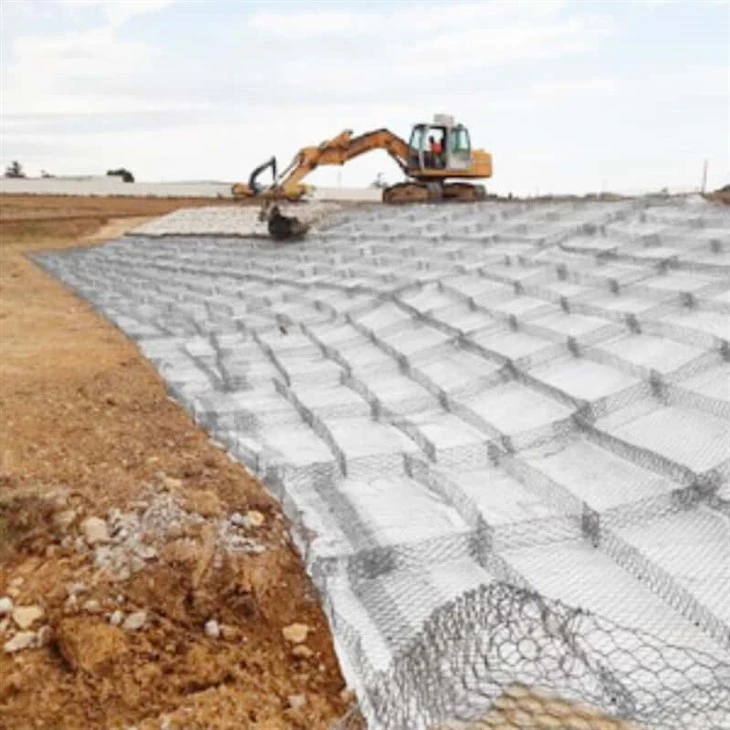
Hesco Barriers can also provide structural support to power plant buildings and equipment. In the event of an earthquake, the barriers can help to stabilize the ground around the power plant, reducing the risk of soil liquefaction and subsequent damage to the infrastructure. They can be used to reinforce slopes and embankments near the power plant, preventing landslides and other ground - related hazards.
Comparison with Other Gabion Products
When considering the use of Hesco Barriers for power plant protection, it is also important to compare them with other gabion products such as Sack Gabion, Welded Gabion, and Reno Mattress.
Sack Gabions are typically made of woven or non - woven geotextile bags filled with stones or soil. While they are relatively inexpensive and easy to install, they may not provide the same level of strength and durability as Hesco Barriers. Welded Gabions, on the other hand, are made of welded wire mesh and are more rigid. However, their installation may be more time - consuming and less flexible compared to Hesco Barriers. Reno Mattresses are flat, rectangular gabions often used for erosion control. They are not as suitable for vertical barrier applications as Hesco Barriers.
Considerations for Using Hesco Barriers in Power Plants
While Hesco Barriers offer many advantages for power plant protection, there are also some considerations to keep in mind.
Maintenance
Regular maintenance is required to ensure the long - term effectiveness of Hesco Barriers. The wire mesh may be subject to corrosion over time, especially in harsh environmental conditions. The filled material may also settle or erode, reducing the barrier's height and strength. Therefore, power plant operators need to establish a maintenance schedule to inspect and repair the barriers as needed.
Environmental Impact
The choice of filling material for Hesco Barriers can have an environmental impact. For example, using locally sourced soil or sand can reduce transportation costs and carbon emissions. However, care must be taken to ensure that the filling material does not contain contaminants that could harm the environment.
Regulatory Compliance
Power plants are subject to various regulatory requirements regarding safety and security. Before installing Hesco Barriers, power plant operators need to ensure that the barriers comply with all relevant regulations. This may include requirements related to barrier height, strength, and fire resistance.
Conclusion
In conclusion, Hesco Barriers can be a valuable asset for protecting power plants from a wide range of threats. Their energy - absorbing properties, modular design, and flexibility make them suitable for flood protection, physical attack prevention, and structural support. While there are some considerations such as maintenance, environmental impact, and regulatory compliance, these can be managed with proper planning and implementation.
If you are a power plant operator or involved in the energy industry and are interested in learning more about how Hesco Barriers can protect your facilities, I encourage you to reach out for a detailed discussion. We can work together to develop a customized solution that meets your specific security and safety needs.
References
- ASTM International. (Year). Standard specifications for wire mesh gabions and related products.
- Federal Emergency Management Agency (FEMA). (Year). Flood protection guidelines for critical infrastructure.
- International Atomic Energy Agency (IAEA). (Year). Security guidelines for nuclear power plants.