






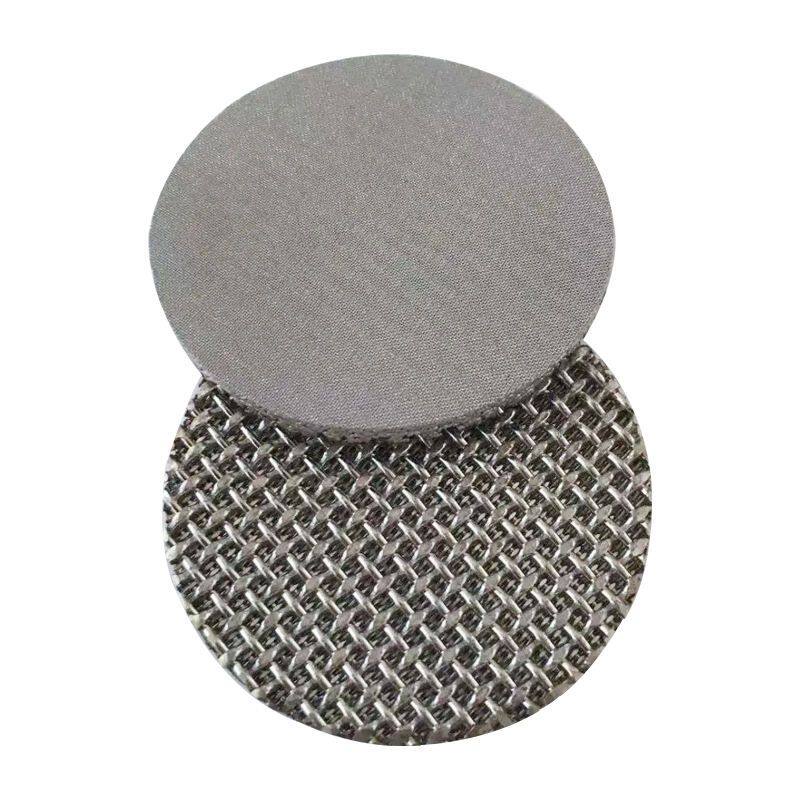
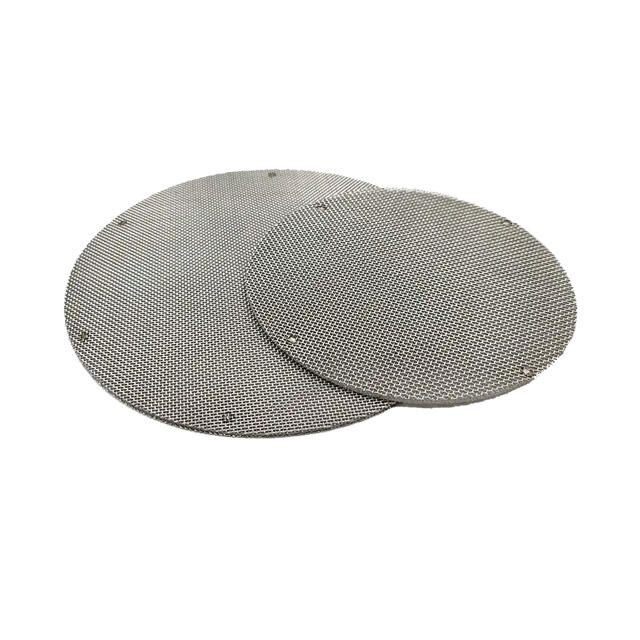
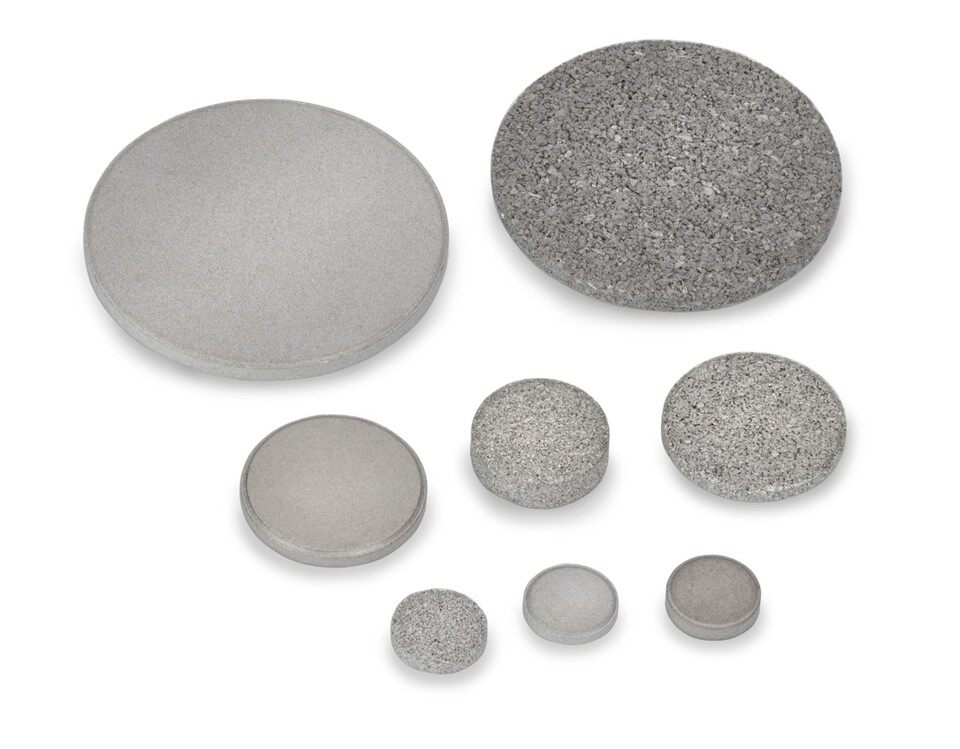
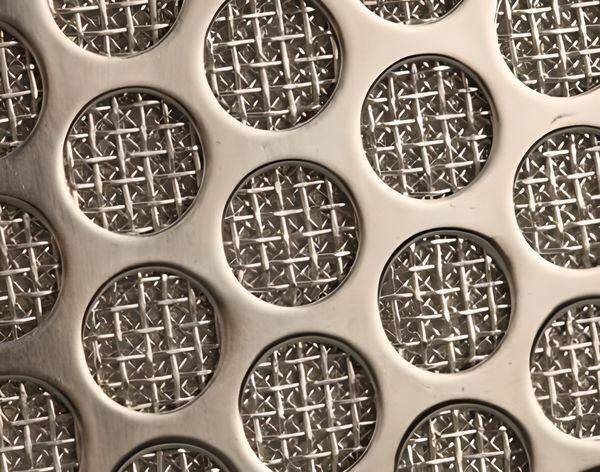
The Sintered Metal Filter Disc is a high-performance filtration component engineered for demanding industrial environments that require extreme durability and precise particle retention. Unlike standard mesh discs, these are produced through a vacuum sintering process that fuses multiple layers of stainless steel wire cloth or metal fibers into a single, integrated porous structure. The Sintered Metal Filter Disc offers a stable pore size distribution and exceptional resistance to pressure and thermal shock, ensuring reliable filtration performance in critical applications such as polymer melt processing, high-pressure hydraulic systems, and chemical filtration.
Constructed from premium alloys like 316L, the Sintered Metal Filter Disc provides superior corrosion resistance and can withstand repeated cleaning cycles, including backwashing and ultrasonic treatment, for a long service life. The rigid structure of the Sintered Metal Filter Disc eliminates the risk of wire migration or pore deformation even under harsh operating conditions. Whether utilized for gas-liquid separation, catalyst recovery, or precision aerospace filtration, these discs provide a robust and reusable solution that maintains consistent flow rates and high-purity results.
Sintering Tech & Characteristics
| Disc Type | Core Material | Key Feature | Operating Temp | Ideal Application |
| Sintered Mesh Disc | Multi-layer Wire Cloth | High Mechanical Strength | -200°C to 600°C | Polymer Melt / Oil Filtration |
| Sintered Fiber Disc | Random Metal Fibers | High Dirt Holding Capacity | Up to 500°C | Hydraulic / Fuel Systems |
| Sintered Powder Disc | Spherical Powder | Depth Filtration / Rigid | Up to 800°C | Gas Sparging / Lab Use |
| Compound Disc | Mesh + Fiber Felt | Balanced Flow & Accuracy | Up to 500°C | High-purity Gas Processing |
| Reinforced Disc | Mesh + Perforated Plate | Extreme Pressure Resistance | Up to 600°C | Heavy Industrial Separations |
Standard Specs & Performance
| Nominal Rating (μm) | Absolute Rating (μm) | Disc Diameter (mm) | Thickness (mm) | Weight (kg/m²) | Bubble Point (Pa) |
| 5 μm | 10 – 12 μm | 10 / 25 / 47 mm | 1.7 mm | ~8.4 | ≥ 3200 |
| 10 μm | 15 – 20 μm | 50 / 100 / 150 mm | 1.7 mm | ~8.3 | ≥ 2500 |
| 20 μm | 25 – 35 μm | 150 / 200 / 300 mm | 1.7 mm | ~8.2 | ≥ 1800 |
| 40 μm | 50 – 60 μm | 300 / 400 / 600 mm | 1.7 mm | ~8.0 | ≥ 1200 |
| 100 μm | 120 – 140 μm | Up to 1200 mm | 1.7 mm | ~7.8 | ≥ 600 |
| Customized | 0.5 – 500 μm | Custom Design | 0.5 – 10 mm | Per Specs | Per Specs |


Why Choose Sintered Disc
From CHG in China?
As a leading manufacturer of sintered discs in China, we offer a comprehensive range of products designed to meet the diverse needs of our customers.
Our sintered discs are known for their excellent quality, cost-effectiveness, and reliable performance.
By utilizing advanced sintering technology, we are able to produce sintered discs with precise sizes, shapes, and filtration efficiency to suit different application requirements.
We carefully combine metal mesh layers with disc plates to enhance the filtration surface area, making our products highly effective for filtering liquids, gases, and semi-solid materials.
In addition, all raw materials are strictly selected, and every production step is carefully controlled to ensure consistent quality and complete customer satisfaction.
Is It Possible to Order Customized Sintered Disc From CHG in China?
Yes, customized sintered discs can be ordered directly from BLUE in China.
To provide an accurate solution, we ask customers to share detailed specifications such as disc size, thickness, porosity, diameter, and structural design requirements.
Our technical team carefully reviews each request and offers professional recommendations to optimize both product performance and production efficiency. Once the final specifications are confirmed, we proceed with manufacturing according to your project needs.
Throughout the production process, every stage is strictly monitored, and comprehensive quality inspections are carried out to ensure stable performance and reliable filtration results.
All products are securely packed in compliance with international shipping standards to minimize the risk of damage during transportation. We are committed to on-time delivery and can typically arrange shipment within 10 days.
With years of manufacturing experience and thousands of satisfied customers worldwide, we have earned a strong reputation for product quality, competitive pricing, and dependable delivery service.
Our sintered discs offer excellent filtration efficiency, outstanding corrosion and alkali resistance, high-temperature durability, and a long service life, making them suitable for a wide range of industrial applications.
Most importantly, we specialize in producing fully customized sintered discs tailored to your exact requirements.
If you have any questions or would like more information about our sintered discs, please feel free to contact us. Our team is always ready to provide professional support and the most suitable filtration solutions for your project. Free quotations are available upon request.
Sintered Disc - Ultimate FAQs Guide
FAQ
What is a Sintered Disc?
A :Sintered disc is a high-performance filtration component designed for precise separation and contaminant removal in industrial applications.
Unlike traditional filter paper, sintered discs are manufactured from multiple layers of precision woven wire mesh bonded together through advanced vacuum sintering technology. This process creates a strong, stable, and durable filtration structure with excellent rigidity and corrosion resistance.
Compared with ceramic filters, powder filters, and conventional metal filters, sintered wire mesh discs offer higher filtration efficiency, better pressure resistance, and longer service life.
Sintered discs are widely used in:
- Diesel engine filtration
- Chemical fiber processing
- Water treatment systems
- Food and beverage filtration
- Plastic extrusion applications
- Textile dope filtration
What are the Applications of Sintered Discs?
A:intered discs are widely used in industrial filtration and separation systems due to their excellent filtration efficiency, corrosion resistance, and high-temperature durability. They are suitable for filtering liquids, gases, steam, and semi-solid materials in demanding working environments.
Common applications of sintered discs include:
- Chemical and petrochemical filtration
- Water treatment and purification systems
- Food and beverage processing
- Pharmaceutical and biotechnology industries
- Plastic extrusion and polymer filtration
- Diesel engine and fuel filtration
- Hydraulic and lubrication systems
- Textile and chemical fiber production
- Gas diffusion and air filtration
- High-temperature and high-pressure filtration applications
With customizable pore sizes, materials, and structures, sintered discs can meet different industrial filtration requirements with high precision and long service life.
How Do Sintered Discs Get Manufactured?
How to Choose the Right Sintered Disc?
How Does a Sintered Disc Work?
What Materials Are Used to Manufacture Sintered Discs?
. Bronze Metal
Commonly, bronze is the prior choice of the buyers due to its low-cost acquisition and considerate tensile power, heat resistance and mechanical strengths.
Furthermore, bronze consists of variable corrosion resistance properties depending on the type of fluid used.
. Stainless Steel
Stainless steel is also suitable for making sintered filter discs due to its excellent heat and corrosion resistance properties.
The grades 304, 304L, 316, and 316L are mainly widely used in multiple applications for various purposes.
What are the Sintered Disc Pore Size?
Typically, sintered disc pore sizes range from 0.5 micron to 200 microns, depending on the material, mesh structure, and application needs. Fine pore sizes are suitable for high-precision filtration, while larger pore sizes are commonly used for coarse filtration and higher flow rates.
However, the pore sizes from 16µm to 40µm work more efficiently for medium precipitates operations.
Moreover, the sizes from 1.0µm to 1.6µm are helpful for ultra-fine filtration outcomes like in biological solutions. They remove bacteria from the fluid on decomposition
What Are the Features of Sintered Discs?
Sintered discs offer excellent filtration performance and durability, making them ideal for demanding industrial applications. Their key features include:
-
High filtration accuracy and efficiency
- Excellent corrosion and oxidation resistance
- Strong mechanical strength and rigidity
- High-temperature and pressure resistance
- Long service life and reusable design
- Stable pore structure for consistent filtration
- Easy cleaning and maintenance
- Customizable sizes, shapes, and pore ratings
- Suitable for liquid, gas, and steam filtration
These advantages make sintered discs widely used in chemical, pharmaceutical, food processing, water treatment, and industrial filtration systems.
Apart from Filter Discs, Which Other Types of Sintered Metal Filter Elements Do CHG Have?
CHG manufactures sintered stainless steel filters using grades 316 and 304 with alloying elements carbon or molybdenum.
Both of these elements are suitable for the filtration processes that require excellent corrosion resistance and welding operations.
2. Porous Metal Filter
Porous metal filters are manufactured in different shapes and sizes for water treatment, automotive, food and beverage industry, and chemical filtration tasks.
3. Metal Powder Filters
Generally, the metal powder filters are porous filters with a broad micron range from 0.2-100 microns with enhanced breathability and uniform distribution of pore sizes.
How Does Sintered Disc Compare to Sintered Metal Filter Plates?
Comparing sintered disc to the sintered metal filter plate is difficult as both have distinctive characteristics and distinct usage among various applications.
Primarily, the sintered filter disc consists of a disc shape, while sintered metal filter plates can be of any shape.
Additionally, these materials possess impressive filtration efficiency with variable pore sizes that prohibit contaminants from passing through them.
Moreover, sintered discs can be incorporated with multiple layers of wire mesh and metal powders for enhanced productivity.
Different kinds and grades of metals can also be used for the effective manufacturing of sintered discs and plates.
Typically, stainless steel, bronze, titanium, copper, and nickel are utilized to construct sintered plates and discs.
Consequently, both filters exhibit elevated accuracy levels with high mechanical strength to resist high-pressure operations.
Which Features Should You Consider in a Sintered Disc?
The features you should consider in sintered filter disc are stated below:
Primarily, the sintered discs should be manufactured with different grades of stainless steel, namely, 304, 306, 304L, and 306L.
Moreover, these filter discs must provide high precision particle efficiency with variable accuracy levels.
Additionally, the sintered filter discs should be able to withstand high temperatures up to 1000 degrees Celsius.
The multiple layered filters inside the disc enhance the rigidity and improve the unit's mechanical and structural strength.
The sintered metal filter discs must have longer life spans with equal efficiency with the special allowance of washing and backwashing.
Low-pressure drop and enhanced filtration accuracy should be enabled in the unit to deliver results quicker and faster.
How Do You Specify a Sintered Disc?
To specify a sintered disc, several important parameters should be provided to ensure the product meets your filtration and application requirements. These specifications typically include:
- Material type (stainless steel, bronze, titanium, etc.)
- Disc diameter and thickness
- Filtration rating or pore size
- Number of mesh layers
- Operating temperature and pressure
- Flow rate requirements
- Shape and structural design
- Corrosion resistance requirements
- Application or filtration media
Providing these details helps manufacturers produce a customized sintered disc with the right filtration efficiency, strength, and durability for your specific industrial application.
What Are the Available Sizes and Designs of Sintered Discs?
Sintered discs are available in a wide variety of sizes and designs to meet different industrial filtration requirements. They can be customized based on application needs, operating conditions, and installation requirements.
Common available options include:
- Standard or customized diameters
- Different thicknesses and filtration layers
- Round, ring, square, or special-shaped designs
- Single-layer or multi-layer mesh structures
- Flat, cone-shaped, or pleated configurations
- Various pore sizes and filtration ratings
Sintered discs can also be manufactured with different edge treatments, frames, or support layers to improve strength, sealing performance, and installation convenience. Custom designs are widely available for specialized filtration systems and industrial equipment.
Can You Perform Inside-Out Multimode Filtration with a Sintered Disc?
Yes, you can perform inside-out multimode filtration with the sintered disc by the standard filtration technique.
Typically, this method involves the filtration of the liquid inside the sintered metal filter disc.
Moreover, the process is helpful for applications that require a continuous flow of fluid during the process.
By the end of the process, the contaminants are collected from the outer sides of the system without bothering the unit.
When Should You Replace a Sintered Disc?
A sintered disc should be replaced when its filtration performance begins to decline or when cleaning can no longer restore normal flow and efficiency.
Common signs that replacement is needed include:
- Noticeable pressure drop increase across the filter
- Reduced flow rate despite cleaning
- Permanent clogging or blocked pores
- Visible damage such as deformation or corrosion
- Loss of filtration accuracy or efficiency
In many cases, sintered discs are designed to be cleaned and reused multiple times. However, after repeated use and cleaning cycles, the pore structure may become partially blocked or weakened, making replacement necessary to ensure stable and reliable filtration performance.
Which Types of Sintered Discs Are There?
Sintered discs come in several types, designed to meet different filtration needs and working conditions. The main types include:
- Sintered wire mesh discs – Made by laminating multiple layers of stainless steel mesh for high strength and precise filtration
- Sintered metal powder discs – Produced by compressing and sintering metal powders for uniform porosity and fine filtration
- Multi-layer composite discs – Combine different mesh or powder layers to achieve graded filtration efficiency
- Single-layer sintered discs – Simple structure used for basic or coarse filtration needs
- High-pressure sintered discs – Reinforced designs for extreme pressure and heavy-duty applications
- Custom-shaped sintered discs – Special designs such as ring, cone, or irregular shapes for specific equipment
Each type offers different levels of filtration accuracy, strength, and flow capacity, allowing selection based on specific industrial requirements.
How Do You Determine the Filtration Efficiency of a Sintered Disc?
The filtration efficiency of a sintered disc is determined by measuring how effectively it removes particles from a fluid or gas under specific operating conditions.
This is typically evaluated through several key factors:
- Pore size rating: Smaller and more uniform pores generally indicate higher filtration precision
- Particle retention rate: The percentage of particles removed from the fluid stream
- Flow rate vs. pressure drop: Balanced efficiency ensures good filtration without excessive resistance
- Bubble point test: Used to verify the largest pore size and overall integrity of the filter structure
- Dirt-holding capacity: The amount of contaminants the disc can retain before performance declines
- Consistency of output fluid: Cleanliness level of filtered media over time
In industrial testing, these parameters are measured under controlled conditions to ensure the sintered disc meets required performance standards for specific applications such as chemical processing, water treatment, or gas filtration.
How Much Does a Sintered Disc Cost?
The cost of a sintered disc varies depending on several key factors, rather than having a fixed price.
Main cost factors include:
- Material type (stainless steel, titanium, bronze, etc.)
- Filtration accuracy (micron rating / pore size)
- Size and thickness of the disc
- Number of layers and structural complexity
- Custom design requirements
- Order quantity (bulk orders reduce unit cost)
Typically, the buyer has to pay from $0.30 to $30.00, depending on the efficiency of the product. In general, standard sintered discs are more affordable, while high-precision, custom-designed, or high-performance discs are more expensive due to advanced processing and stricter quality control requirements.
For an accurate price, it is best to provide your specifications so the manufacturer can offer a tailored quotation based on your application needs.
What Is the Difference Between Mesh Filter Discs and Fiber Filter Discs?
Mesh filter discs and fiber filter discs are both used for filtration, but they differ in structure, performance, and application.
Mesh filter discs are made from woven metal wire mesh layers that are sintered together to form a strong, rigid structure. They offer high mechanical strength, precise pore control, and excellent resistance to high pressure and temperature. They are ideal for applications requiring durability and reusable filtration, such as chemical processing, hydraulic systems, and gas filtration.
Fiber filter discs, on the other hand, are made from compressed metal fibers or nonwoven fiber materials. Their structure is more porous and irregular, which allows for higher dirt-holding capacity and deeper filtration. However, they are generally less rigid compared to mesh discs.
In summary, mesh filter discs are better for strength, precision, and stability, while fiber filter discs are preferred for deep filtration and higher contaminant capacity.
Are Sintered Discs Suitable for High-Pressure Applications?
Yes, sintered discs are highly suitable for high-pressure applications. Their multilayer structure, formed through advanced sintering technology, creates a strong and rigid porous body that can withstand significant mechanical stress without deformation.
Because the wire mesh or metal particles are permanently bonded together, sintered discs maintain stable pore structure even under continuous high-pressure flow. This ensures consistent filtration performance and prevents breakdown or collapse of the filter media.
For this reason, they are widely used in high-pressure systems such as hydraulic equipment, chemical processing units, gas filtration systems, and other industrial environments where reliability under pressure is critical.


