






Raw material inspection
To ensure the quality and performance of our products, we rigorously test all raw materials. We work with reputable suppliers to ensure that every batch of material meets industry standards. Through careful analysis and multiple tests, we ensure that we can provide you with the raw materials that best suit your needs, ensuring the reliability and performance of your final product while reducing production costs.

Chemical Composition Analysis
Material Analysis: Stainless steel wire mesh is usually made from raw materials using different types of alloy steel, such as 304, 316, 316L and so on. When purchasing raw materials, the chemical composition of stainless steel wire needs to be analyzed to ensure that it meets the required specification standards. For example, check the content of chromium (Cr), nickel (Ni), carbon (C) and other elements in stainless steel wire.
Verification of alloy specifications:Through spectral analyzers or chemical analysis methods, verify that the material complies with the provisions in the procurement contract.
Physical Properties Inspection
Tensile Strength: Check the tensile strength of the raw material to ensure that the wire has sufficient tensile capacity and is not easy to break or deform.
Yield Strength: To ensure that the material will not be permanently deformed when subjected to external force.
Hardness test: Through the Brinell, Vickers or Rockwell hardness test, to ensure that the hardness of the wire meets the requirements and can adapt to the pressure in the production process.


Diameter Check
Diameter Consistency: Use precision instruments (e.g. calipers, micrometer) to check each steel wire for uniform diameter to ensure uniformity of mesh and product consistency.
Length and Curl: Check the length of the wires and for curls or other defects that can affect the mesh weaving process.
Production process:
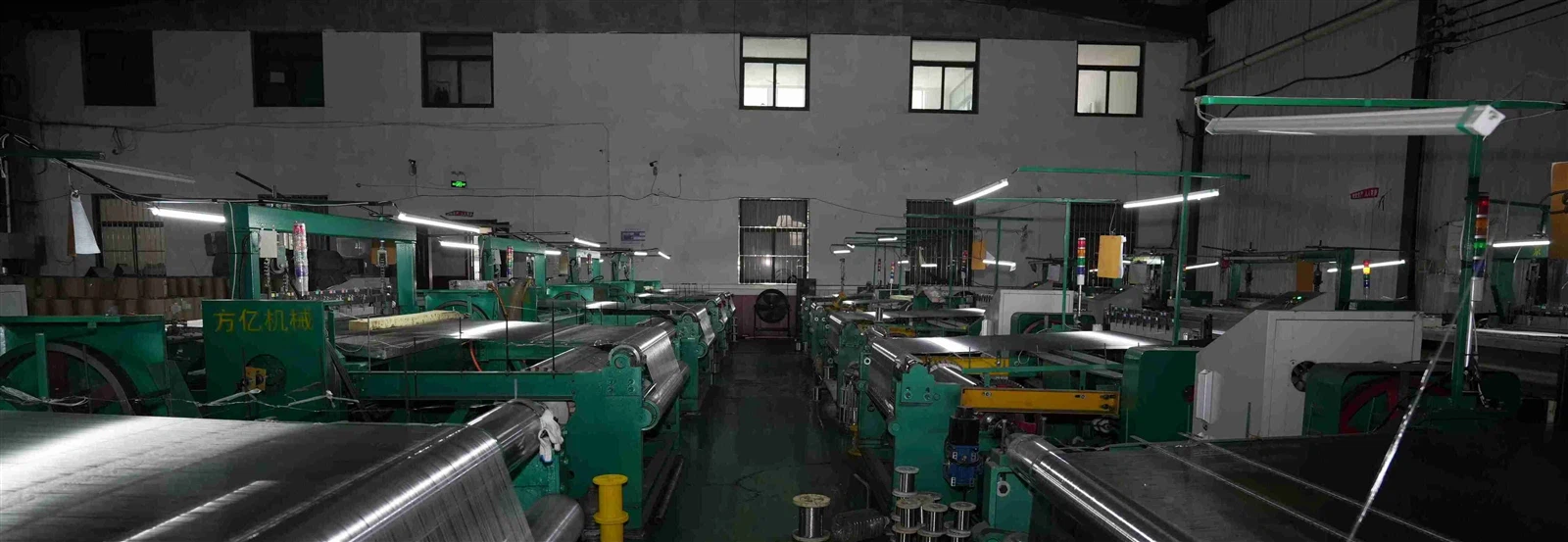
CHG Metal is ISO9001:2015 certified. Currently, CHG Metal owns two factories covers an area of 8600 square meters, more than 150 sets production machines including wire mesh weaving machine, testing instruments and corollary instruments. The main production equipment manufacturing with international advanced level, with an annual output of about 3,000,000 square meters of stainless steel wire mesh, woven 1 to 635 mesh square hole wire mesh, dutch wire mesh production to 2800 mesh. Self designed epoxy resin mesh coating producing line, with an annual output of about 3,000,000 square meters for epoxy resin mesh.
Tidying up the warp threads


Weaving


Quality Inspection


Surface Coating Dealing


Cutting & Packing


Monitoring of the production process
During the production of stainless steel wire mesh, it is vital to ensure consistency and stability in quality

Full tracking records
Detailed records of operations, inspection results, equipment status, etc. are required for each production stage to ensure that the details of the production process can be traced back at any time.
Random sampling
Random sampling is carried out at regular or irregular intervals during the production process and is performed by specialized quality inspectors. These personnel will take samples from different production batches and conduct various inspections and tests to ensure that quality standards are met at each stage of production.

Roles and Responsibilities of Specialized Personnel
Quality controllers are required to conduct regular on-site inspections during the production process to assess the quality status of each production step according to quality inspection standards. For example, they may check indicators such as woven points, mesh size, wire tension, etc. Technicians manage specialized processes, ensuring equipment runs correctly and adjusting parameters as needed. Together, they ensure the final product meets quality standards.
On-site Feedback and Improvement
Immediate Feedback Mechanism: When quality control personnel find quality problems in production, they should immediately feedback to production line workers or technicians and make adjustments. At this time, the workers can stop the production or repthe problematic part to avoid the defective products continue to be produced.

Data Recording and Traceability
Real-time Data Recording: At the end of each production session, the staff should record the inspection results, operation parameters and other data to form a complete production file.
Problem traceability: When quality problems are found, they can be traced back to the specific production batch according to the records to determine which link or operation caused the problem, so as to quickly carry out rectification.
Regular training and audits
Training of production personnel: Regular quality management training is provided to production personnel to ensure that they understand and master the necessary quality standards and operational practices.
Internal Quality Audits: Regular internal quality audits are conducted to check compliance with all quality management regulations during the production process and to assess the effectiveness of the overall quality control system.